
The complete guide
Window Catio Buyer's Guide - Choosing a Safe Outdoor Space for Indoor Cats
The problem with keeping cats indoors
Indoor cats live longer. That is settled, and most owners know it. What is less often said out loud is that a lot of indoor cats are bored out of their minds.
You see it in the behaviour. The 3am sprinting. The yowling at the back door. The cat who sits in the window for six hours a day with its tail twitching, watching birds it will never reach. None of that is a cat being difficult. It is a predator with nothing to do.
Letting them out solves the boredom and creates a much bigger problem. Cars, dogs, other cats, snakes, ticks, fights, and the local bird population all become part of the deal. In plenty of places, free-roaming cats are also a legal issue now, with curfews and containment rules that carry fines.
A window catio sits right in the middle. The cat gets outdoor air, real sunlight, sounds, smells and a view that changes. You keep the cat contained. Nobody has to pick a side.
What this enclosure actually is
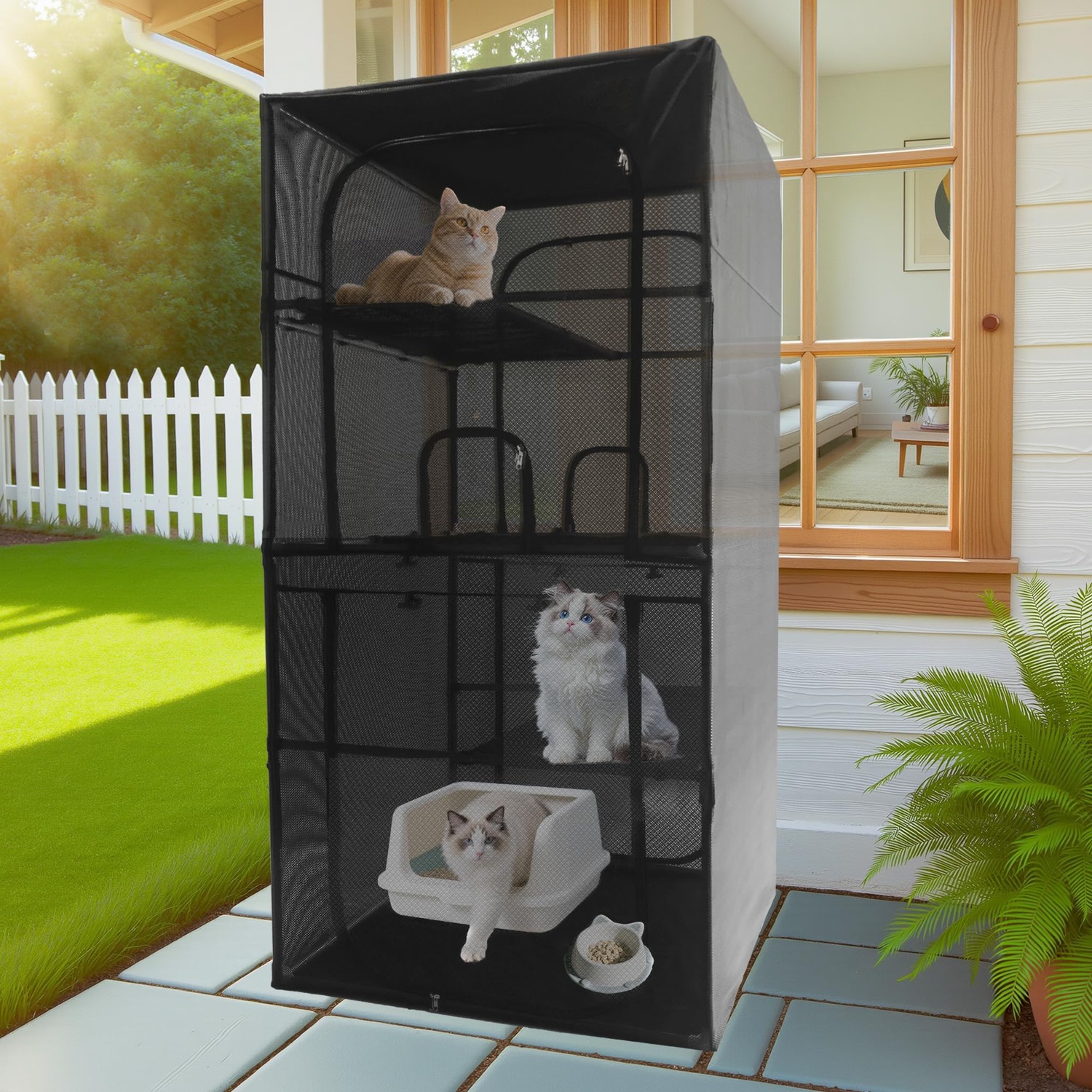
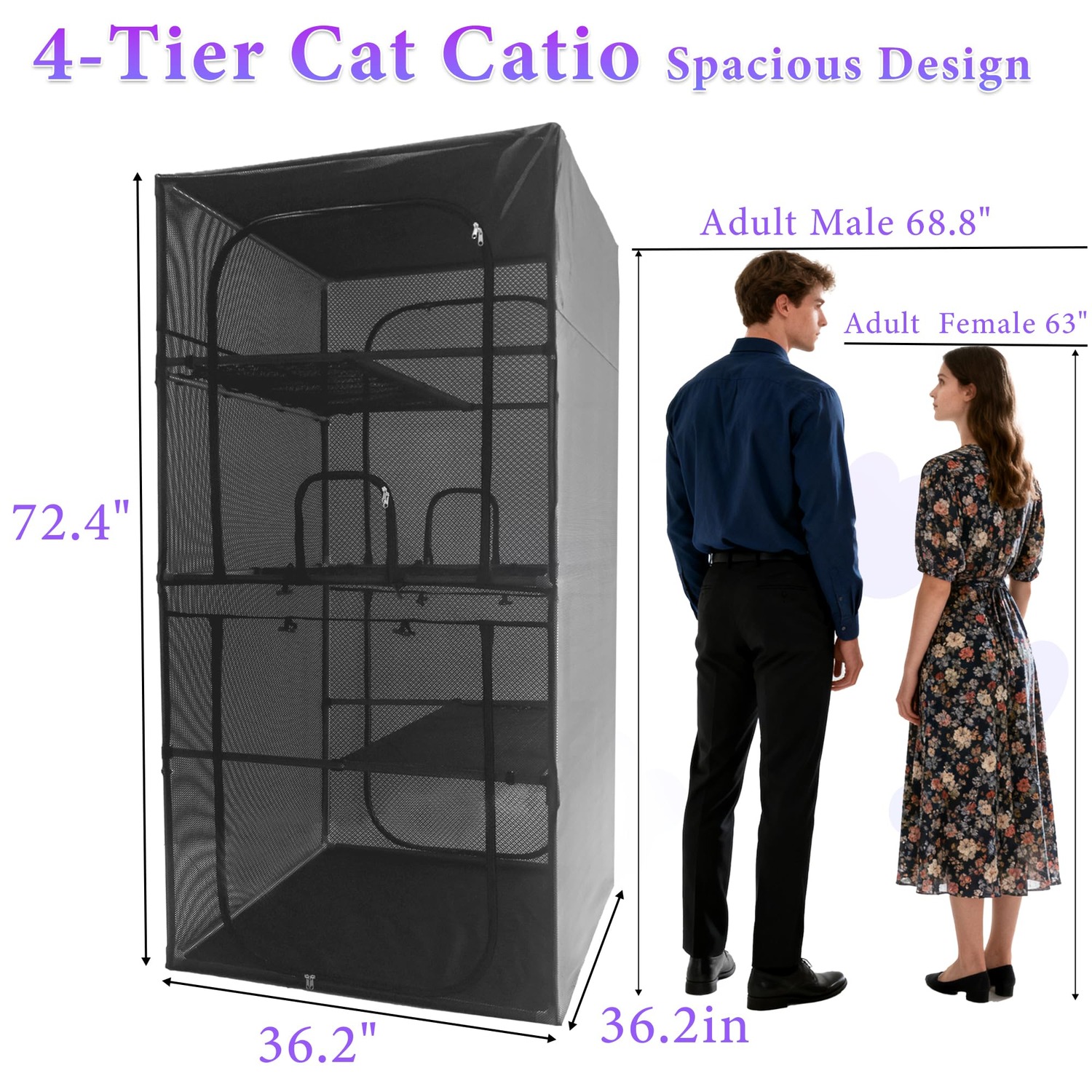
This is a freestanding four-tier cat enclosure measuring 91.9 cm long by 91.9 cm wide by 183.9 cm high. The frame is metal rod, the walls and panels are nylon mesh, and the whole thing is black. A cover is included for the roof.
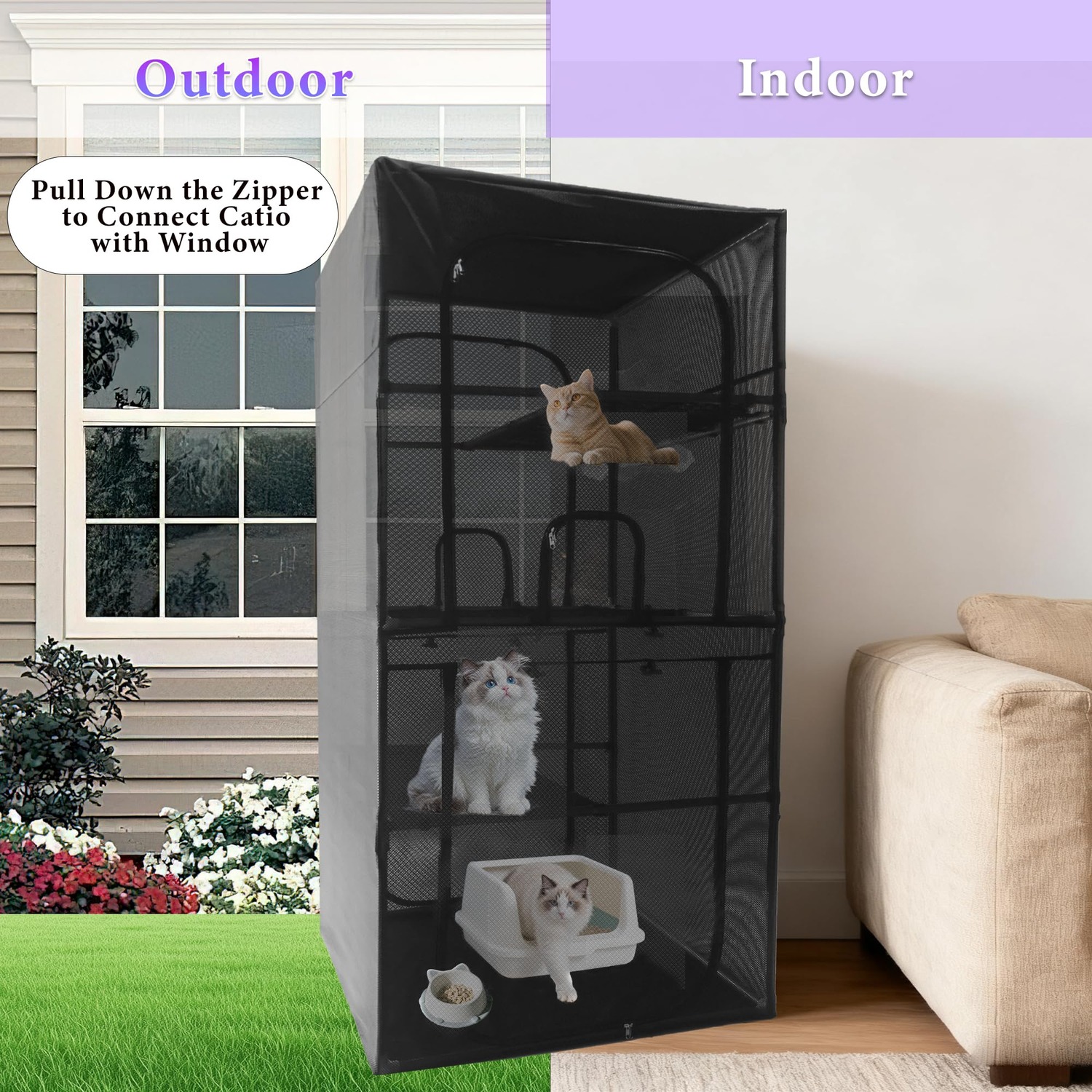
It is designed to be placed where your cat can reach it, typically against a window or door, on a balcony, or out in a yard. The cat moves in and out through one of the doors, or through a window you leave open into the enclosure.
There are five doors in total. Three large and two small, all zippered. The large doors at the bottom are the ones you will appreciate most, because they are sized for a person to crawl through. Anyone who has tried to retrieve a litter tray from the back of a low enclosure through a narrow hatch understands why that matters.
Assembly is required but no tools are needed. It also comes apart for flat storage.
Why height beats floor space
If you give a cat a choice between a wide flat run and a tall narrow one, most cats pick tall. Height is how cats feel safe. It is also how they claim territory and how they keep an eye on everything.
Four tiers inside a 183.9 cm frame gives a cat genuine vertical range. They can climb up, drop down, perch at the top, or hide low. That vertical movement is also better exercise than walking around a flat area, because jumping and climbing use more of the body.
With more than one cat, tiers do something else useful. Cats that share a space do better when they can separate by height rather than having to sit next to each other. A multi tier cat cage naturally reduces friction, because each cat can hold its own level.
That said, not every cat climbs. Older cats, heavy cats and cats with joint pain will mostly use the ground floor. If that describes your cat, the enclosure still works, but plan the layout around the lowest tier and keep bedding, water and the litter tray all within easy reach.
Picking the right spot
Measure before you buy. The two numbers that trip people up are the 183.9 cm height and the 91.9 cm square footprint.
On a balcony, check your ceiling or awning clearance and leave room for the cover on top. Also leave a walking path, because an enclosure that blocks the only route to your clothesline will not last the month. Keep it clear of railings so cats cannot use the roof as a step up to somewhere you do not want them.
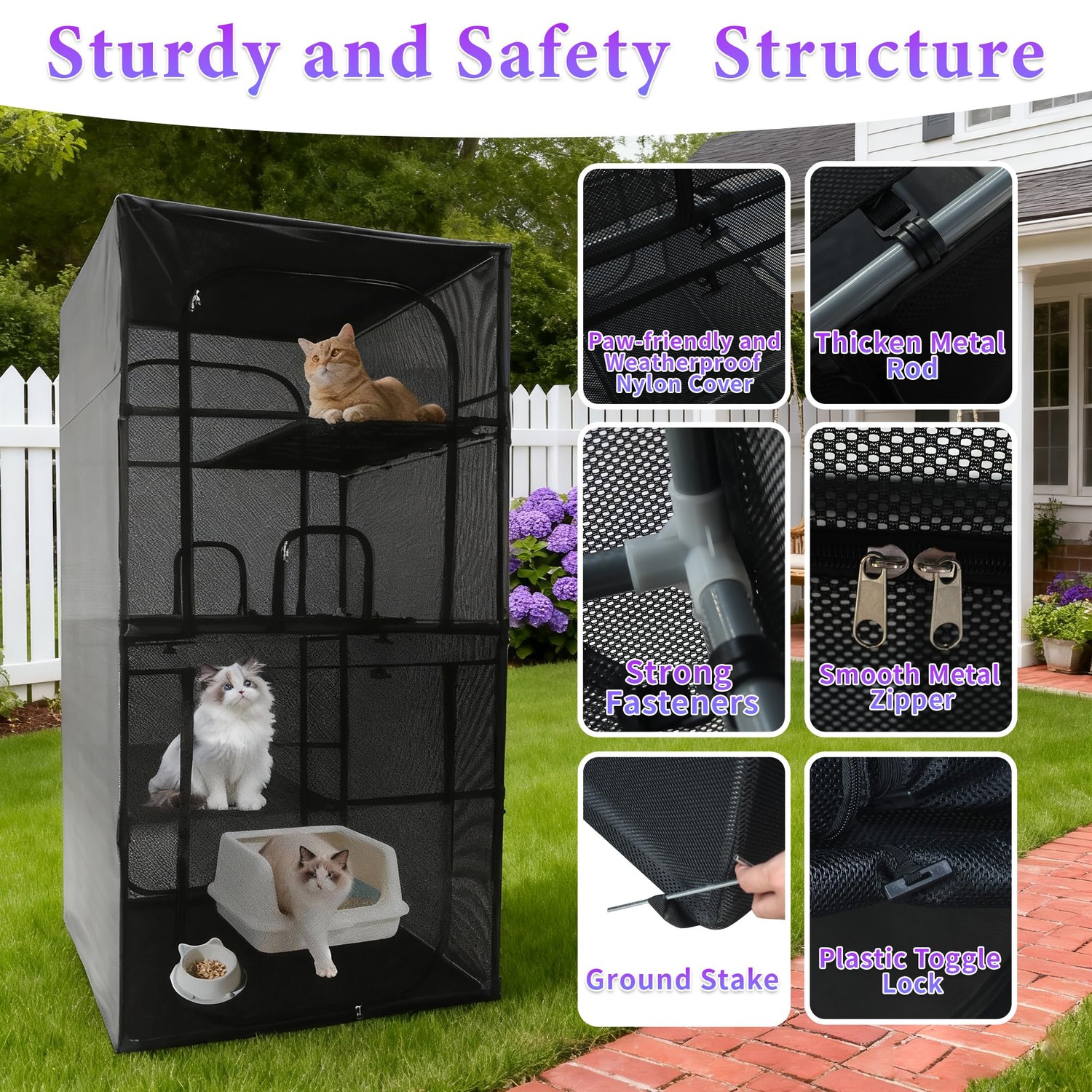
In a yard, flat ground is the main thing. Ground stakes go in easily on soil or lawn and make a real difference to how solid the frame feels when a cat jumps between levels. On concrete or tile you cannot stake it, so you will need weights at the base corners instead.
Against a window, think about which window. North-facing spots get more sun, which cats love in winter and hate in midsummer. The roof cover helps with shade, but a spot that gets some natural shade for part of the day is better than one baking all afternoon.
Indoors is a legitimate option too. Plenty of people use an enclosure like this as a recovery space after surgery, a containment area during renovations, or a safe zone when a new pet arrives.
Materials, weather and what to expect
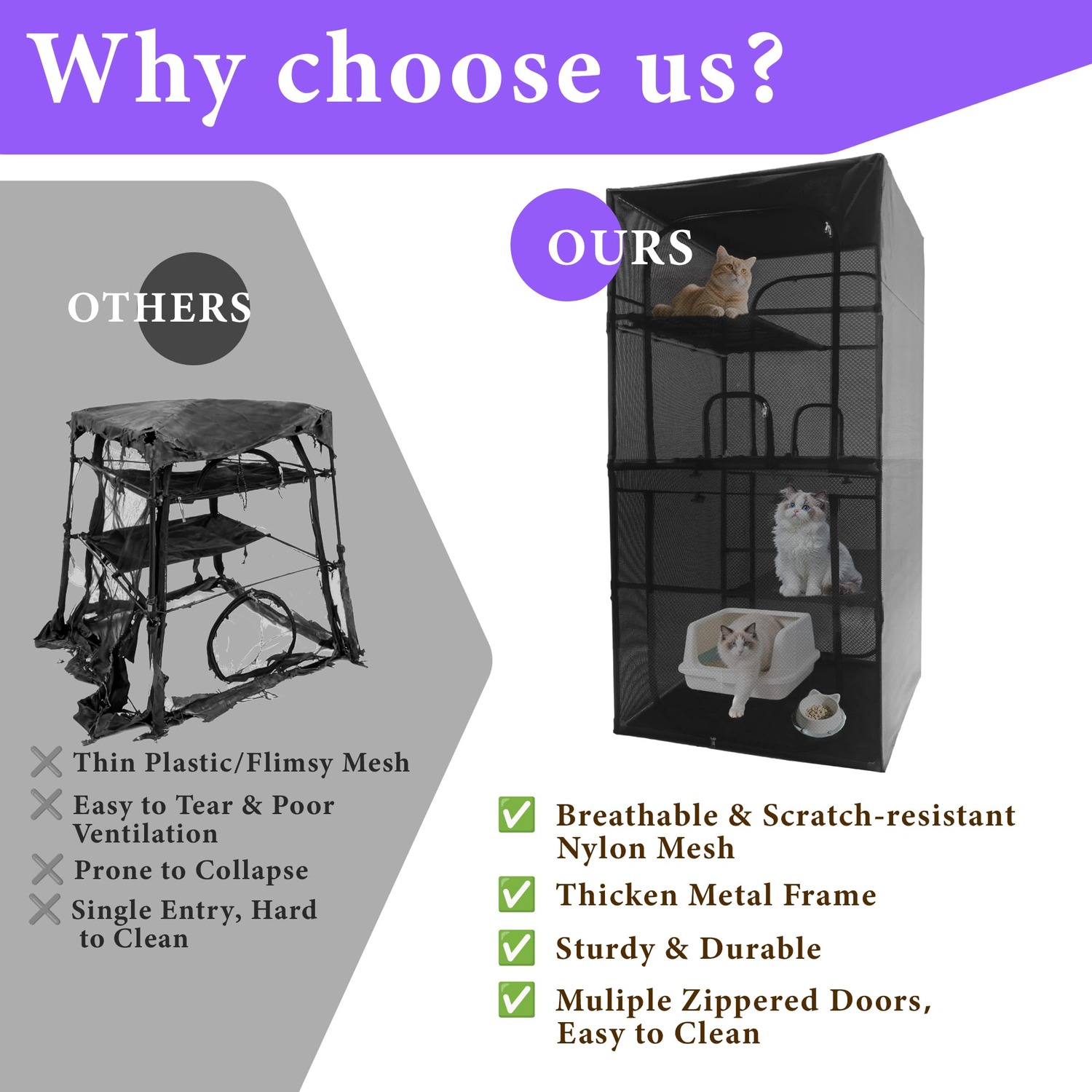
Metal and nylon is a sensible combination for this kind of product. The metal rods carry the load and keep the shape. The nylon mesh gives airflow and lets both you and the cat see through.
Mesh handles ordinary cat contact well. What wears it out is one cat picking one spot and clawing at it every single day. The fix is simple enough, give them something better to scratch inside the enclosure, and check the panels regularly so a small pull does not become a hole.
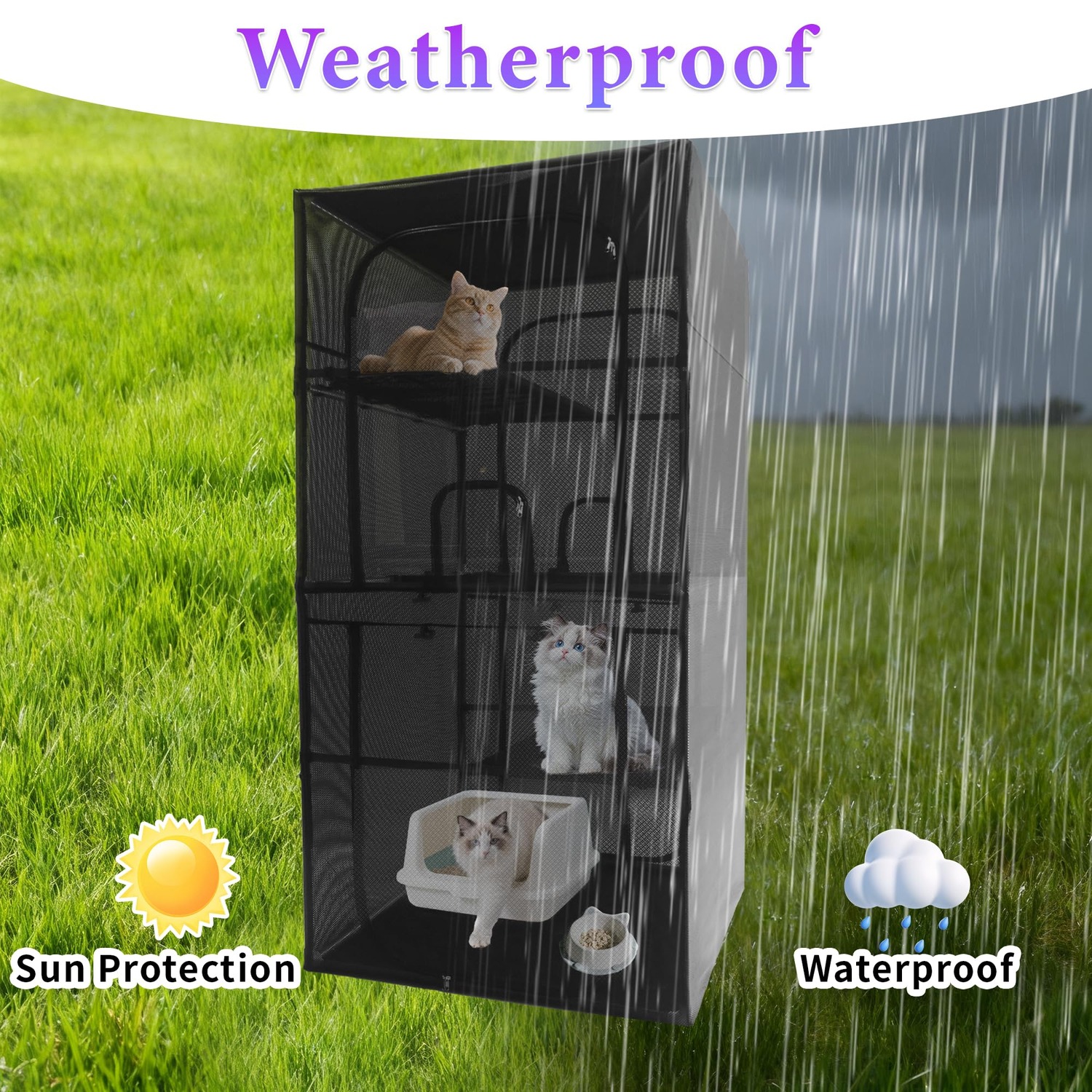
The roof cover is described as waterproof and sun-resistant. It keeps light rain off and takes the edge off direct sun on the top tier. Treat that as weather protection, not weatherproofing. In a real storm, bring the cat in and either take the enclosure down or tie it off securely. Fabric and wind are a bad combination, and an unanchored frame can tip.
Heat deserves specific attention. A dark enclosure in full sun gets hot fast. Shade, water and limiting time outside during the hottest hours matter more than any feature of the product itself.
Getting your cat to actually use it
The mistake most people make is putting the cat in and zipping it up. That turns the enclosure into a cage in the cat's mind, and you will spend weeks undoing that.
Leave the doors open instead. Let the cat find it. Put a blanket inside that already smells like home, add a toy, and drop a few treats near the entrance. Cats approach new objects on their own schedule and resent being hurried.
Most cats work out the top tier within a few days. Once they realise it is the best lookout in the house, you will struggle to get them down.
Feeding inside can help if progress is slow. So can sitting in there yourself for a few minutes, which is exactly what the crawl-through bottom doors are for.
Cleaning and upkeep
Nothing complicated here. Wipe the metal frame with a damp cloth and dry it off so moisture does not sit on the joints. Spot clean the mesh with mild soapy water and a soft brush, then let it air dry completely before you zip anything shut.
Brush fur, dust and leaves off the mesh now and then. Blocked mesh moves less air, and airflow is half the point.
Every few weeks, run your hands over the zips, joints and stakes. Zips are usually the first thing to show wear, and a zip that sticks is a zip that someone will leave half-closed. Reseat anything that has worked loose.
If you are packing it away for the season, dry everything fully first. Damp nylon in a box becomes mildew in a box.
The short version
This is a four-tier, 91.9 x 91.9 x 183.9 cm cat enclosure in metal and nylon mesh, with five zippered doors and a roof cover. It assembles without tools and packs down flat.
It suits indoor cats who need outdoor time, households with more than one cat who need vertical space, balconies and courtyards, and anyone dealing with cat containment rules. It is less suited to cats who cannot climb, though the ground level still works for them.
Measure your space first, especially the height. Anchor it properly. Give your cat a few days to decide it was their idea. After that, most of the window-staring and door-yowling tends to sort itself out.