
The complete guide
How to Choose a Walk-In Catio for Your Garden
The problem with letting cats outside
Cats are not subtle about wanting outside. They sit at the door. They slip past your legs. They stare out the window at a bird for forty minutes with the focus of a surgeon. And every owner knows the trade-off: outdoor cats live shorter lives on average, mostly because of traffic, fights and the things that happen when a cat is out of sight for six hours.
So most people end up picking a side. Either the cat stays in and you live with the guilt and the yowling, or the cat goes out and you live with the worry. Neither is great.
A walk in catio is the third option. It is an enclosed outdoor space that gives a cat the sun, the air, the sound of the garden and a view of everything moving in it, while keeping the cat inside a boundary you control. The cat gets what it actually wants, which is sensory input, not necessarily a three-kilometre territory.
What this enclosure actually is
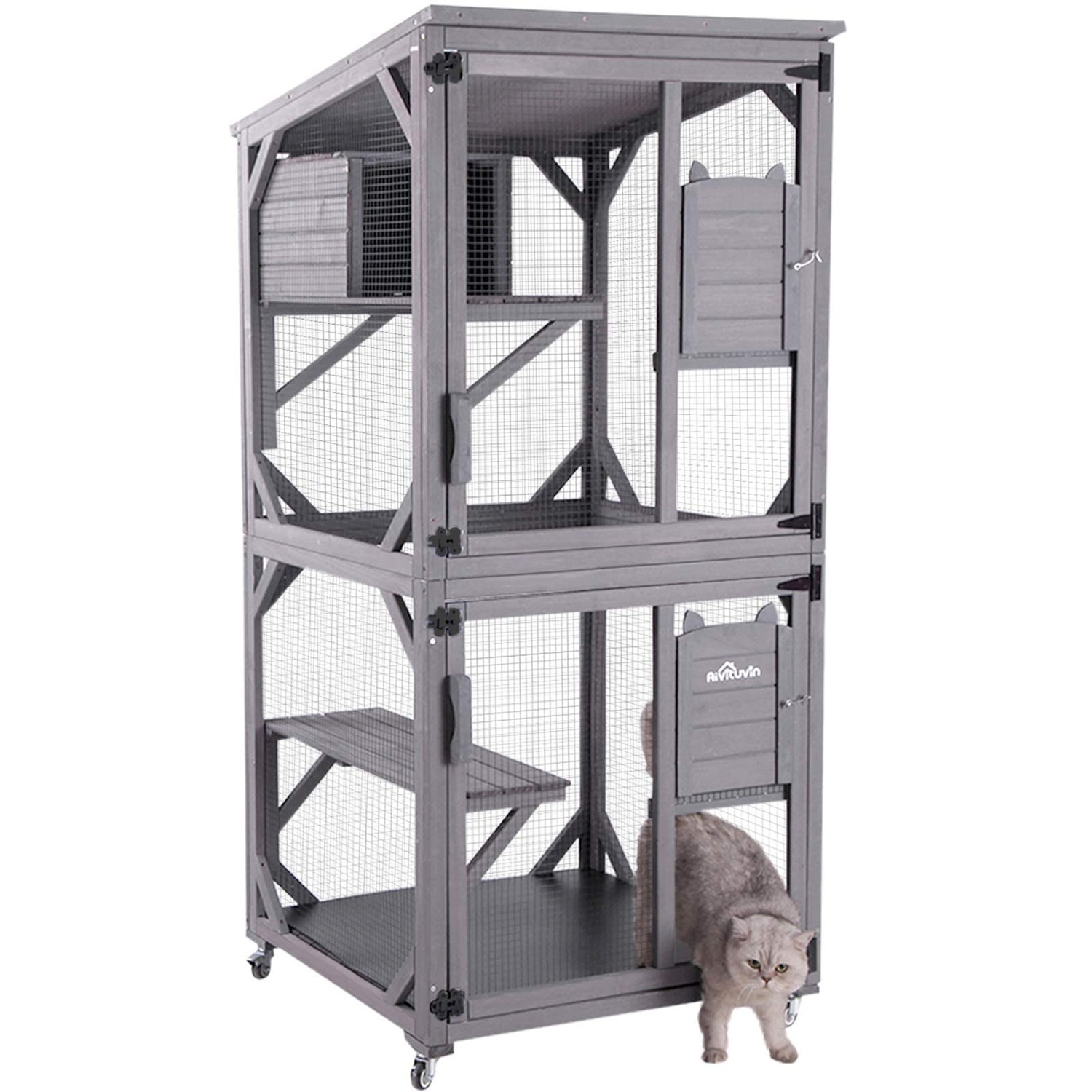
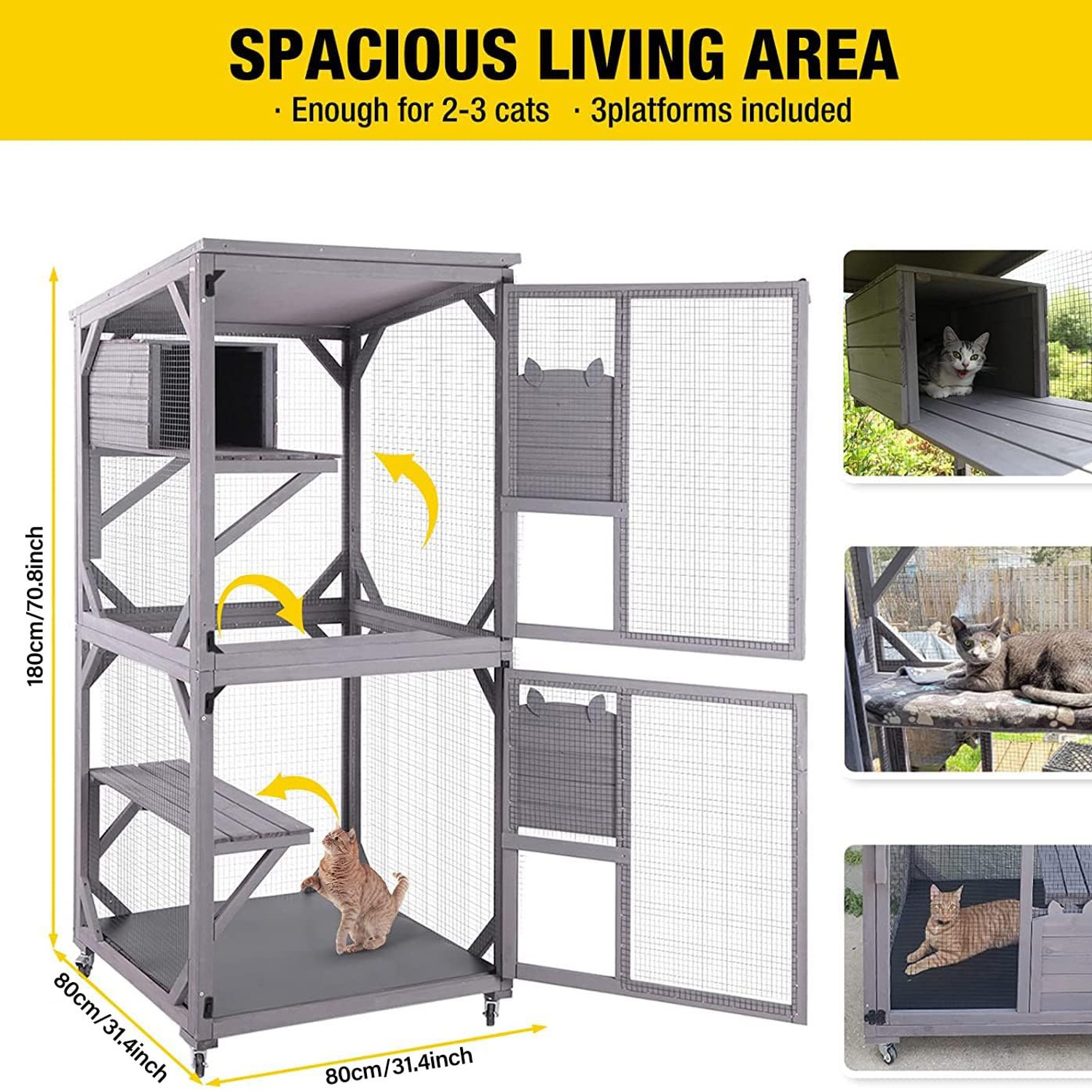
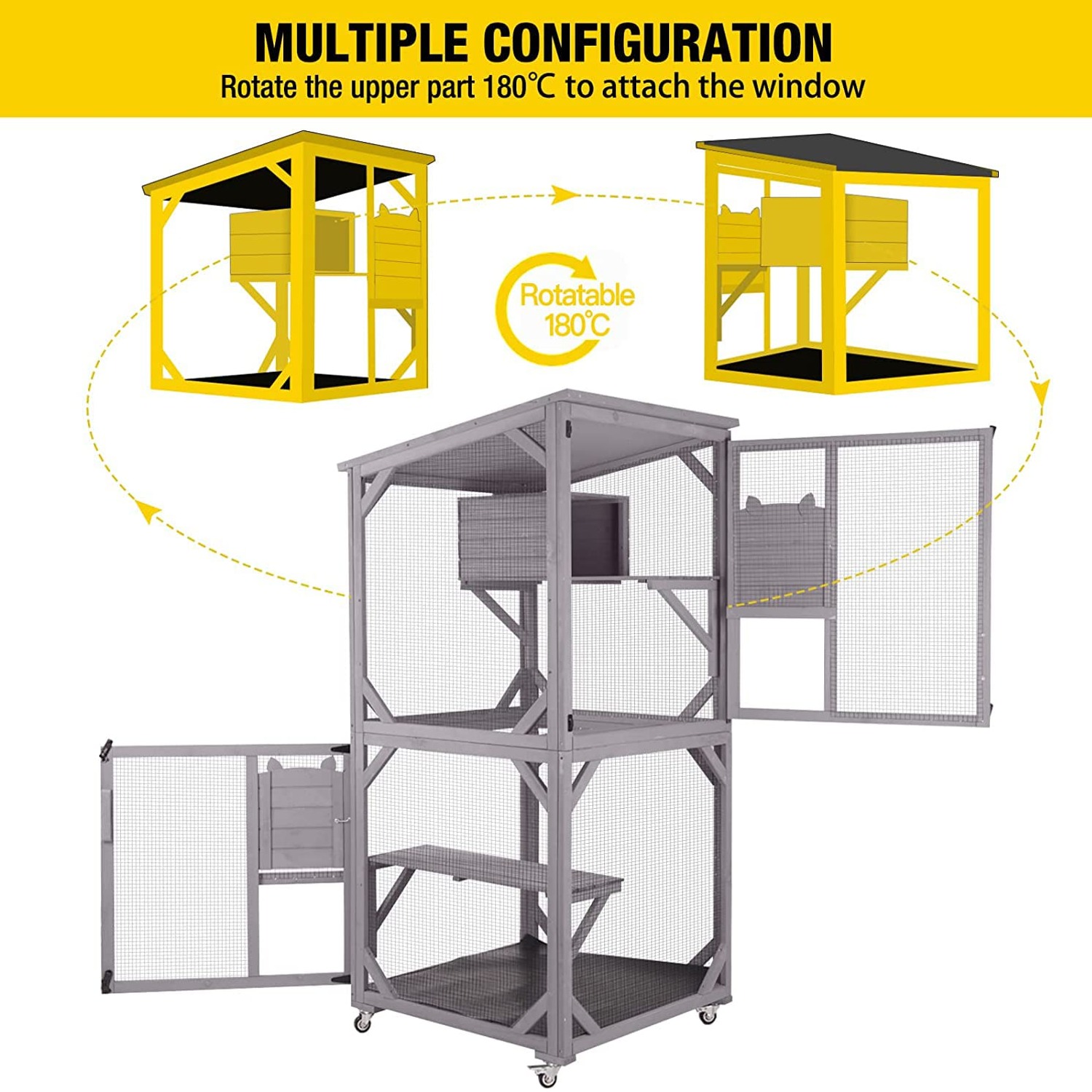
This is a timber cat enclosure measuring 80cm wide, 80cm deep and 180cm tall. The footprint is small, roughly the size of a large side table, but the height is where the usable space lives. Cats do not use floor area the way dogs do. They use shelves, perches and vertical routes. A tall narrow enclosure with two levels gives a cat more genuine options than a wide flat run of the same volume.
Inside there are two platforms and a nesting box. The platforms are climbing targets and lookout points. The nesting box is the retreat, somewhere covered to sleep or to sit out a gust of wind. Having both matters. A cat that only has exposed perches will feel uneasy and may not settle.
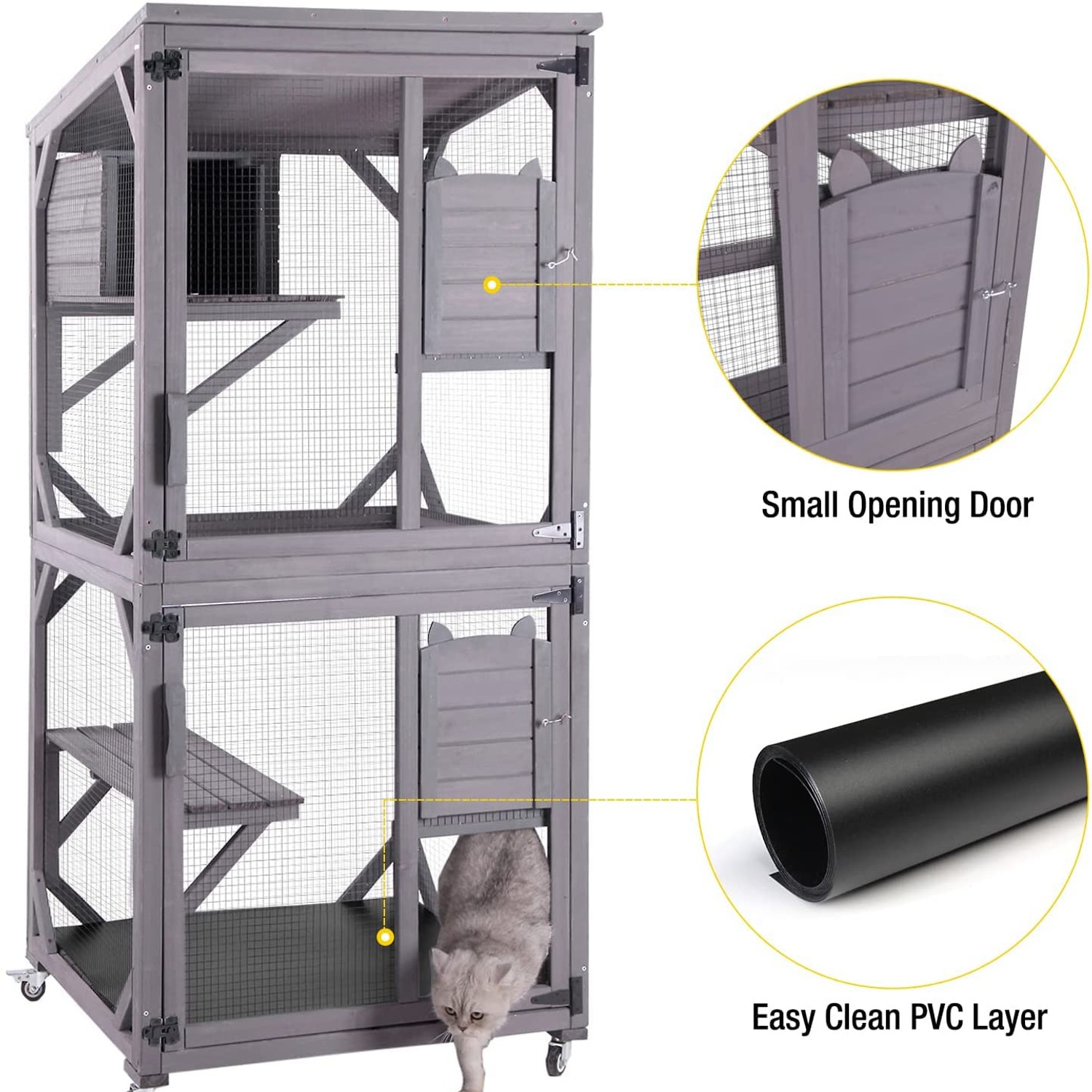
The frame is wood with PVC used for the cleaning board. That board is the part that earns its keep. Instead of scrubbing a fixed floor on your hands and knees, you slide it out, hose it, dry it and put it back.
There are two doors. It sounds like a minor spec until you have tried to put a water bowl in a single-door enclosure while a cat tries to exit past your arm.
The wheels change how you use it
Most outdoor cat enclosure designs are built where they stand and never move again. That is fine if you have the perfect permanent spot. Most people do not.
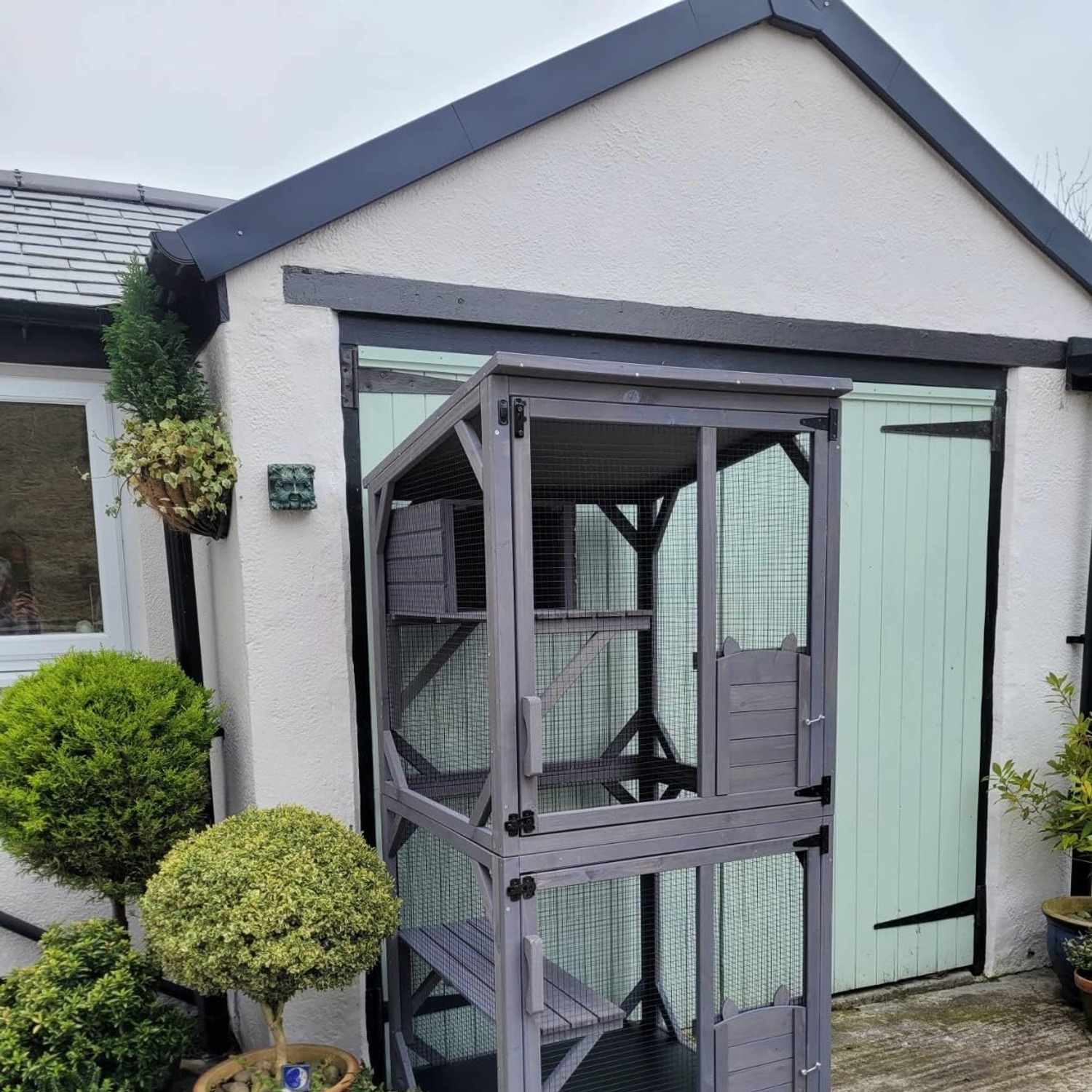
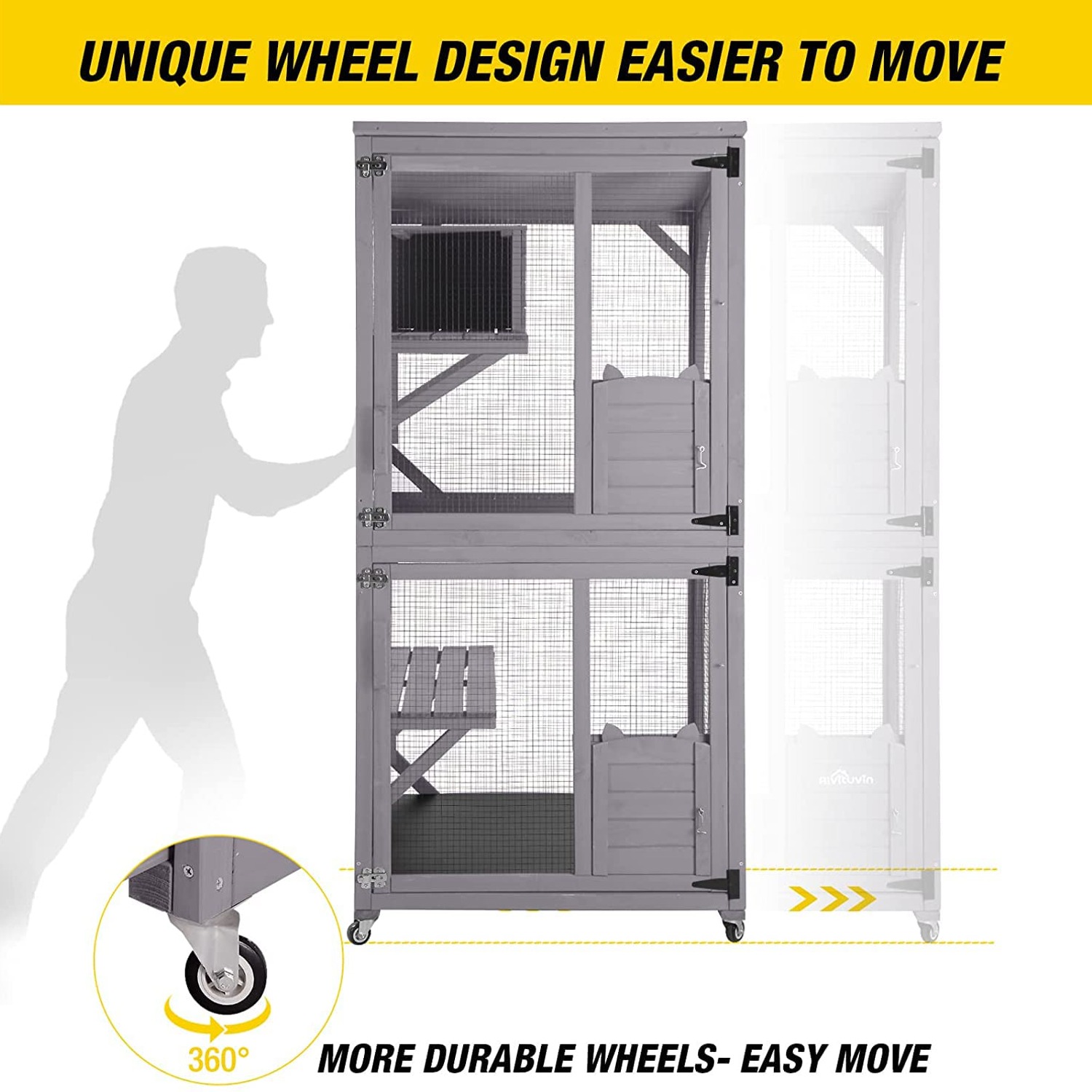
This one sits on universal brake wheels. Roll it onto the deck in the morning where the sun lands, roll it under the pergola by midday, push it against the house wall when a storm comes through. Lock the brakes and it stays put.
The practical benefit is heat management. A spot that is pleasant at nine in the morning can be dangerous at two in the afternoon. With a fixed structure your only answer is shade cloth. With a catio on wheels, you move it.
The secondary benefit is cleaning. You can roll the whole thing off a patch of lawn and let the grass recover, or shift it to hose down the area underneath.
Keep in mind the wheels suit firm flat surfaces best. Decking, pavers and concrete are ideal. Thick lawn or uneven dirt will fight you.
Who it suits
Indoor cats who have never been out are the obvious match. A safe outdoor cat run gives them a controlled introduction to wind, smells and noise, which is a lot of enrichment for a cat whose day is otherwise a sofa and a window.
Kittens benefit too, with supervision. It is a sensible halfway step between full indoor life and whatever freedom you plan to give them later.
Older cats often love it most. A cat that no longer wants to patrol the neighbourhood will still want a sunny spot and something to watch. The two levels mean you can let them use the ground floor and ignore the climb entirely.
It also suits households where the cat and the street do not mix. Busy roads, aggressive neighbourhood cats, dogs next door. If letting the cat out is genuinely not safe, a large cat enclosure gives you an outdoor life without the gamble.
Where it is less suited: three or more cats who need all-day space, or a household wanting a permanent full-time outdoor home. For that you want a larger run or a connected enclosure system.
How to choose and where to put it
Start with measurement, not price. Mark 80cm by 80cm on the ground where you want it and look up. You need 180cm of clear height, which rules out spots under low eaves, washing lines or branches.
Then check the surface. Flat and firm, with enough space around it for you to open both doors fully. If you want to move it regularly, map the path it will travel and make sure there are no steps or lips.
Think about sun across the whole day, not just when you are shopping. Morning sun with afternoon shade is close to ideal in most climates. Having the wheels helps, but it helps more if you already know where the shade falls.
Finally, consider what goes inside. A low litter tray, a water bowl that will not tip, and maybe a towel or cushion in the nesting box. A bare enclosure is a box. A furnished one is somewhere a cat chooses to be.
Assembly, honestly
It arrives flat-packed. Assembled weight is 26.8 kg, and the carton is awkward rather than brutally heavy, so have someone around when it lands.
Work on a flat surface. Lay the panels out and identify every piece before you start screwing anything. The single biggest mistake people make with flat-pack timber is getting halfway through and realising panel C was meant to face the other way.
Snug the bolts as you go but do not fully tighten until the whole frame is up. Then go around and tighten everything properly. A square, tight frame will not sag or rack. A rushed one will develop a lean within a season.
Budget an afternoon. If you finish in ninety minutes, great, but pressure makes for sloppy work on something that holds an animal.
Keeping it in good shape
Daily is just a spot check. Remove anything the cat left, top up the water, make sure the doors latch.
Weekly, pull out the PVC cleaning board and wash it with warm water and a pet-safe cleaner. Let it dry fully before it goes back in. Wipe down the timber with a damp cloth and dry it off. Do not soak wood.
Monthly, check the hardware. Bolts work loose with movement, especially on a wheeled unit that gets rolled around. Check the wheel brakes still hold.
Annually, look at the timber finish. Outdoor wood weathers. If it is going grey or feeling rough, a reapplication of a suitable pet-safe exterior finish will extend its life considerably. Make sure anything you use is non-toxic and fully cured before the cat goes back in.
In severe weather, move it under cover or throw a tarp over the top. A weatherproof cat enclosure is only as weatherproof as its worst-exposed corner.
The short version
This is a 180cm tall walk-in catio with a compact 80cm by 80cm footprint, built from wood and PVC, with two levels, two doors, a nesting box and brake wheels. It weighs 26.8 kg assembled and carries a 6 month warranty.
It suits one or two cats who want outdoor time without outdoor risk. The height gives them climbing and perching. The wheels let you chase shade instead of accepting whatever the fixed spot offers. The removable cleaning board means maintenance is a lift-and-rinse rather than a chore you keep putting off.
Measure your space first, give the assembly the time it deserves, and furnish the inside properly. Do those three things and you have a cat that gets the garden without the garden getting the cat.