

The complete guide
How to Choose a Portable Catio That Your Cat Will Actually Use
The problem with letting a cat outside
Cats want outside. Not in a vague way, in a sit-at-the-door-and-yell way. The smells, the moving grass, the birds, the sun on a warm paving stone. Indoor cats will find the one patch of window light and lie in it for hours because it is the closest thing they get.
The trouble is that letting a cat roam free carries real costs. Traffic is the obvious one. Then there are neighbourhood dogs, territorial cats, ticks and fleas, poisoned bait, and the damage cats do to local birds and lizards. In many areas there are also curfews or containment rules that make free roaming a legal issue, not just a safety one.
So owners end up stuck between two bad options. Keep the cat in and listen to the complaints, or let the cat out and worry every time they are late home.
A portable catio sits in the middle. It gives your cat real outdoor time, in a contained space, while you sit nearby with a coffee. No one has to compromise much.
What this one actually is
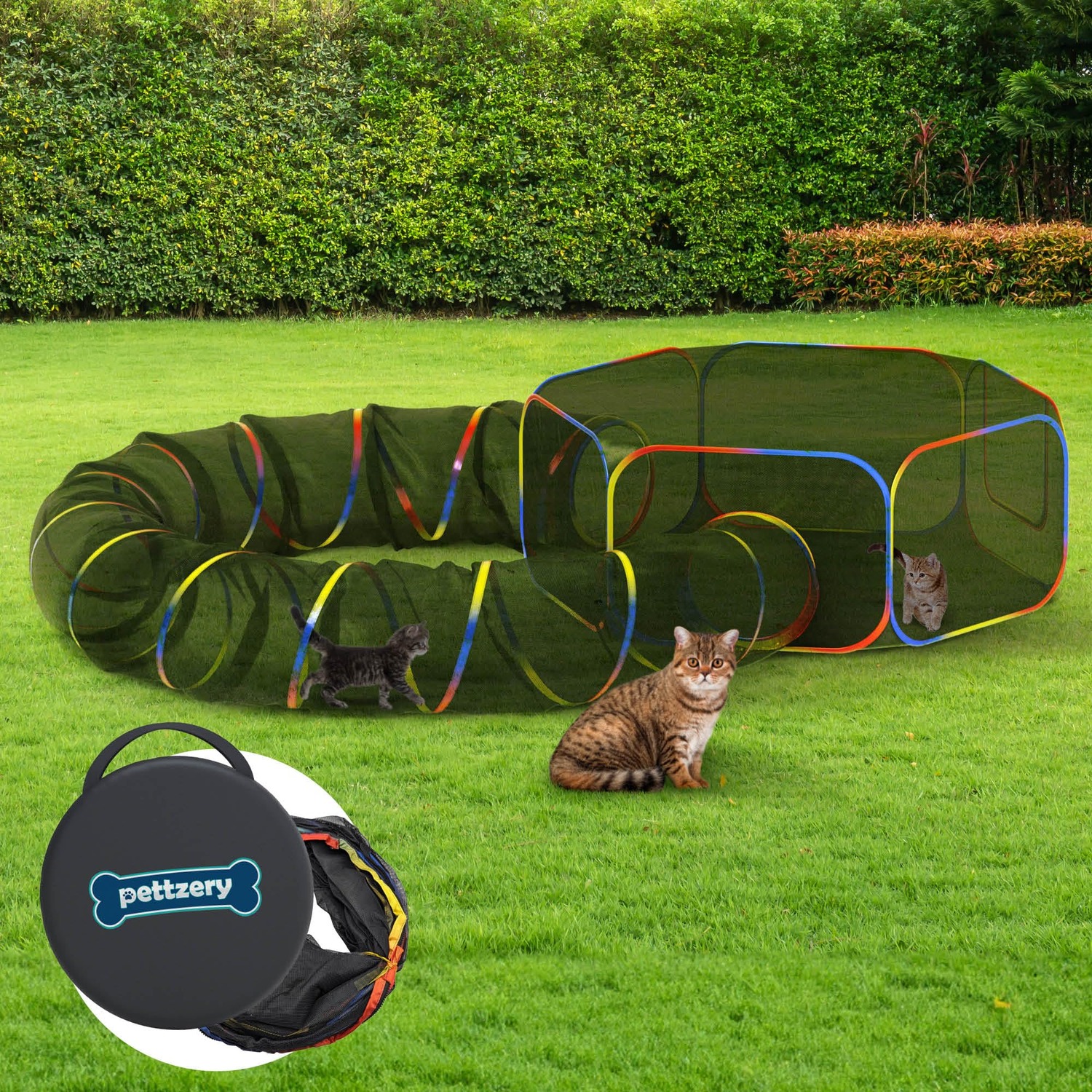
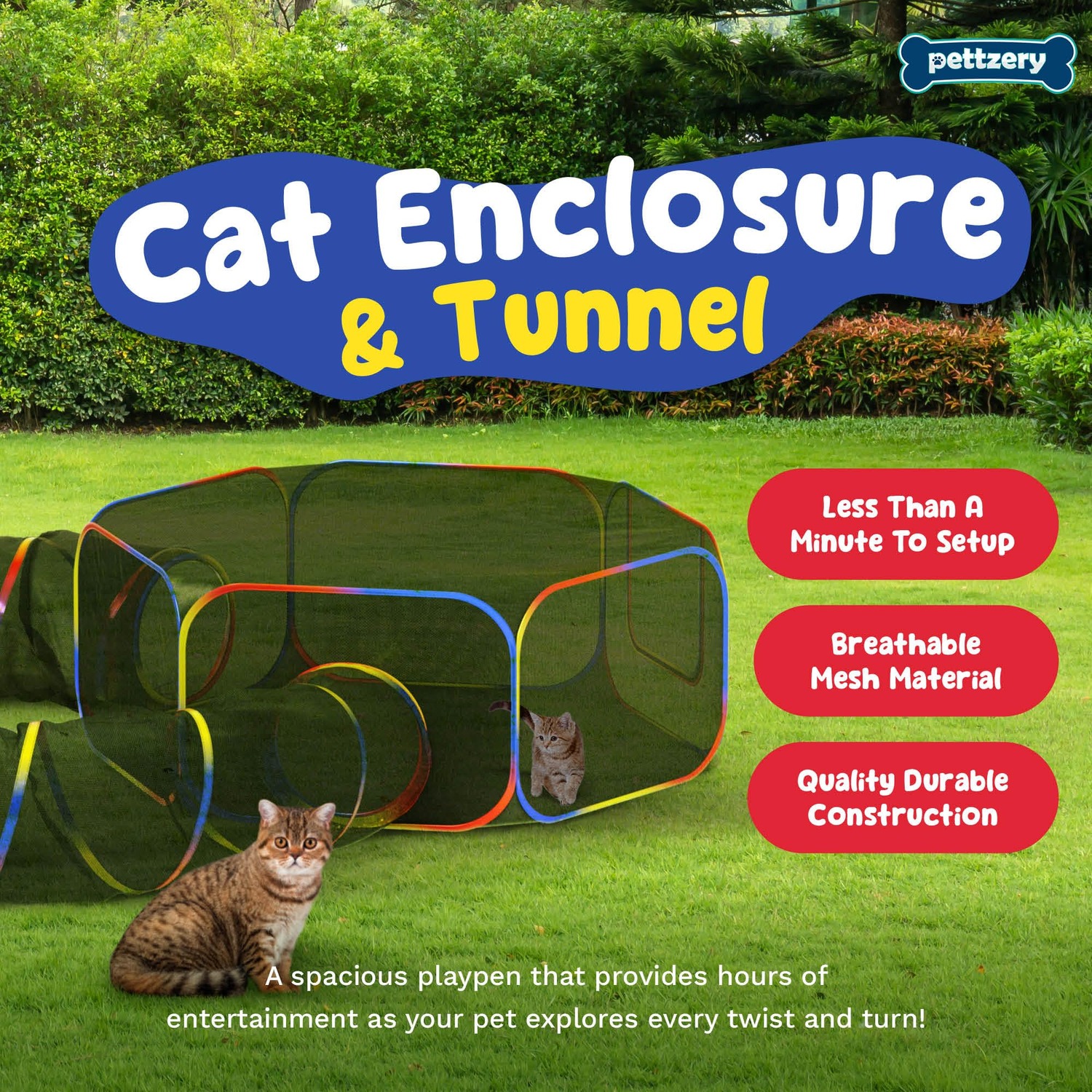
This is a pop-up fabric enclosure plus a separate play tunnel that zips onto it. The main tent opens to 119.4 cm square and 45.7 cm high. The construction is Oxford cloth with mesh panels, closed with zippers. There is no assembly step, so it goes from bag to tent in about a minute.
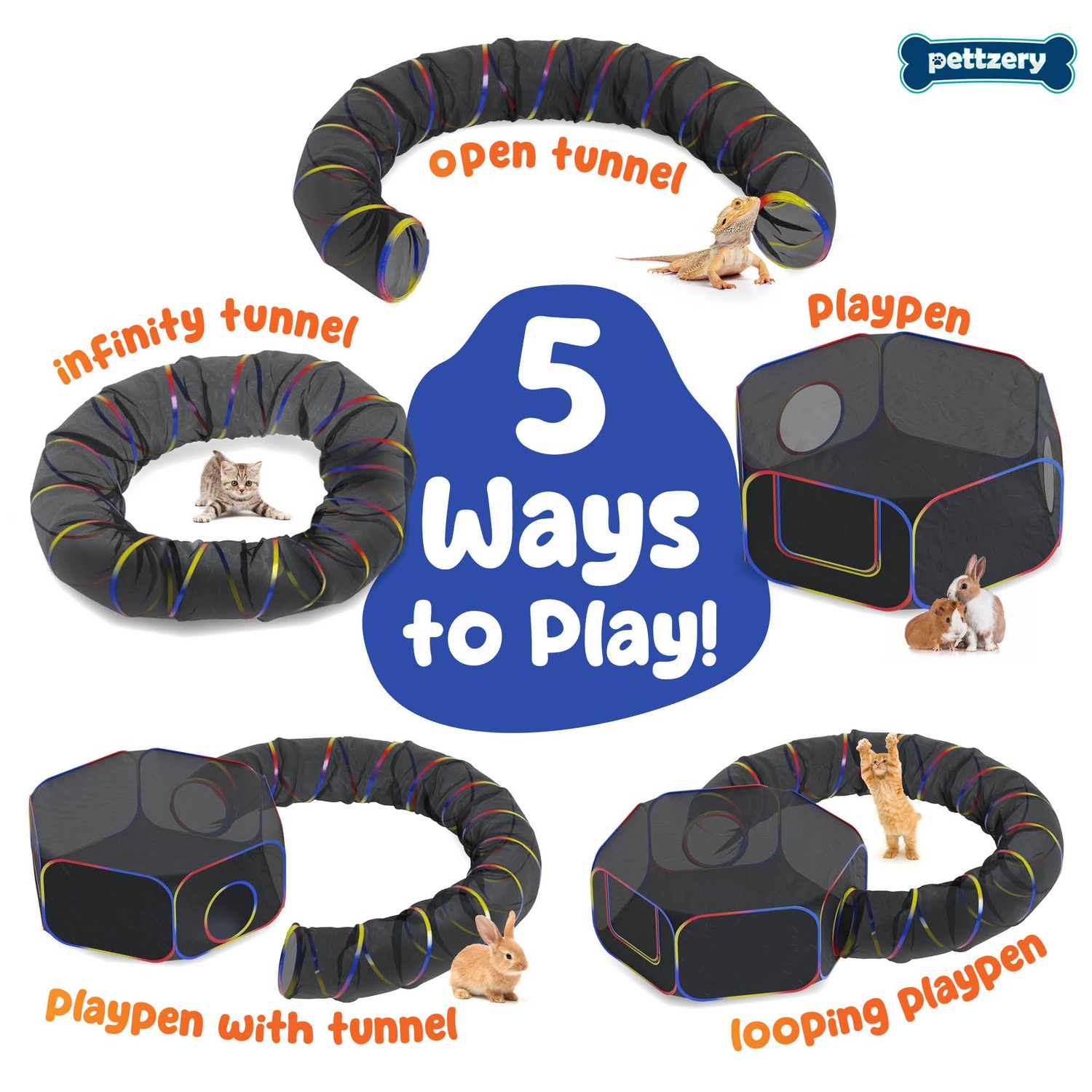
The two-piece design is the useful part. On a small balcony you can use just the tent. On a lawn you zip on the tunnel and suddenly the cat has a circuit instead of a room. Cats behave differently in a tunnel. They stalk, they hide, they shoot through and stop dead at the other end. A cat tunnel tent gets far more active play out of the same cat than a plain box does.
The mesh does two jobs. It keeps air moving so the inside does not turn into a greenhouse, and it lets you see exactly what your cat is doing without unzipping anything. That visibility matters more than people expect. Half the appeal of outdoor time is watching your cat enjoy it.
Who it suits
Apartment owners get the most obvious benefit. A cat enclosure for apartment living turns a small balcony into usable territory for an hour or two, with no risk of a fall and no chance of a dash past your legs at the front door.
It also suits people with gardens who do not want a permanent structure. A timber catio bolted to the wall is a great thing, but it is a build, a cost, and often a conversation with a landlord. A foldable catio needs none of that. It opens where you put it and disappears afterwards.
Travellers and campers are the third group. Taking a cat to a holiday rental is stressful for everyone, mostly because the cat has nowhere familiar to be. A travel catio with a blanket that smells like home gives them a known space in an unknown place.
Finally, there are the convalescent cases. Cats recovering from surgery, elderly cats who should not be climbing fences, and newly adopted cats who are not ready for free access yet. A contained outdoor space lets them get sun and air without the risk.
How to choose between the options
Floor area is the first thing to check. A tent that looks spacious in a photo can be a shoebox in real life. At 119.4 cm square, this one gives a cat room to stretch out fully, plus space for a bed and a water bowl, without you needing to fold anything to fit it in.
Height is the second. At 45.7 cm, a cat can sit up and turn around. That is intentional, not a shortcut. Tall soft enclosures catch wind badly and tip. If you want standing-height space, you are looking at a rigid frame structure, which is a different product with different storage problems.
Material is the third. Thin nylon is cheap and tears. Oxford cloth is heavier and takes more scuffing against concrete, grass and claws. Combined with mesh panels, you get a balance of airflow and durability, which is what you want in an outdoor cat tent that lives outside in short bursts.
Then there is setup. Anything that requires threading poles will get used less. That is just how it goes. No assembly means you will actually open it on a Tuesday afternoon instead of thinking about it and not bothering.
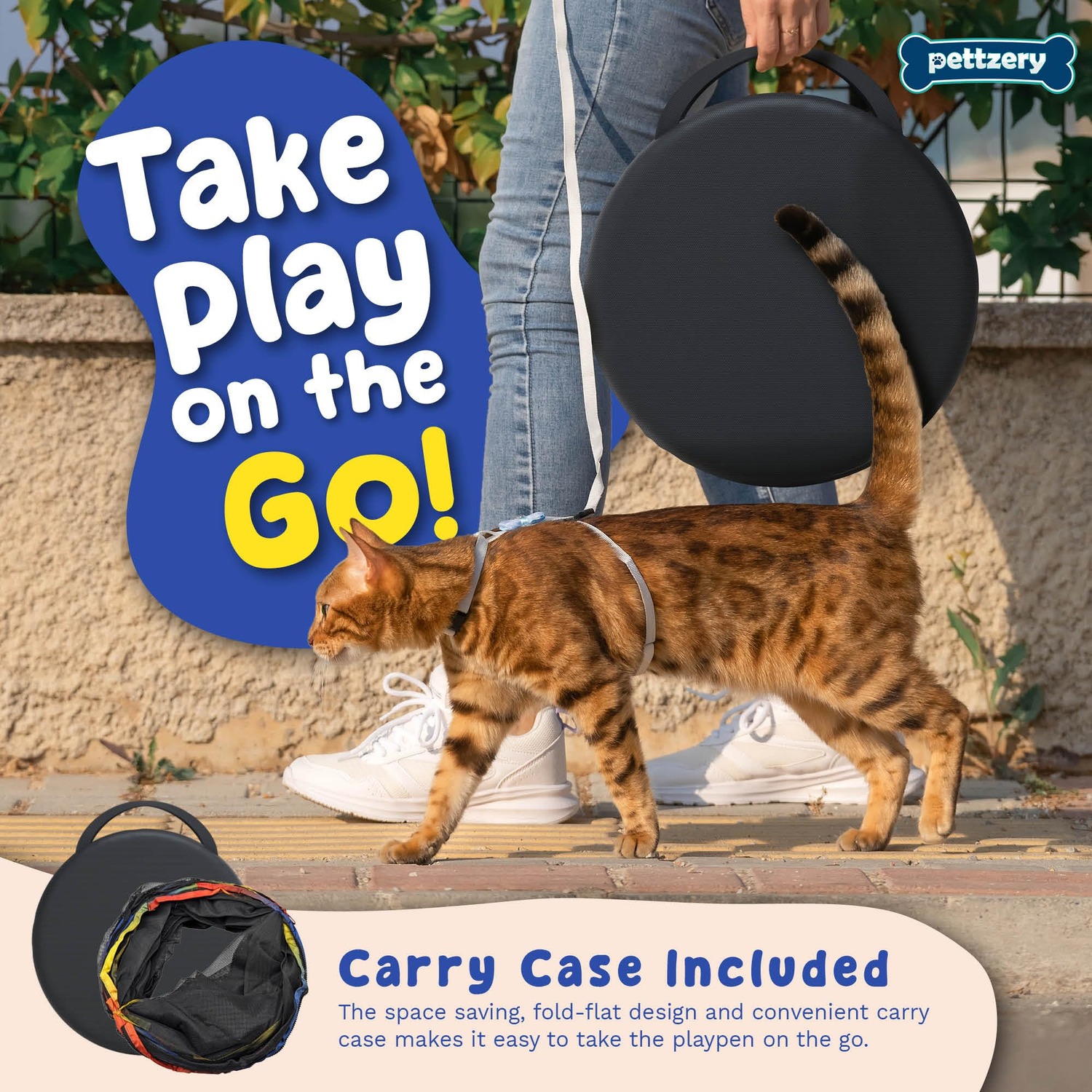
Last, think about storage. If you only have outdoor space sometimes, a mesh cat tent that folds into a carry bag is far more practical than something that needs a shed corner permanently.
Introducing it to your cat
Do not rush this. Cats judge new objects harshly and then re-judge them a week later as if nothing happened.
Open it indoors first. Leave the zippers open and let the tent sit in the lounge for a day or two. Put a familiar blanket inside, something that already smells like your cat. Drop a treat or two near the entrance, not inside, so there is no pressure.
Once they are going in and out on their own, move it outside somewhere quiet. Shade is better than full sun for a first session. Stay with them. Short sessions build confidence faster than one long session that ends with a stressed cat.
Add the tunnel after the tent is normal. Most cats take to tunnels quickly, but introducing both at once is a lot of new object to process. A cat playpen with tunnel is most fun when the cat already trusts the main space.
If your cat bolts out the moment you unzip, that is usually a sign you moved too fast. Go back a step and shorten the sessions.
Keeping it safe and in good shape
Supervision is the rule. Soft-sided enclosures are not escape-proof against a cat with hours of free time and a grudge. Stay in the garden. When you go inside, the cat goes inside.
Watch the sun. Mesh breathes well, but a dark tent in full afternoon sun gets warm. Set it in partial shade, keep water inside, and move it as the sun shifts. The tunnel makes a decent shaded retreat on its own.
Wind is the other thing. The low profile helps, but weight the corners if you live somewhere exposed. A tent that lifts once will spook a cat badly.
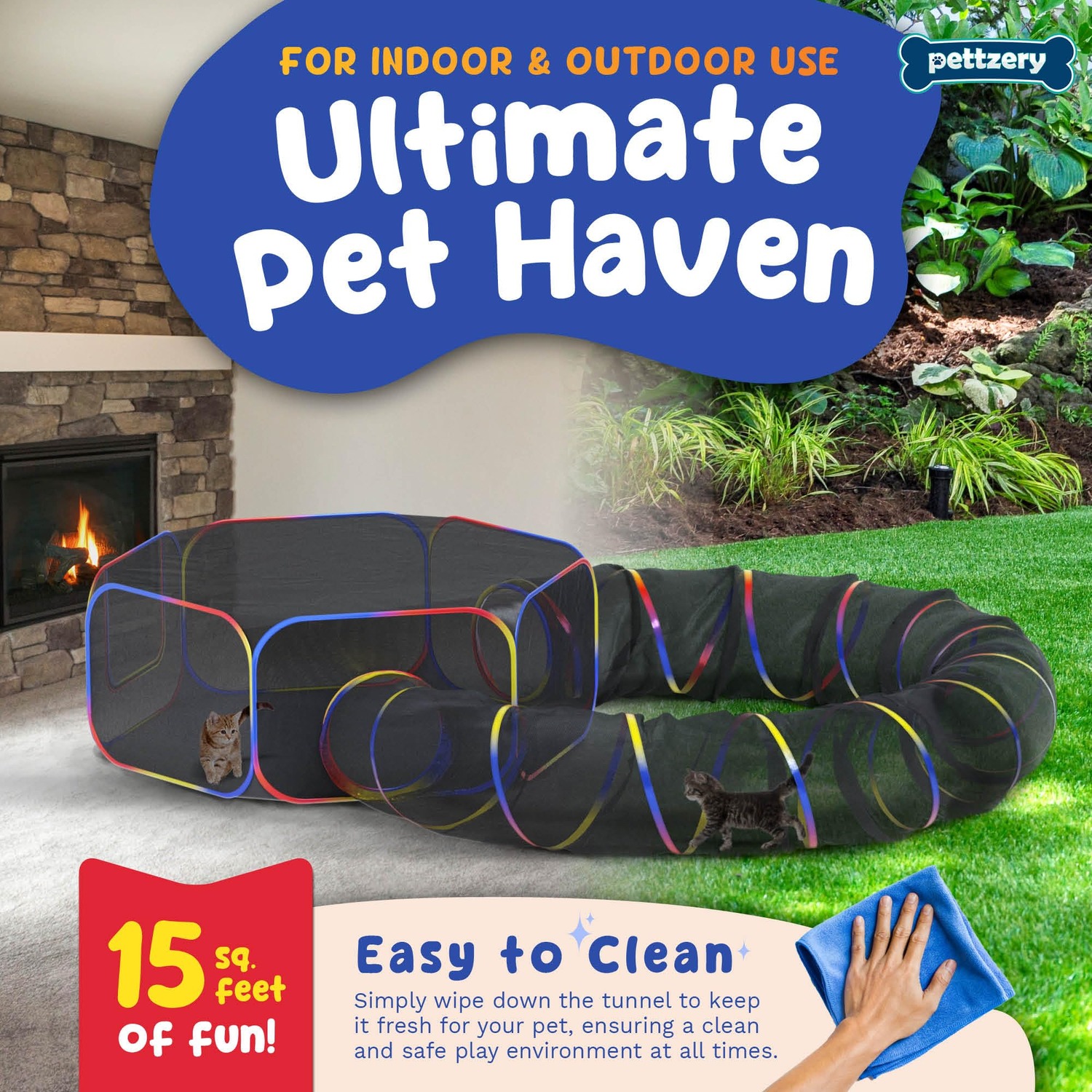
Cleaning is simple. Shake out the fur and grass after each session. Spot clean with warm water and a mild pet-safe detergent when it needs it, then air dry fully before folding. Do not machine wash it and do not tumble dry it. Putting it away damp is the quickest way to end up with a musty tent and weakened mesh.
Check the zippers now and then. Run them slowly, keep fabric out of the teeth, and they will last. Zippers are almost always the first thing to fail on any pop up cat tent, and almost always because of a snag that got forced.
The short version
If your cat wants outside and you do not want them roaming, this gives you a middle path. The tent opens to a genuine 119.4 cm square, the tunnel zips on for extra space and better play, and the whole thing folds into a bag when you are done.
It is not a permanent structure and it is not meant to be left unsupervised. It is meant to be the thing you pull out on a nice afternoon, set up in a minute, and sit next to while your cat finally gets to roll around on actual grass.
For most apartment dwellers, renters and travellers, that is exactly the right amount of catio.