
The complete guide
Choosing a Pop-Up Cat Enclosure, A Practical Buyer's Guide
The problem every indoor cat owner knows
Your cat sits at the window. Ears forward, tail flicking, watching a bird hop around on the grass. You know exactly what they want, and you know exactly why you cannot give it to them. Roads, dogs, other cats, snakes, ticks, and the simple fact that an outdoor cat is a cat who might not come home.
So most of us compromise. The cat stays in, we feel a bit guilty, and the window stays the closest thing to outside they get.
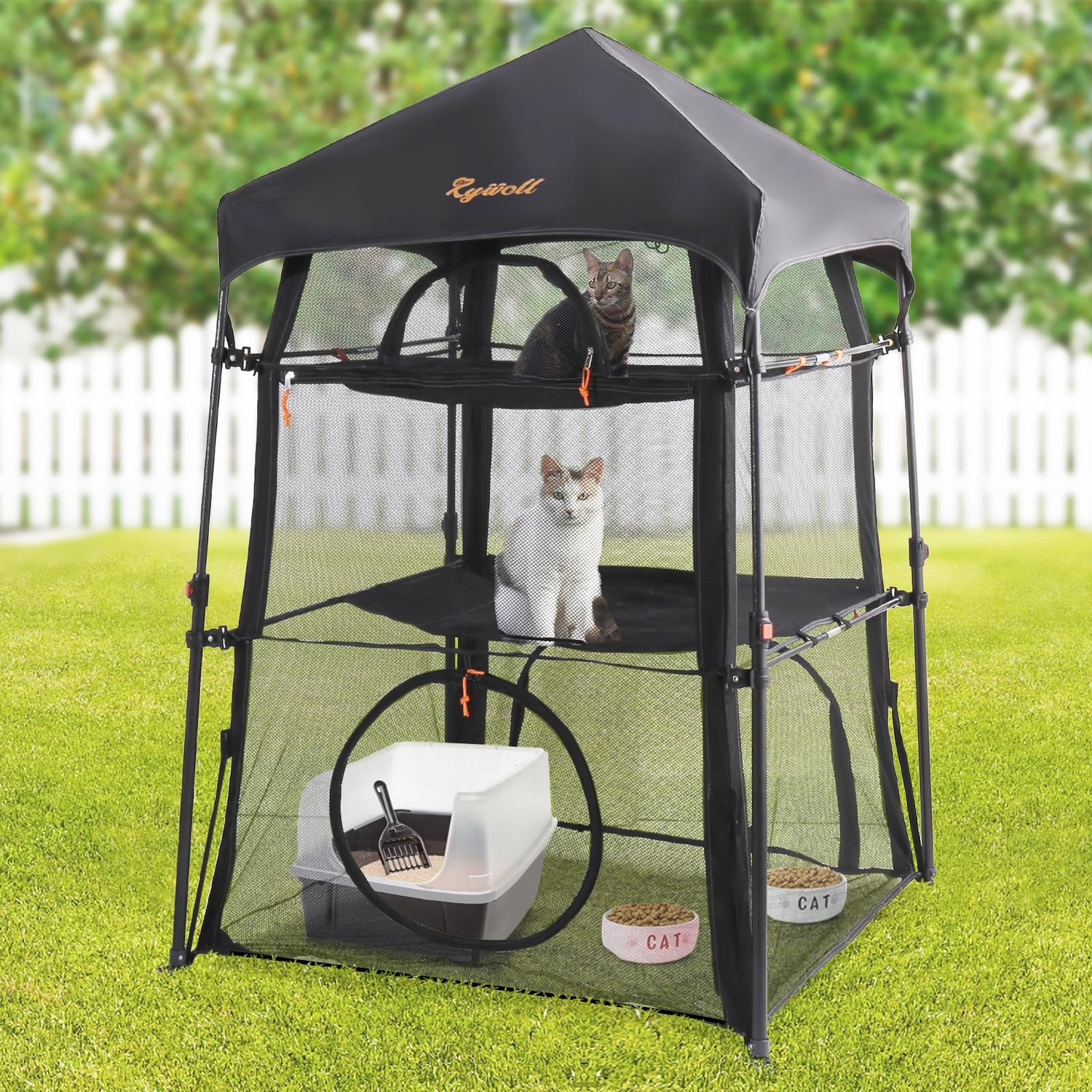
A pop-up cat enclosure fixes that without handing over any real risk. It puts your cat on the grass, under the sun, with birds and smells and moving air all around them, inside a mesh shell that nothing can get into and your cat cannot get out of. For a lot of households this is the single best thing you can buy for an indoor cat's quality of life.
How a pop-up enclosure actually works
The concept borrows from camping tents. A folded frame holds tension, and when you release it into position, the frame springs out and locks the fabric shell into a standing structure.
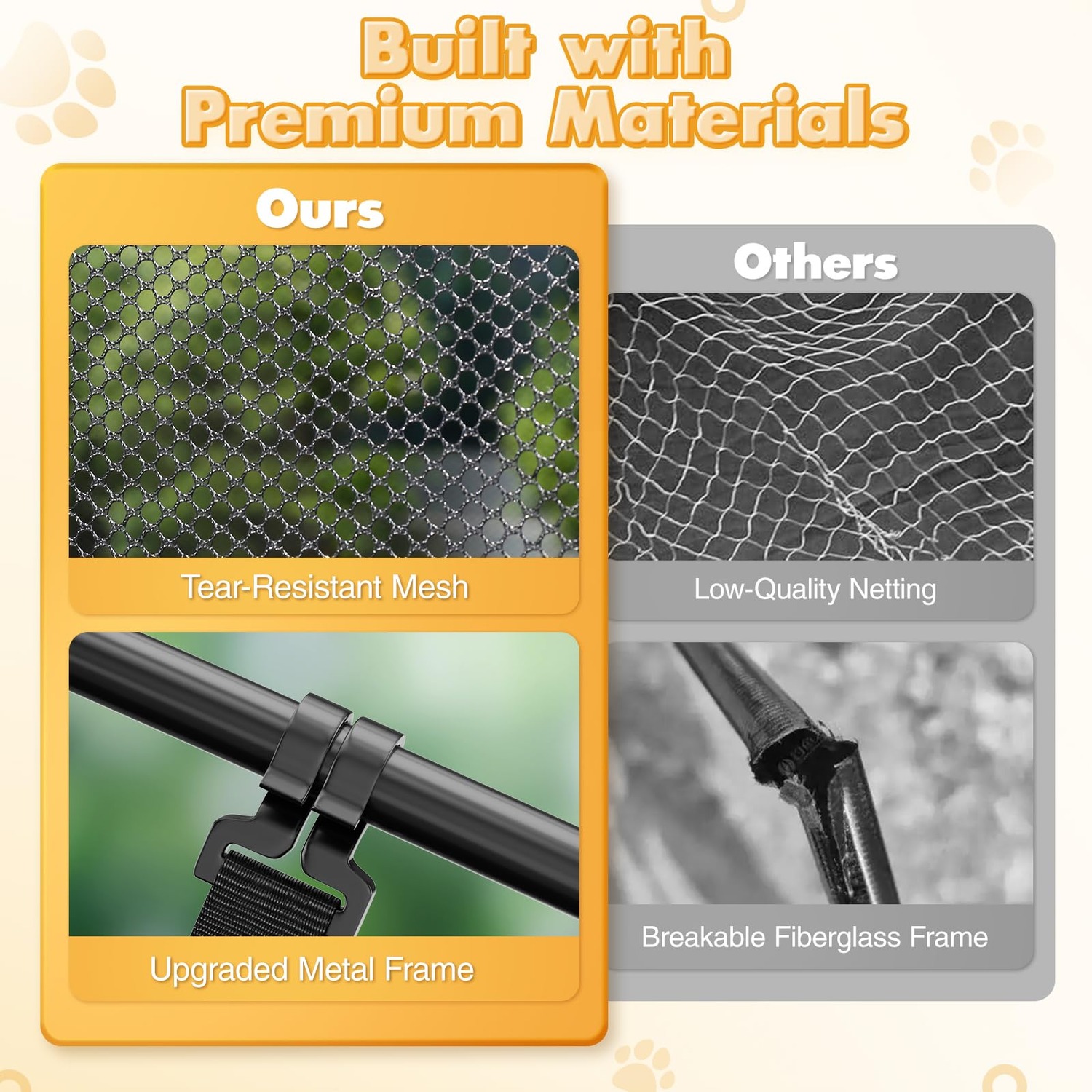
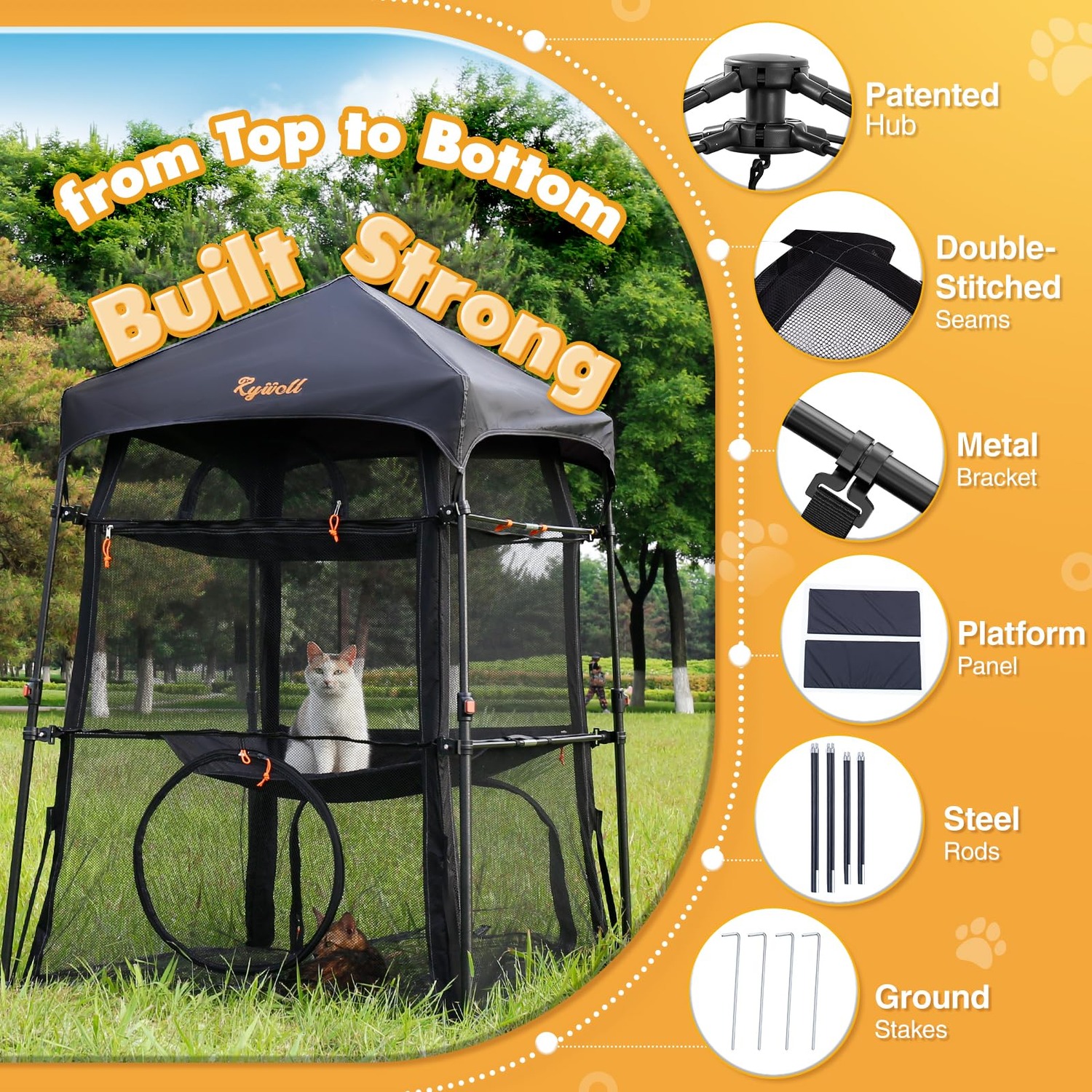
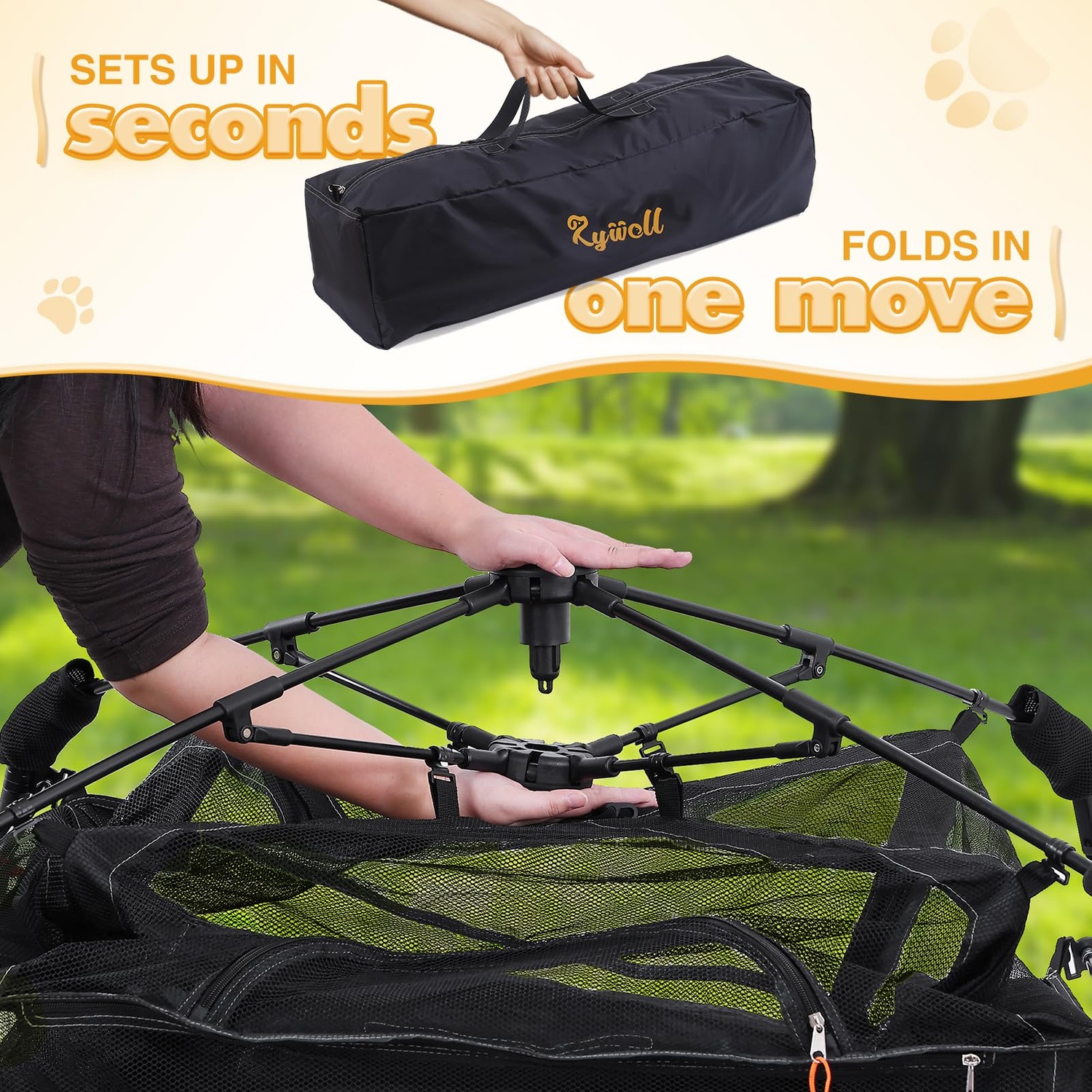
On this model, the frame is alloy steel and the mechanism works from a central hub. You hold the hub base and press the top section into its slot, and the enclosure stands up. To pack it away, you press the bottom support rods inward and it collapses back down. There is no threading poles through sleeves, no instruction sheet you have to read twice.
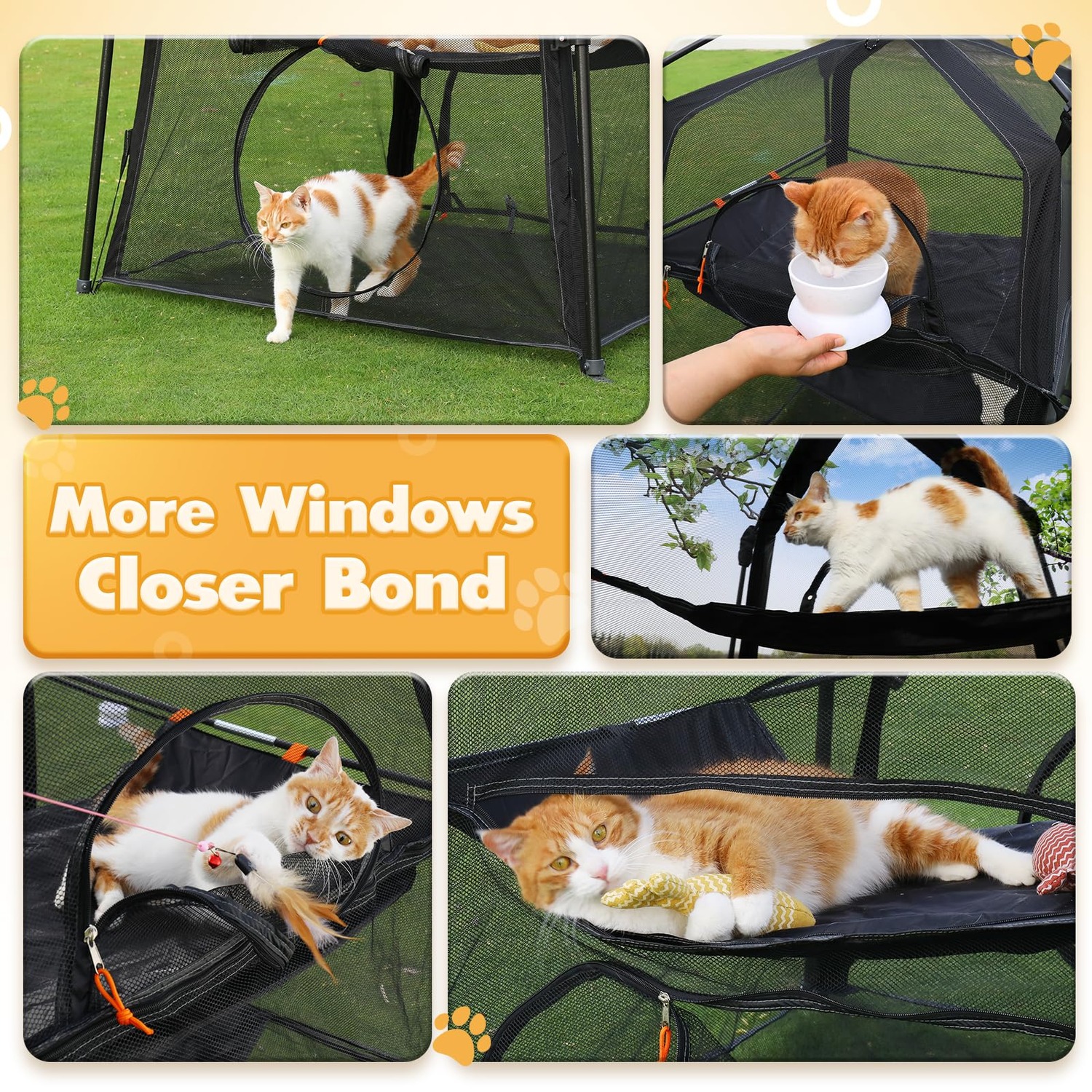
The shell is Oxford cloth with mesh panels. Oxford cloth is a tight basketweave fabric used for bags, tents and outdoor gear because it resists tearing and takes abrasion well. The mesh sections do the real work for a cat, because they let air move through, let your cat see out on every side, and let you see in.
Access is by zip. Zips matter more than people expect. A flap or velcro closure can be nosed open by a persistent cat, and some cats are very persistent. A zip stays shut.
At 110 x 110 x 145 cm, this sits in the large category. The footprint is a bit over a square metre, and the height is where the design gets interesting, because the interior is split into three levels. Cats want to be high up. A single-floor pen is fine for containment but boring. Levels turn the same square metre into something a cat will actually choose to spend time in.
Who this suits
Indoor cats with outdoor curiosity. This is the main case. A couple of hours in a mesh cat enclosure on the lawn, a few times a week, gives an indoor cat sensory input they otherwise never get.
Multi-cat homes. The three tiers mean two cats can be in the same enclosure without being in each other's face. They can stack vertically, which is how cats naturally share a space.
People with balconies instead of gardens. A cat enclosure for balcony use has to be contained and stable. This one has a square footprint that fits most balcony spaces. You will need weights rather than pegs on a hard surface.
Campers and travellers. It folds into a carry bag and weighs 5.9 kg. If your cat travels with you, having a safe base at the campsite changes the trip entirely. A travel cat enclosure also works well at a holiday rental where you are not sure how cat-proof the place is.
Temporary separation situations. Introducing a new cat, isolating one who is recovering from surgery, or giving a kitten a contained space while the household adjusts. Mesh lets cats meet each other safely before they share a room.
Who it does not suit. If you want permanent, weatherproof, leave-them-out-all-day housing, this is not it. A pop-up tent is a supervised-use product. For permanent outdoor access you want a fixed timber or mesh catio bolted to the house.
How to choose, and what to check before you buy
Size against your space. Measure the patch of lawn, deck or balcony where it will live. You need the 110 x 110 cm footprint plus a bit of clearance to walk around it and peg the corners. Height is 145 cm, which clears most balcony railings and awnings but is worth checking under a low pergola.
Stability. This is the thing people underestimate with any pop-up frame. The enclosure is far steadier pegged down than standing loose. Tent pegs are included and you should use them every time you set up outdoors. On concrete or indoors, put something heavy on all four corners instead. A properly anchored outdoor cat pen barely moves. An unanchored one sways when a cat jumps between levels, which some cats find off-putting.
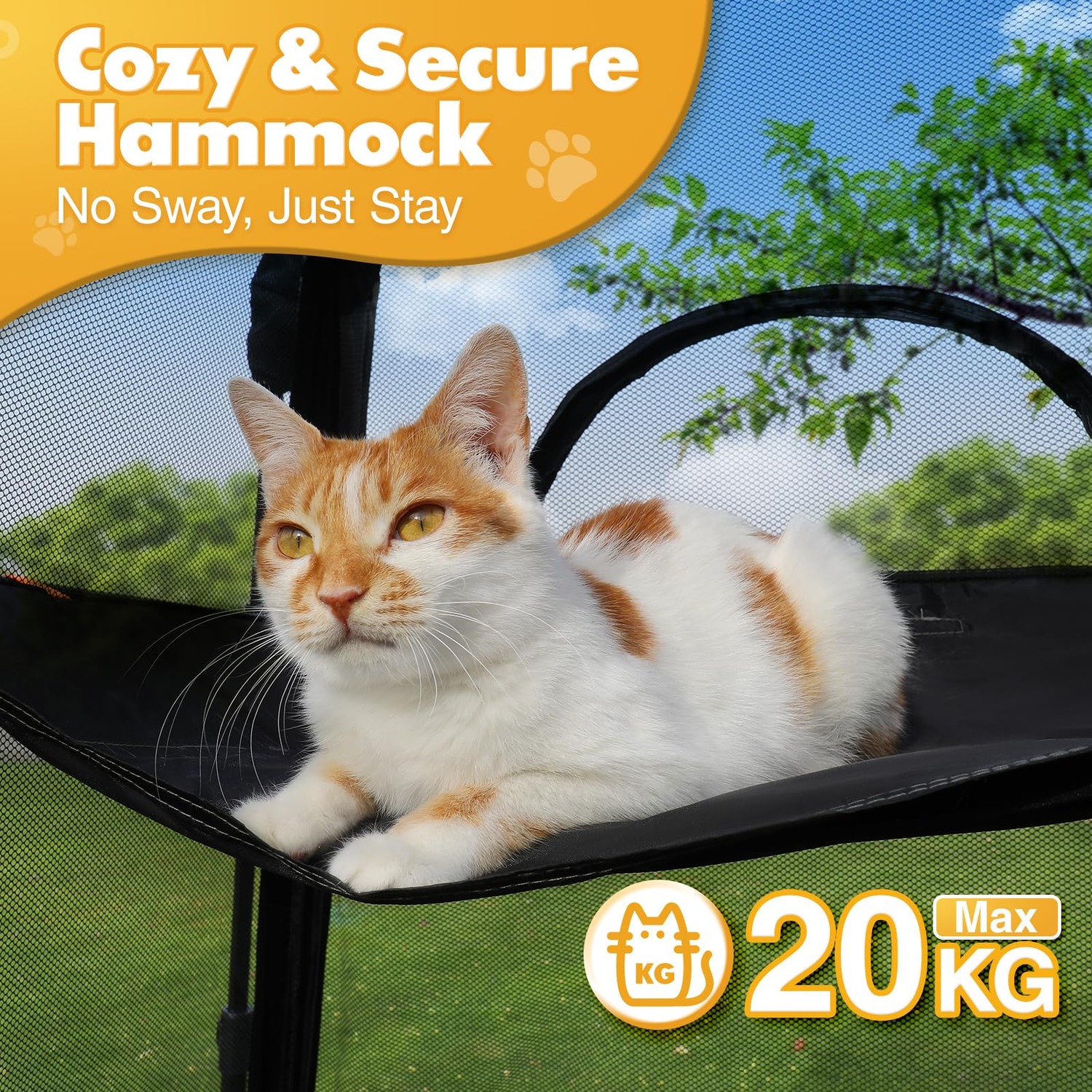
Levels and your cat's confidence. Hammock-style shelves have some bounce. Confident cats love it. Nervous cats need a slow introduction. Put a familiar blanket on the bottom level, leave the door open, and let them explore at their own pace. Treats on each tier do more than coaxing ever will.
Weight and portability. 5.9 kg is manageable for one person. If you plan to move it between the lawn and the car regularly, that matters. A heavier fixed structure gives you more stability but you will not be taking it camping.
Supervision plan. Decide now how you will use it. If the answer is "supervised sessions in the garden while I garden or read", this is ideal. If the answer is "leave the cat out there while I am at work", look at a fixed catio instead.
Setting it up well the first time
Pick flat ground. A slope puts uneven load on the frame and makes the levels sit crooked. Avoid gravel and rough stone where the fabric base will abrade.
Open the frame first, then peg the corners, then fit anything that goes inside. Pull the corners taut as you peg so the fabric holds tension and the levels sit flat. A slack enclosure is a wobbly enclosure.
Put a water bowl on the ground level, especially on warm days. Black fabric absorbs heat, so position the enclosure in shade during the hotter part of the day. Morning and late afternoon are usually the best windows.
For the first session, keep it short. Twenty minutes with you nearby is plenty. Most cats are cautious for five minutes, then start investigating. Build up from there.
Looking after it
Shake it out after each use to clear fur, grass clippings and litter. Wipe the fabric and mesh with a damp cloth and mild soap when it needs it, and let it dry fully in the open position before folding.
Dry the steel frame if it has been sitting on damp grass. Metal plus trapped moisture inside a storage bag is how frames get rust spots.
Check the zips and seams every few weeks. A zip that is starting to catch is easier to fix than one that has failed. Look over the mesh for any small holes, since a small hole in a cat enclosure becomes a large hole surprisingly fast.
Store it in the carry bag somewhere dry. Garage shelf, shed, wardrobe, anywhere out of direct sun and away from damp.
The short version
If you have an indoor cat who stares out the window, a pop-up cat enclosure is the most direct way to give them what they are looking at. This one is 110 x 110 x 145 cm with three internal levels, built on an alloy steel frame with Oxford cloth and mesh panels, closing with zips. It weighs 5.9 kg, packs into the supplied carry bag, comes with tent pegs and carries a 12 month warranty.
Peg it down properly every time. Use it in shade on warm days. Keep sessions supervised. Do those three things and you have a safe, portable catio that takes a minute to set up and gives your cat an entirely different kind of afternoon.