
The complete guide
How To Choose An Outdoor Cat Tunnel That Your Cat Will Actually Use
The problem with indoor cats and gardens
Indoor cats are safer. Nobody argues with that. Traffic, dogs, other cats, ticks, and the slow creep of a cat that decides the house three doors down has better food. Keeping a cat in solves a lot.
It also takes something away. Cats are built to track movement, smell weather changing, and sit in a warm patch of grass doing nothing in particular. A window sill gives them about ten percent of that. The rest they miss, and you can usually tell, because the cat who yowls at the back door at 6 am is not asking for breakfast.
An outdoor cat tunnel is one of the easier ways to split the difference. You get a contained space on the lawn. Your cat gets grass, wind, insects and sunshine without a clear path to the road. It is not a full catio build, it does not need planning or a drill, and it packs away when you are done.
How an outdoor cat tunnel works
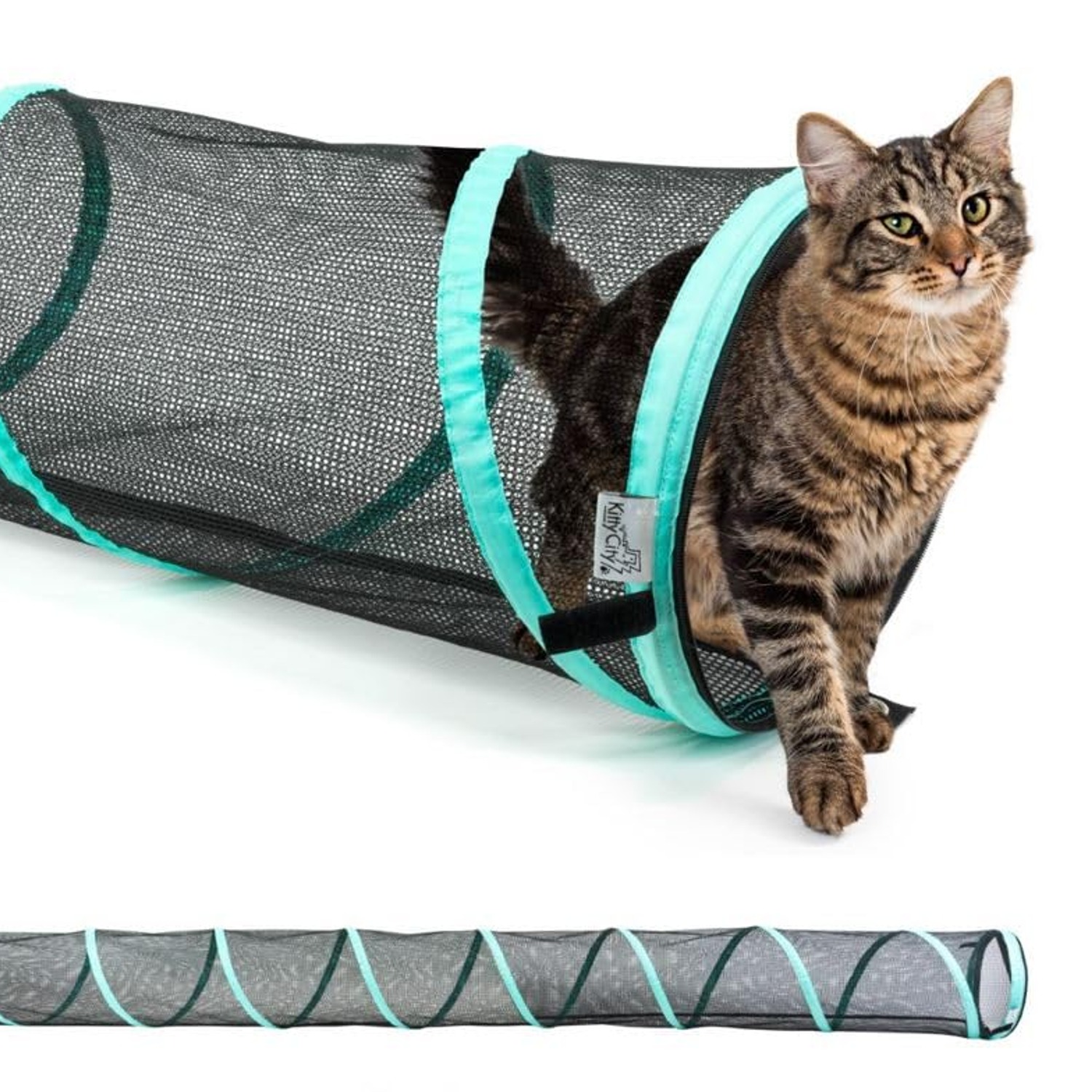
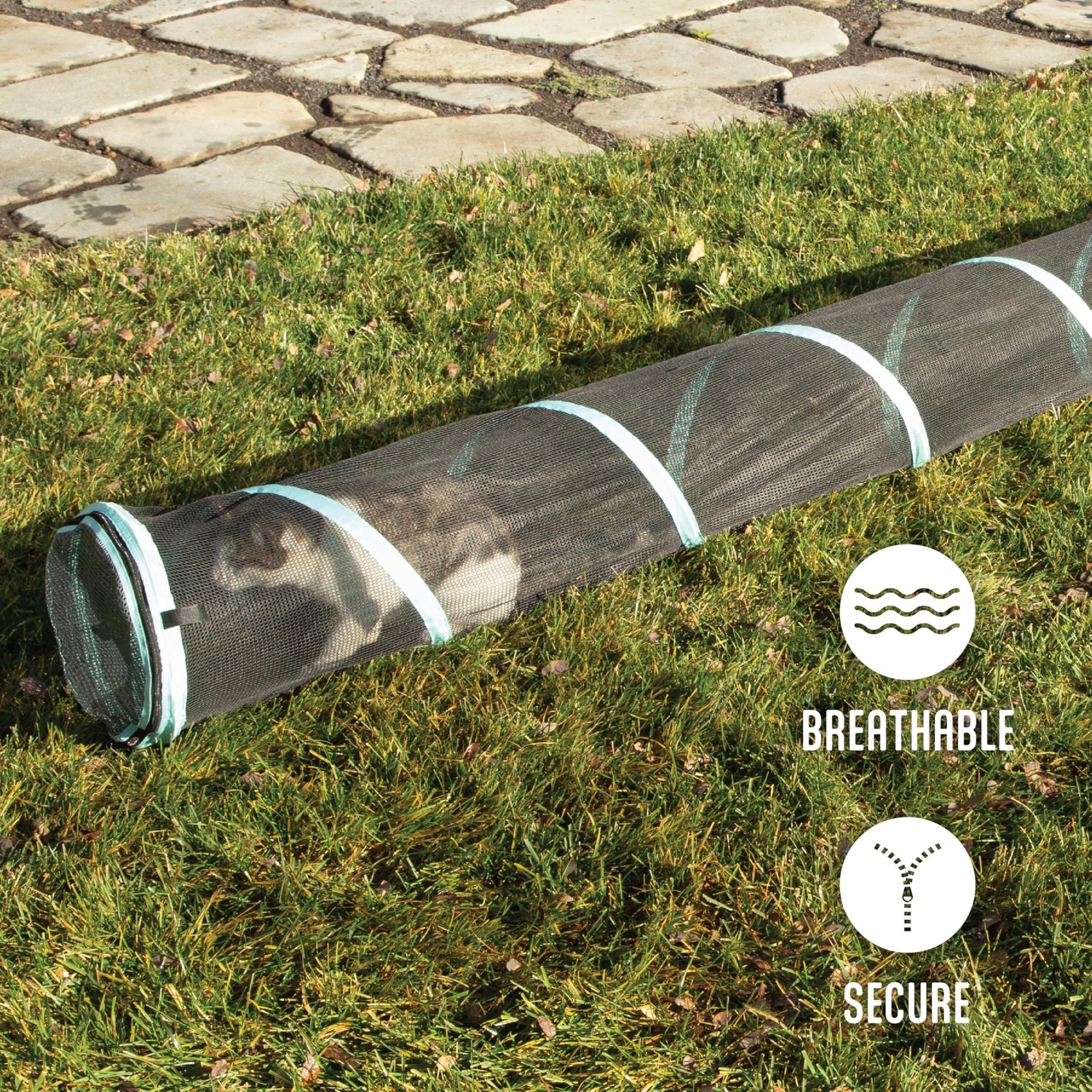
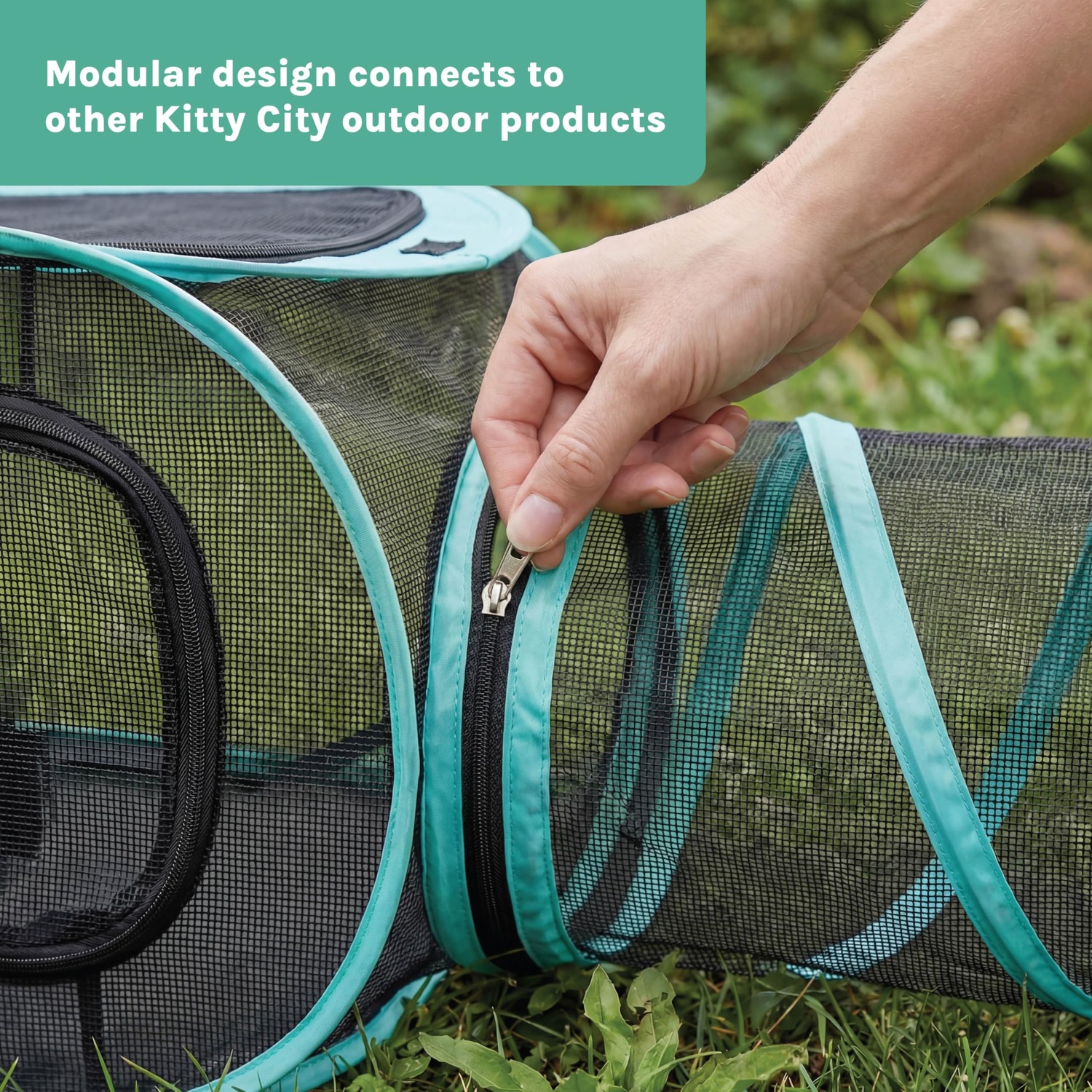
The idea is simple. A long fabric tube with a sprung frame holds its round shape when you unpack it. Both ends have zips. Stakes push through anchor points into the lawn so the tube stays put instead of rolling.
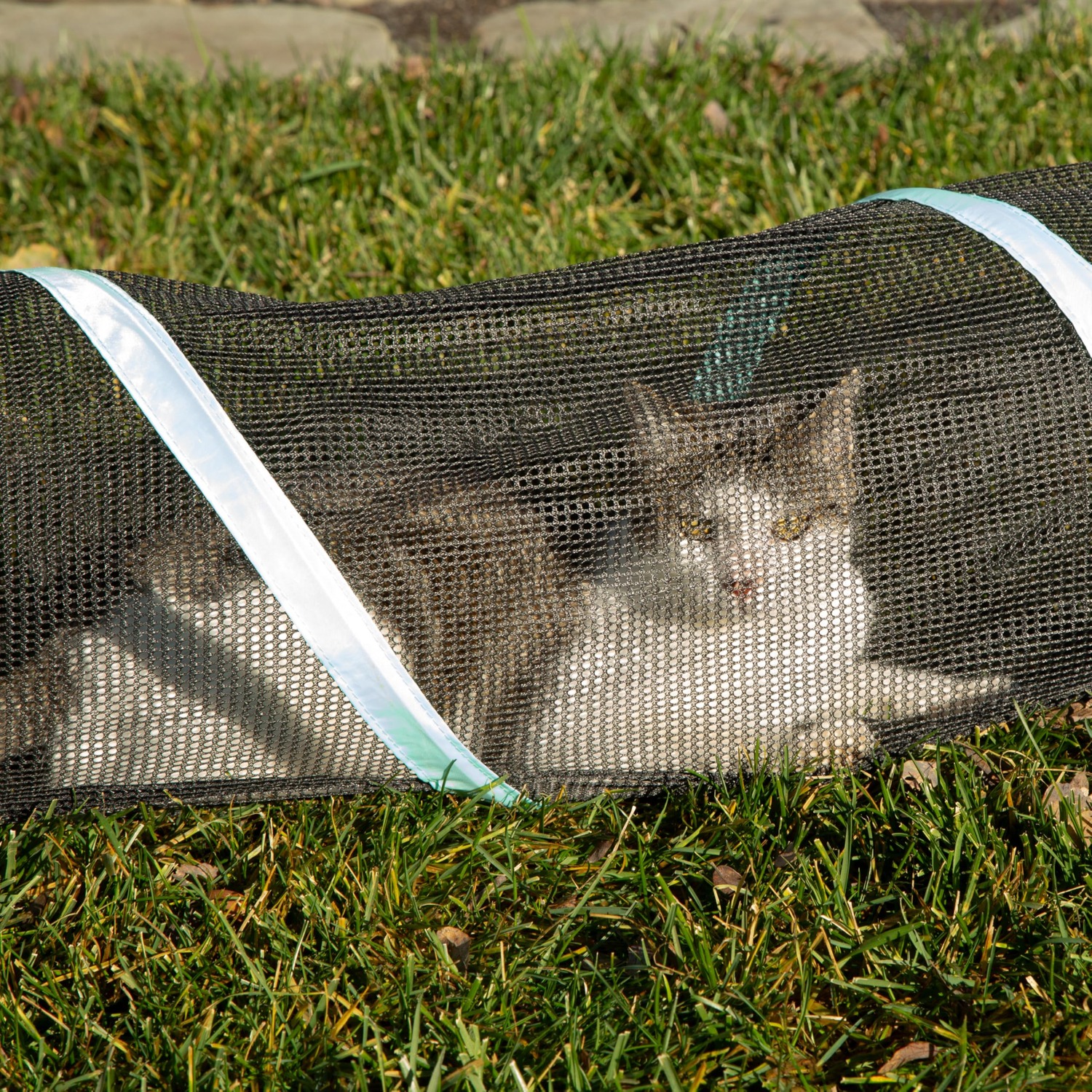
You set it up, you put the cat in, you zip the ends, and you stay nearby. That last part matters. A mesh cat tunnel is containment, not security. It stops a cat wandering off while you are sitting there with a coffee. It is not a structure you leave a cat zipped inside while you go to the shops.
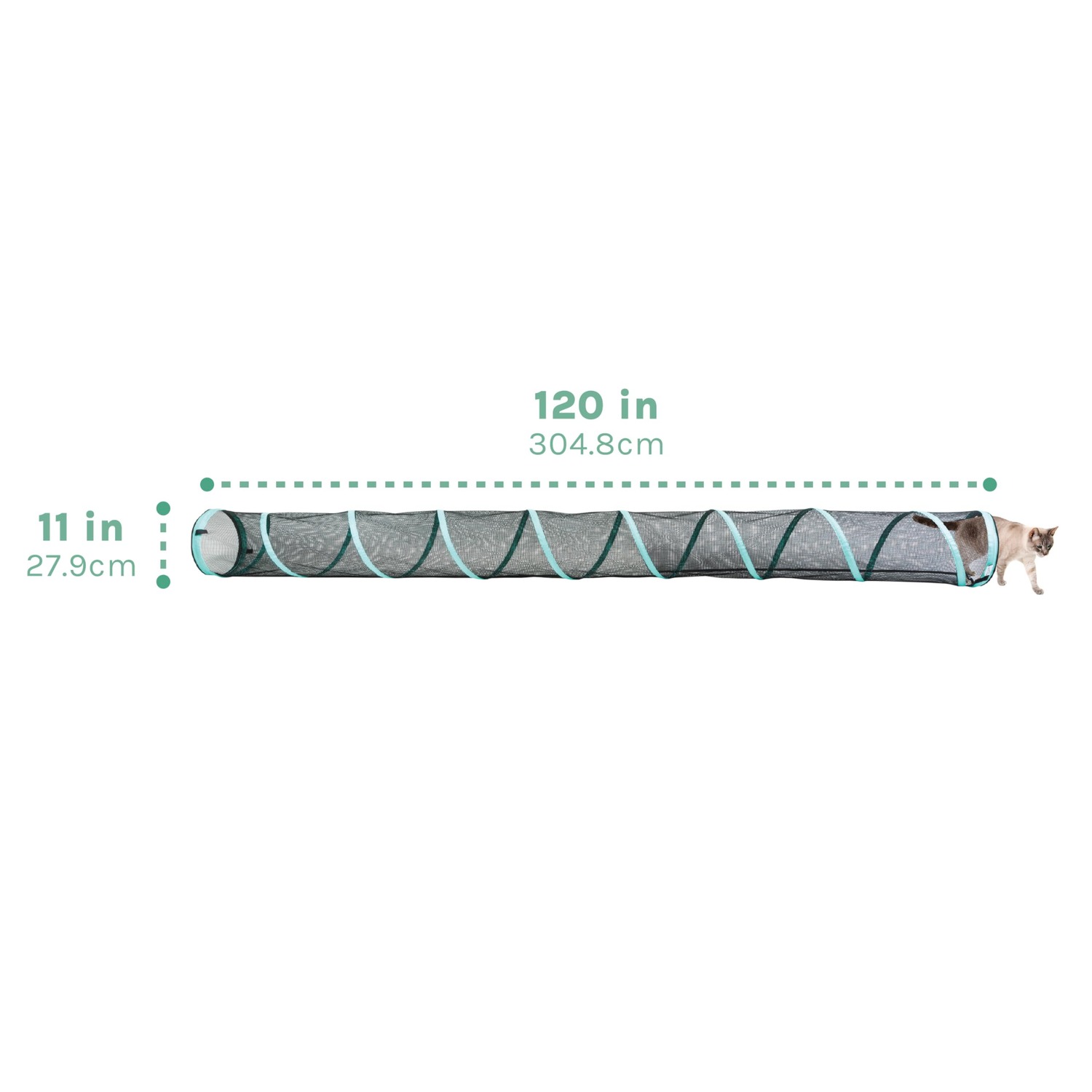
This particular tunnel runs 3.05 metres long with a 28 cm opening, so roughly ten feet of run. The whole thing weighs 816 grams. You pick it up with two fingers.
Why length matters more than you think
Short tunnels get a shrug. A cat sticks its head in, decides it is a box, and sits in it. That is fine, but it is not play.
Longer tunnels change the behaviour. Once a tunnel gets past about two metres, a cat stops treating it as a container and starts treating it as a route. They go in one end, build up speed, stop halfway to listen to something, then shoot out the far side. Then they do it again from the other direction. A 3 metre cat tunnel sits in that sweet spot where there is real distance to cover but it still fits across a normal suburban lawn.
Width is the other half of the equation. At 28 cm, this suits small to medium cats comfortably. A big adult cat will walk through fine, but turning around mid-tunnel will be a squeeze. If you have a very large cat, measure across the shoulders and be honest about it.
Who this suits
This works best for a few specific households.
Indoor cat owners with a lawn or courtyard get the most from it. Twenty minutes of staked-down outside time, a few times a week, changes the mood of an indoor cat noticeably.
Renters do well with it too. No fixings, no permanent structure, nothing to explain to a landlord. When you move, it folds into a bag.
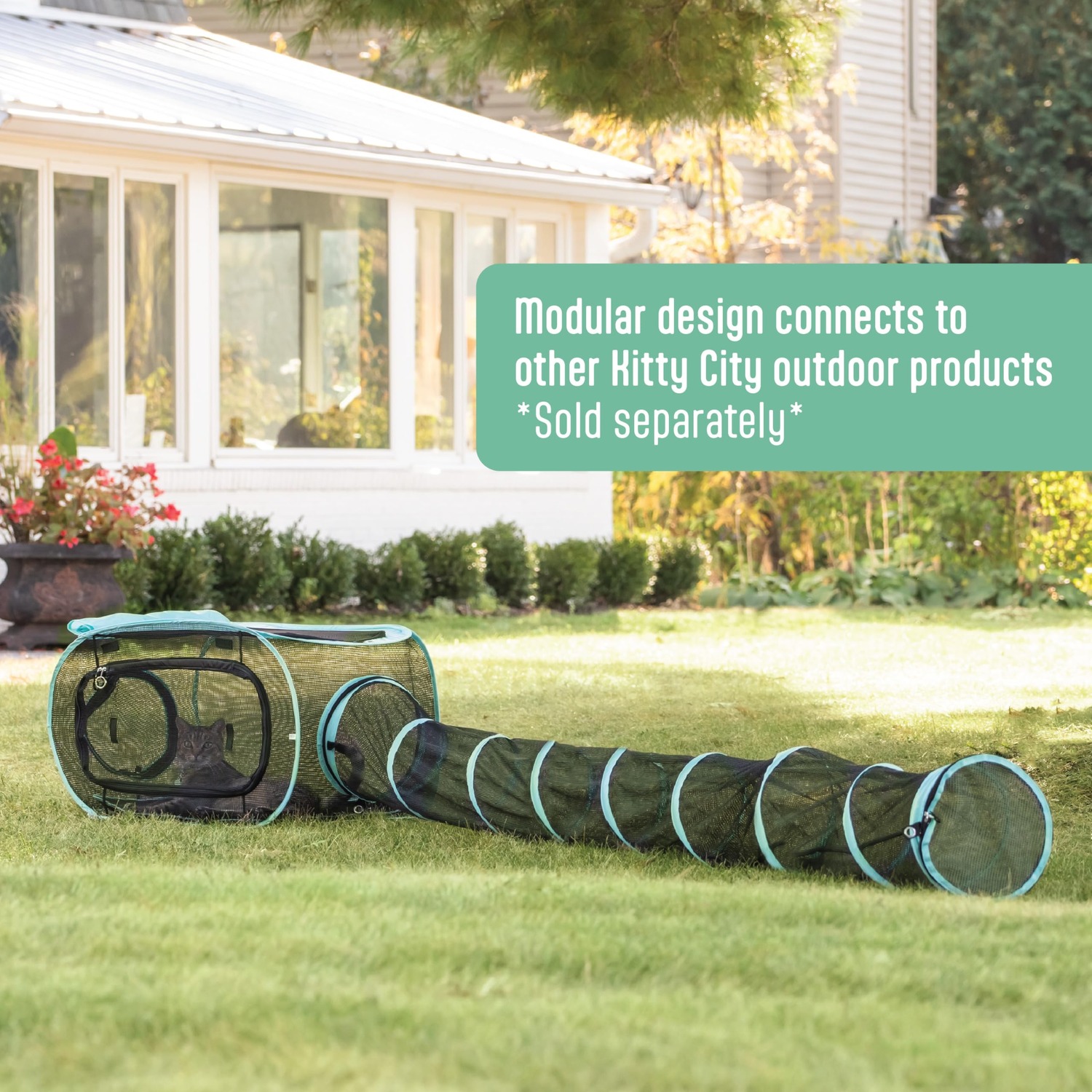
People who already have a catio can use it as a cat tunnel enclosure connector, extending a run from the structure out to a sunnier corner of the garden. Because it belongs to the Kitty City outdoor modular range and works with the Outdoor Mega Kit, it can be one piece of a bigger setup rather than the whole thing.
It is less suited to anyone wanting unattended all-day outdoor access. For that you want a solid-framed enclosure, not fabric.
What to look for when comparing tunnels
A few things separate a tunnel that lasts from one that frays in a season.
Check the ends. Zips at both ends are the whole point of an outdoor model. Open-ended tunnels are indoor toys. If both ends close, you have containment.
Check the anchoring. A cat tunnel garden setup without stakes will roll the first time a cat sprints through it, and a rolling tunnel with a cat inside is a bad afternoon. Ground stakes or anchor loops are not optional outdoors.
Check the fold. Portability only counts if folding it is quick. Collapsible cat tunnel designs that need a wrestling match get used twice. Practise the fold indoors once so you are not fighting it on the lawn.
Check the weight. Under a kilo means you carry it to the park, the grandparents' place, the holiday rental. This one is 816 g, which is genuinely one-handed.
Setting it up for the first time
Pick flat ground, ideally grass. Unroll the tunnel, let it spring into shape, and run the stakes in at the anchor points. Give both ends a tug to check the line is taut and there are no folds where the fabric has collapsed in on itself.
Leave the ends unzipped at first. Let your cat sniff the outside, walk around it, and go in when they feel like it. Pushing a cat into a tunnel is the fastest way to make them hate it permanently.
Treats work. Drop a few a metre in, then a few more further along. A wand toy dragged through from the far end works even better, because you are tapping into the chase instinct rather than bribing.
Once they are moving through happily with the ends open, start zipping one end. Then both. Keep the first full sessions short, around ten minutes, and build from there.
Some cats are through in five minutes. Shy ones can take a week of leaving it out before they commit. Both are normal.
Care and storage
The fabric is polyester, which is forgiving. Shake out the grass, leaves and hair after each use. Wipe it down with a damp cloth and mild soap, or run it through a gentle machine cycle if it has had a muddy week.
The important part is drying. Fold a damp tunnel away and you will open it next month to a smell you cannot get rid of. Let it dry fully in the air, out of harsh direct sun, then fold it flat.
Store it somewhere dry. A pillowcase or a storage bag keeps dust out of the zips. At the start of each season, run both zips end to end before you take it outside, and check the stake points for any fabric pulling.
Keep an eye on claws. Enthusiastic cats will pick at seams over time. Catching a loose thread early and snipping it is far easier than patching a tear later.
A few realistic expectations
It will not replace a garden. A cat that has always roamed will find three metres limiting, and that is fair. This product shines for cats who are indoors anyway and currently get zero outside time.
It will not survive a storm. Light fabric and wind do not mix. Pack up when the weather turns.
It will not entertain a cat forever on its own. Rotate it. Use it a few times a week rather than every single day, and it stays interesting.
And it genuinely does need you there. Think of it as a tool for supervised outside time, not a babysitter.
The short version
A 3.05 metre polyester tunnel, 28 cm across, weighing 816 grams, with zips at both ends and stakes for the ground. It folds down, travels well, and links into the wider Kitty City outdoor modular range if you want to build something bigger later.
If you have an indoor cat and a patch of grass, it is a cheap, low-commitment way to give them weather, smells and a run. Set it up, sit nearby, and let the cat decide how fast to take it.