
The complete guide
The Practical Guide To Choosing A Modular Catio
The problem with a cat who wants out
Nearly every indoor cat spends part of the day at a window, watching birds they will never meet. It is not a small thing. Cats that get no outdoor stimulation tend to put that energy somewhere less helpful, usually furniture, curtains or your ankles at six in the morning.
Letting them out solves the boredom and creates four new problems: cars, dogs, other cats and the local wildlife. In many councils and suburbs, free-roaming cats are discouraged or banned outright, and for good reason. Cats that roam live noticeably shorter lives.
A catio sits in the middle. Your cat gets grass under their paws, sun on their back and real smells in the air, inside a mesh shell that keeps everything else out. A modular catio takes that one step further by letting the space change over time instead of being fixed on day one.
How a modular enclosure actually works
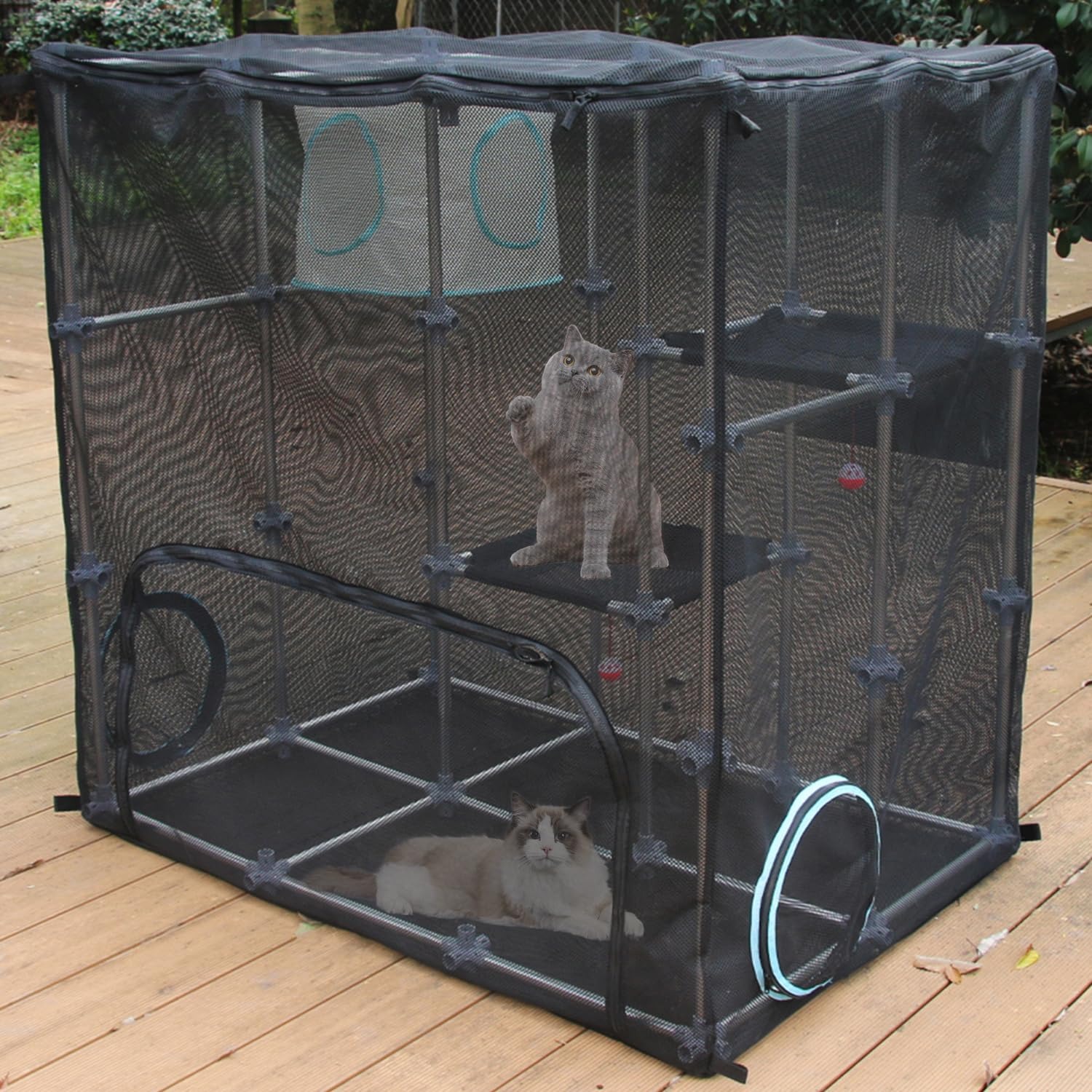
The structure is simple. Aluminium bars form a rectangular frame, nylon mesh panels wrap the sides and top, and zips open and close the doors. This INTURN Mega Kit measures 119.4 centimetres square with 78.7 centimetres of height, which gives a cat room to walk a proper circuit rather than just turn around.
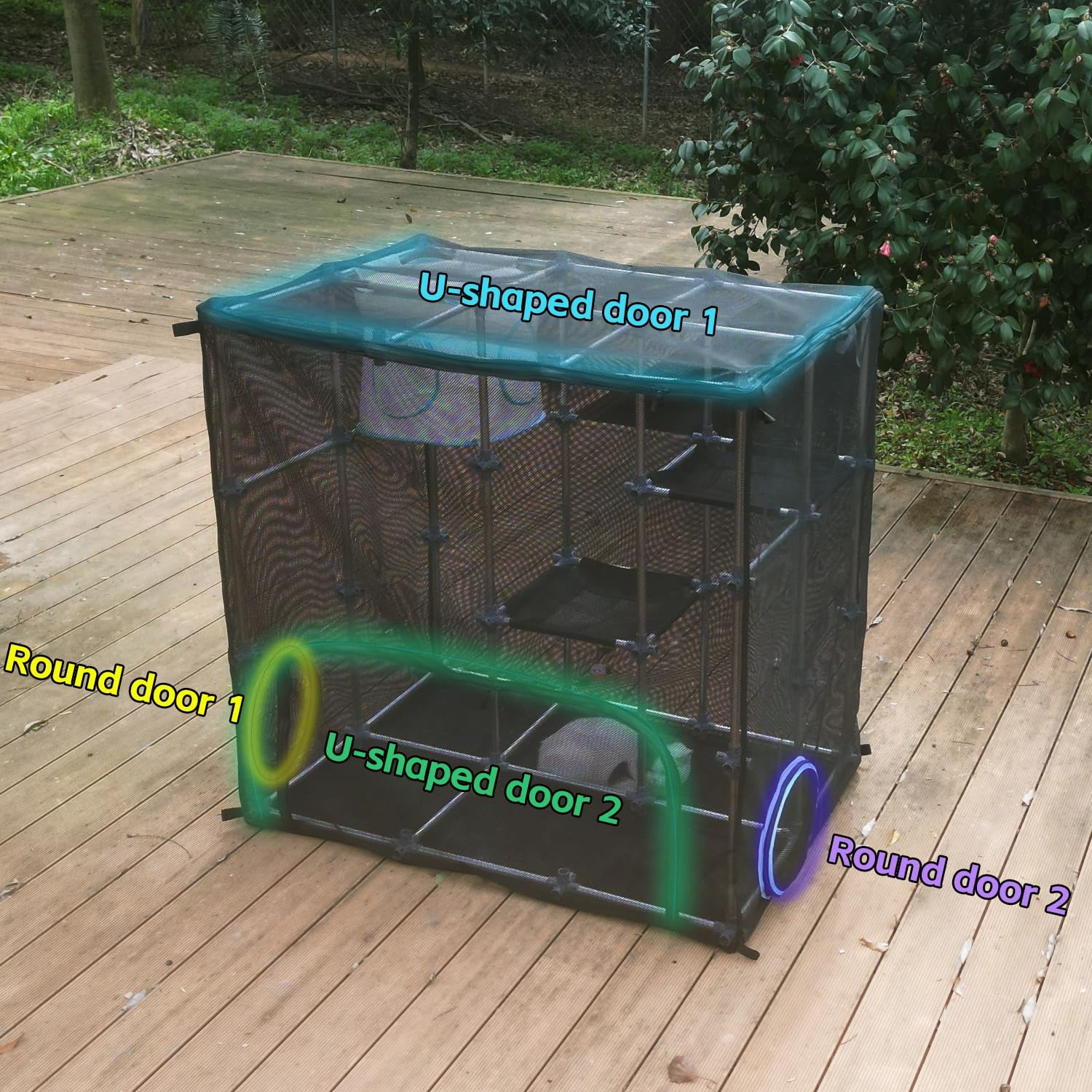
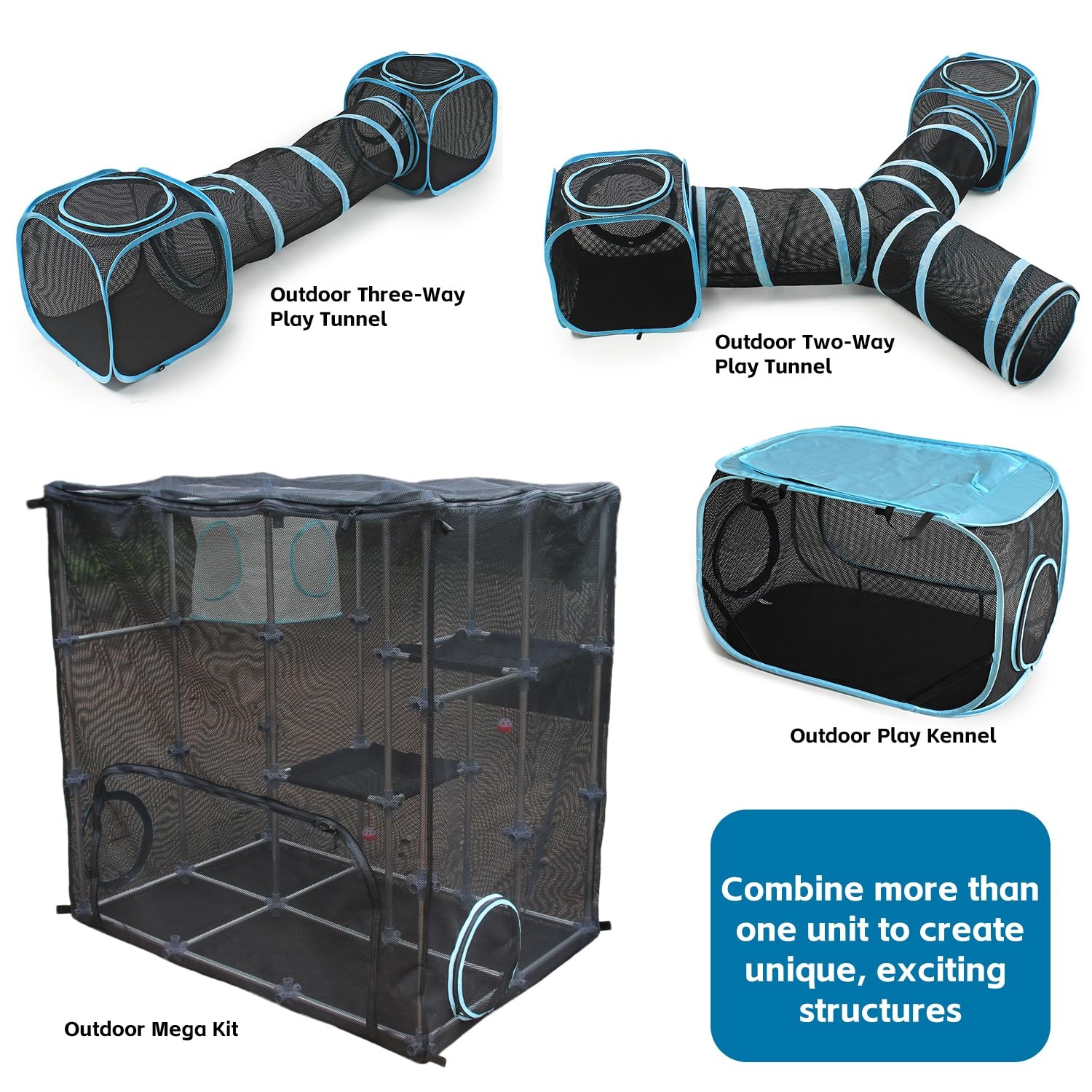
The modular part comes from the doors. There are double zip doors on both sides, and each one is sized to meet other INTURN products rather than just the open air. Unzip a side door, attach a tunnel, and you have extended the run. Attach a second section at the far end of that tunnel and you have a two-room cat playpen kit.
This matters because needs change. One cat becomes two. A courtyard gets rearranged. You move house and the old layout no longer fits the new yard. With a fixed enclosure, any of those means starting again. With a modular one, you add a piece.
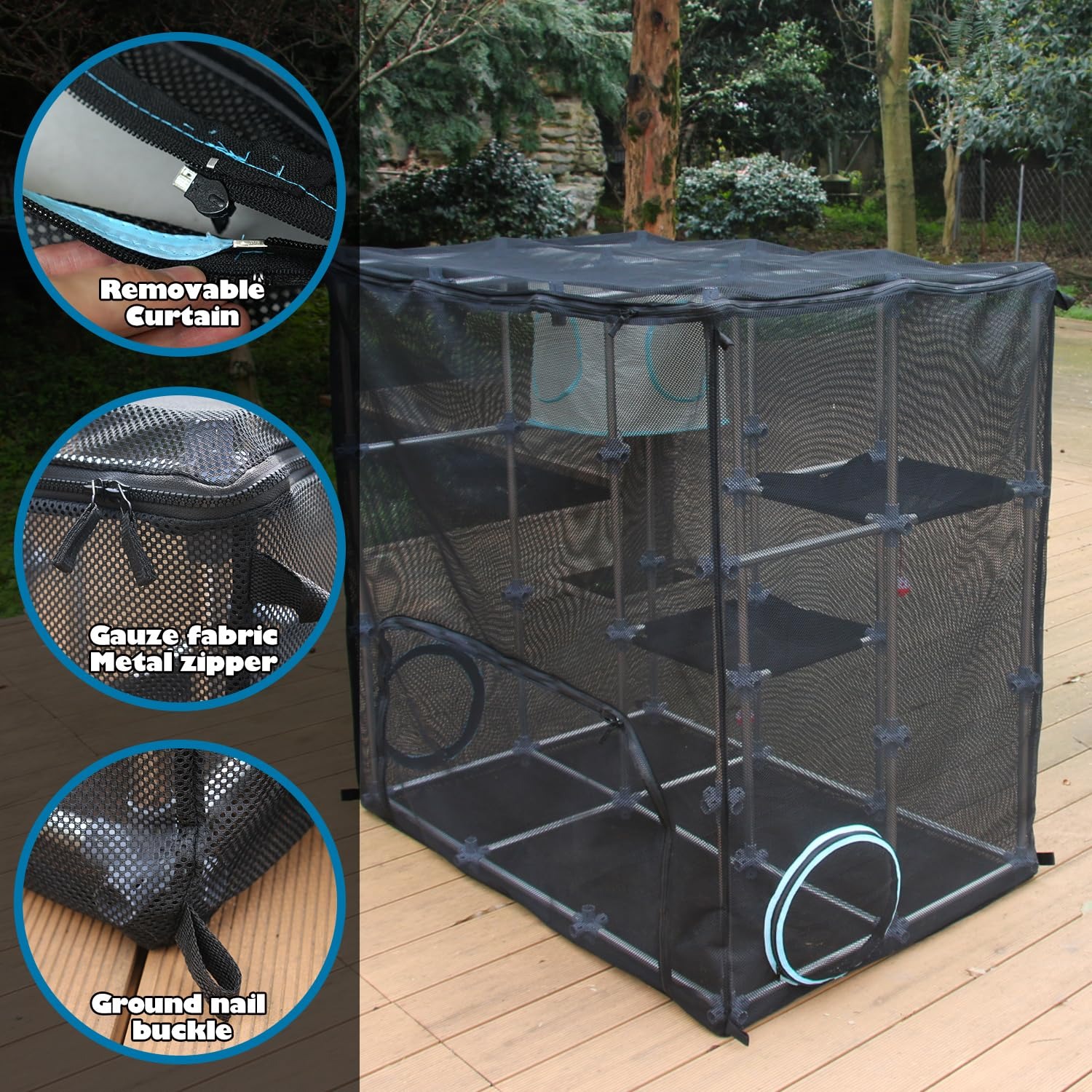
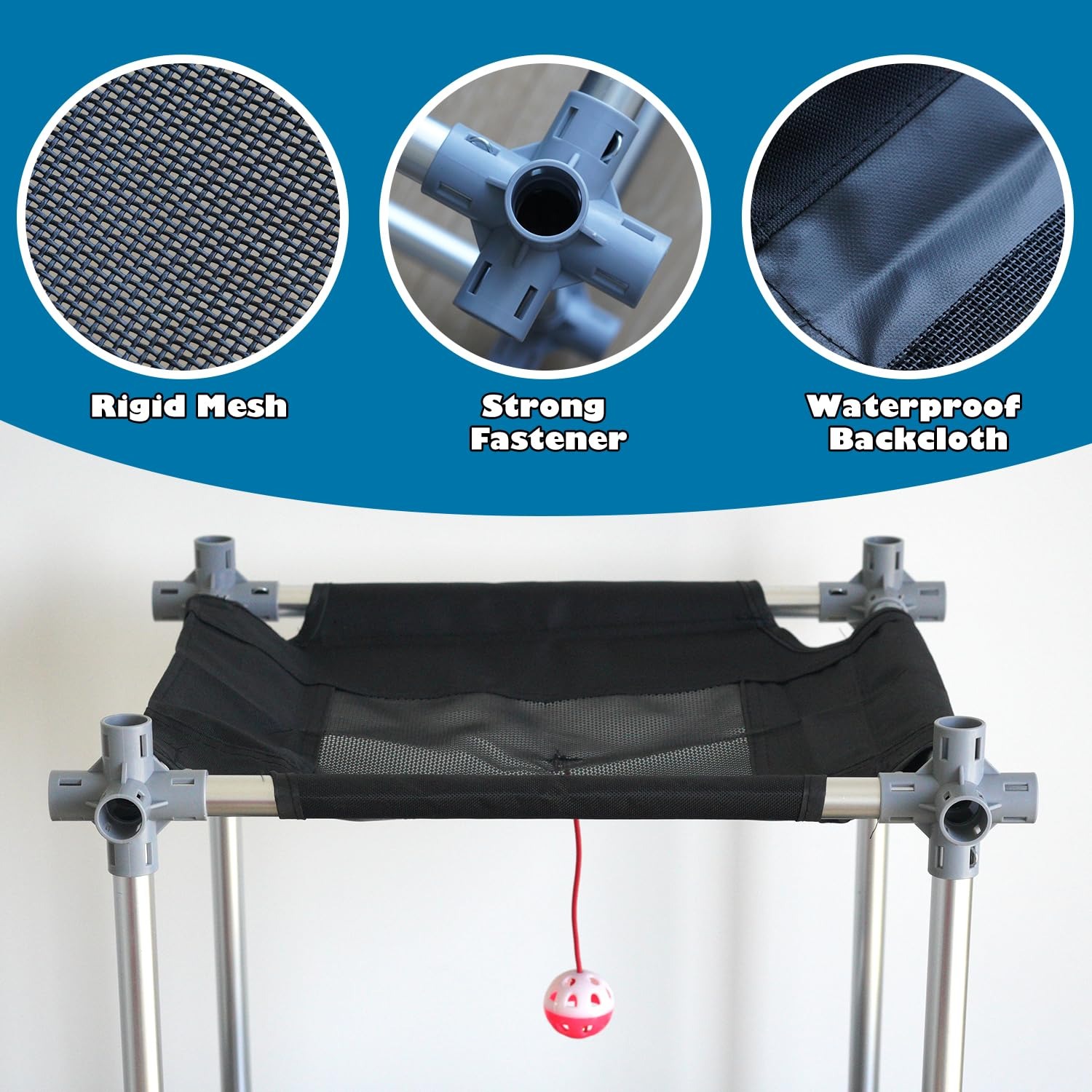
Aluminium was chosen over steel for a reason. It is lighter, so one person can lift and carry the assembled frame, and it does not rust the way untreated steel does outdoors. INTURN pairs the bars with improved locking joints, so the frame holds its shape once assembled rather than flexing every time a cat jumps at a wall.
Why mesh beats solid panels
Breathable nylon mesh does two jobs at once. First, airflow. A solid-sided pet shelter in the sun turns into an oven surprisingly fast, and cats are not always sensible about moving out of it. Mesh on every side lets a breeze pass straight through.
Second, visibility. You can glance out the kitchen window and see exactly where your cat is and what they are doing. Your cat can also see out, which is half the appeal. A cat sitting in a mesh catio watching a magpie is getting the stimulation they were missing at the window, just closer.
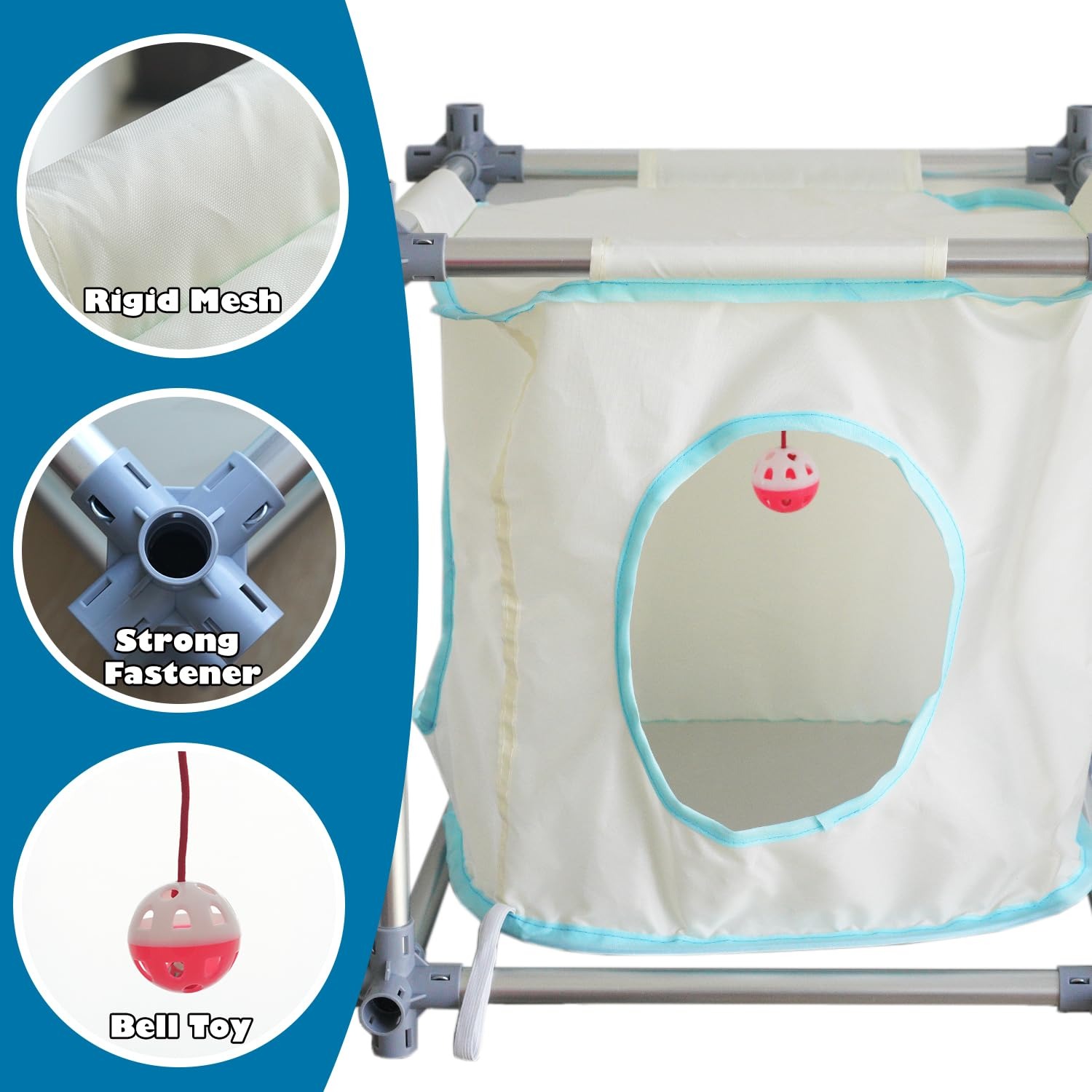
Mesh does have limits. It is not a rain roof and it offers very little shade. Position the enclosure where it gets natural shade for part of the day, or add a tent inside so there is always a covered corner.
Who this suits
Apartment and townhouse residents get the most out of it. A catio for apartments has to be something you can put up on a balcony or courtyard and take down again, and a bolted timber structure is usually out of the question for renters. A portable catio fits that life.
Owners of multiple cats do well here too, provided the cats already tolerate each other. The Mega Kit footprint gives room for two or three cats to coexist without constant contact. Add a hammock at height and a tent at ground level, and the confident cat and the shy one both get a spot they prefer.
It also suits people who travel with their cat. A pop up cat enclosure that packs flat goes in the car to a holiday house or a caravan park, and gives your cat a safe patch of ground somewhere unfamiliar. That is far less stressful than keeping them shut in a strange room.
Who it does not suit: anyone wanting a permanent, weatherproof, unsupervised outdoor housing solution. This is an enclosure for supervised or semi-supervised daytime use, not a kennel.
How to choose and set it up well
Start with measurements. The 119.4 by 119.4 centimetre footprint is the number that decides everything. Measure your intended spot including any door swing, and check the ground is reasonably level. Sloping ground puts uneven load on the frame joints.
Think about shade before you think about accessories. A sunny lawn feels lovely at nine in the morning and is unusable by one in the afternoon. Under a tree, beside a fence or against the shaded side of the house all work better than the middle of an open yard.
Then plan for growth. If you think you will eventually want an outdoor cat enclosure with tunnels, leave space on at least one side where a tunnel could run. Noting the model number, IT14330, makes it easier to match compatible sections later.
For the first introduction, keep it low-key. Set the enclosure up, put a familiar blanket or bed inside, and leave the door open so your cat can come and go. Sit nearby with a book. Most cats investigate within the first session. Nervous ones may need several short visits across a week before they relax enough to settle.
Never leave a cat zipped in and unattended for long stretches, especially early on. Check the zips are fully closed each time, because a partly closed zip is the single most common way a cat gets out of an enclosure like this.
Keeping it in good condition
Nylon mesh and aluminium are both easy to live with, but neither likes neglect. Spot clean the mesh with warm water and a mild, pet-safe detergent. Avoid bleach and solvents, which make nylon brittle, and avoid pressure washers entirely.
Let everything dry fully before you fold it. Packing damp mesh away is the fastest route to mildew and a smell you will never fully remove. Wipe the aluminium bars down after rain and give the locking joints a quick look before each setup.
Constant UV exposure is the main enemy of any fabric enclosure. If you can store it between uses, or at least keep it in shade, the mesh will stay strong for years longer. Zips benefit from an occasional clean too, since grit in the teeth is what eventually causes them to fail.
The short version
This INTURN Mega Kit is a 119.4 by 119.4 by 78.7 centimetre cat enclosure built from aluminium bars and breathable nylon mesh, with zip closures and double zip doors on both sides that connect to other INTURN pieces. It needs assembly, it packs down, and it can be carried by one person.
Buy it if you have an indoor cat, some outdoor space, and no interest in building something permanent. Buy it especially if you think your setup will change, because the ability to add a tunnel or a second section later is the whole reason to choose a modular design over a fixed one.
Just be realistic about what it is. It gives your cat safe, supervised fresh air. It is not a weatherproof shelter and it is not a substitute for you being around. Used the way it is meant to be used, it will change how your cat spends their afternoons.