
The complete guide
The Complete Buyer's Guide to Catio Kits
The problem with an indoor cat who wants outside
Indoor cats live longer. Most vets will tell you that, and the evidence backs it up. Roads, dogs, other cats, ticks and poisons all sit outside your front door. Keeping a cat in avoids most of that.
The trouble is that your cat has not read the research. They sit at the window making that chattering noise at birds. They bolt for the door whenever a grocery bag comes through it. They get restless in the evening and take it out on the curtains or on your ankles at 2am.
That restlessness is not bad behaviour. It is a bored animal with nowhere to put its energy. Cats are built to stalk, climb, hide and watch. A lounge room offers a fraction of that, no matter how many toys you buy.
A catio kit sits in the gap. It gives your cat real outdoor air, real sun and real grass smells inside a space you control. No walking-lead training. No fence modifications. No building permit. You set it up, your cat goes in, and for an hour or two they get to be an outdoor cat without any of the risk.
How a mesh catio actually works
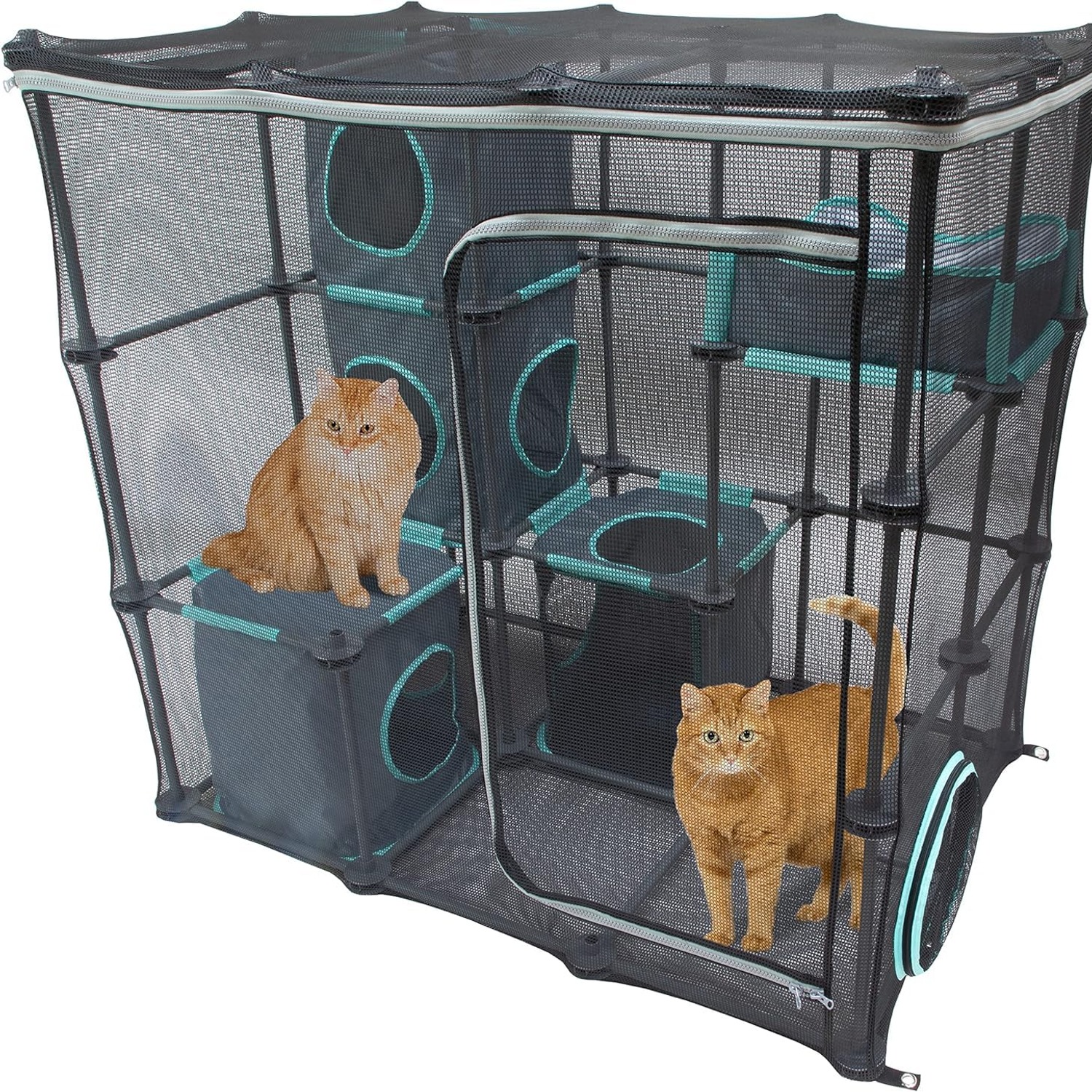
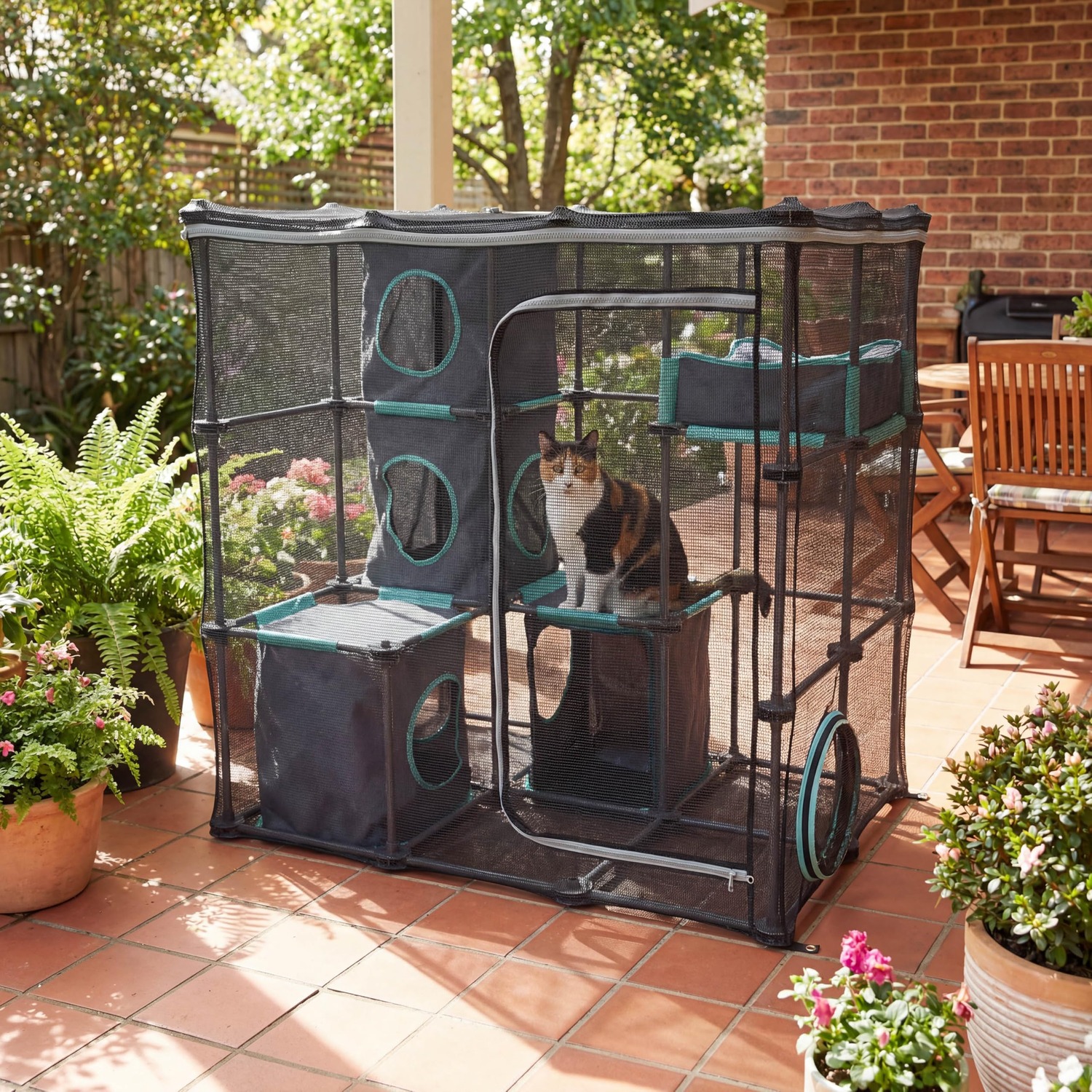
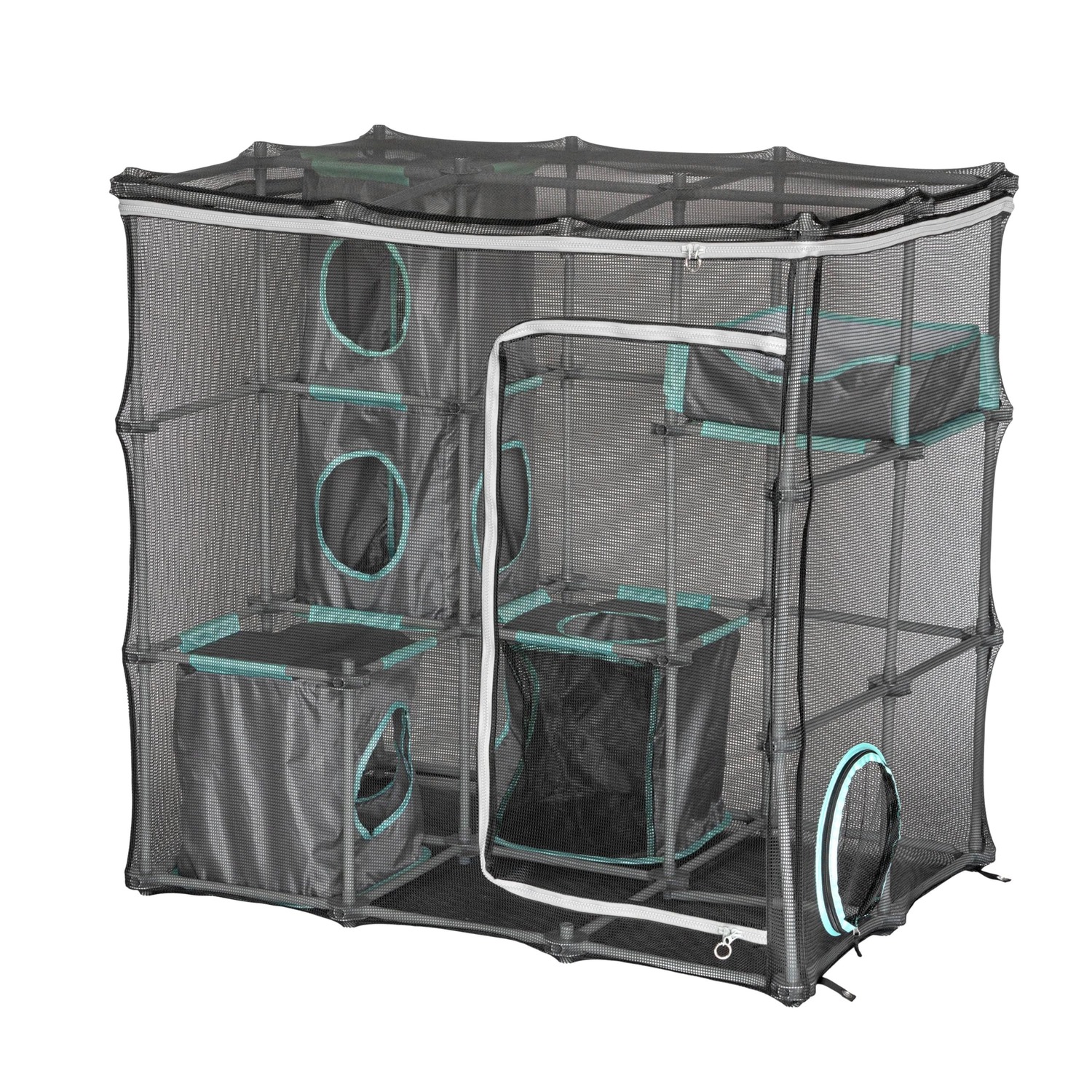
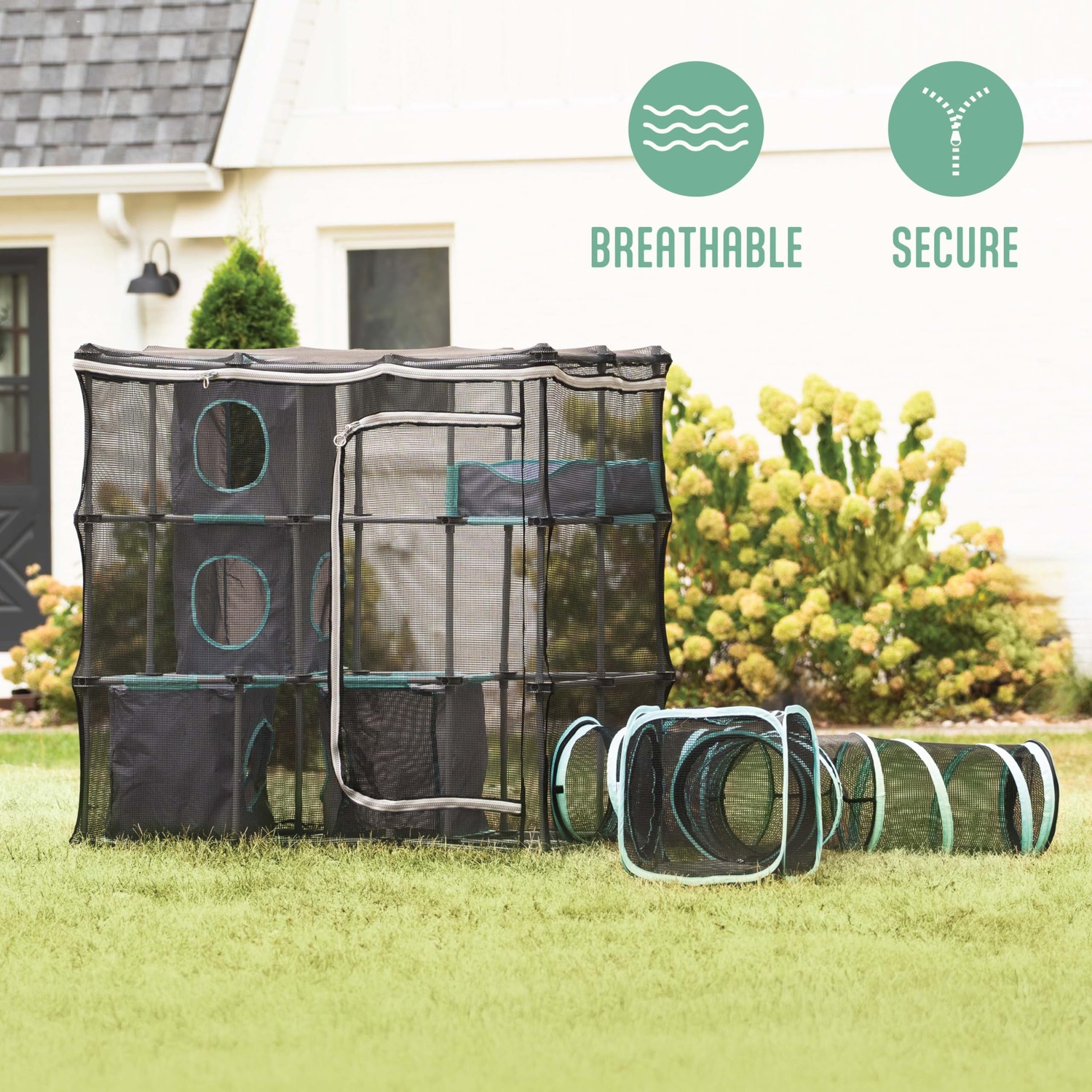
The idea is simple. A fully enclosed structure made of breathable nylon mesh, with a floor, walls and a roof, so there is no gap for a cat to slip through and no open top for them to launch out of.
Mesh matters more than solid fabric here. Air passes straight through it, so the inside does not become a hot box on a sunny afternoon. Light passes through too, which is the entire point. And your cat can see out, which is what they actually want. A cat in a mesh enclosure is watching birds, tracking insects and listening to the street. That is enrichment, and it is why they settle afterwards.
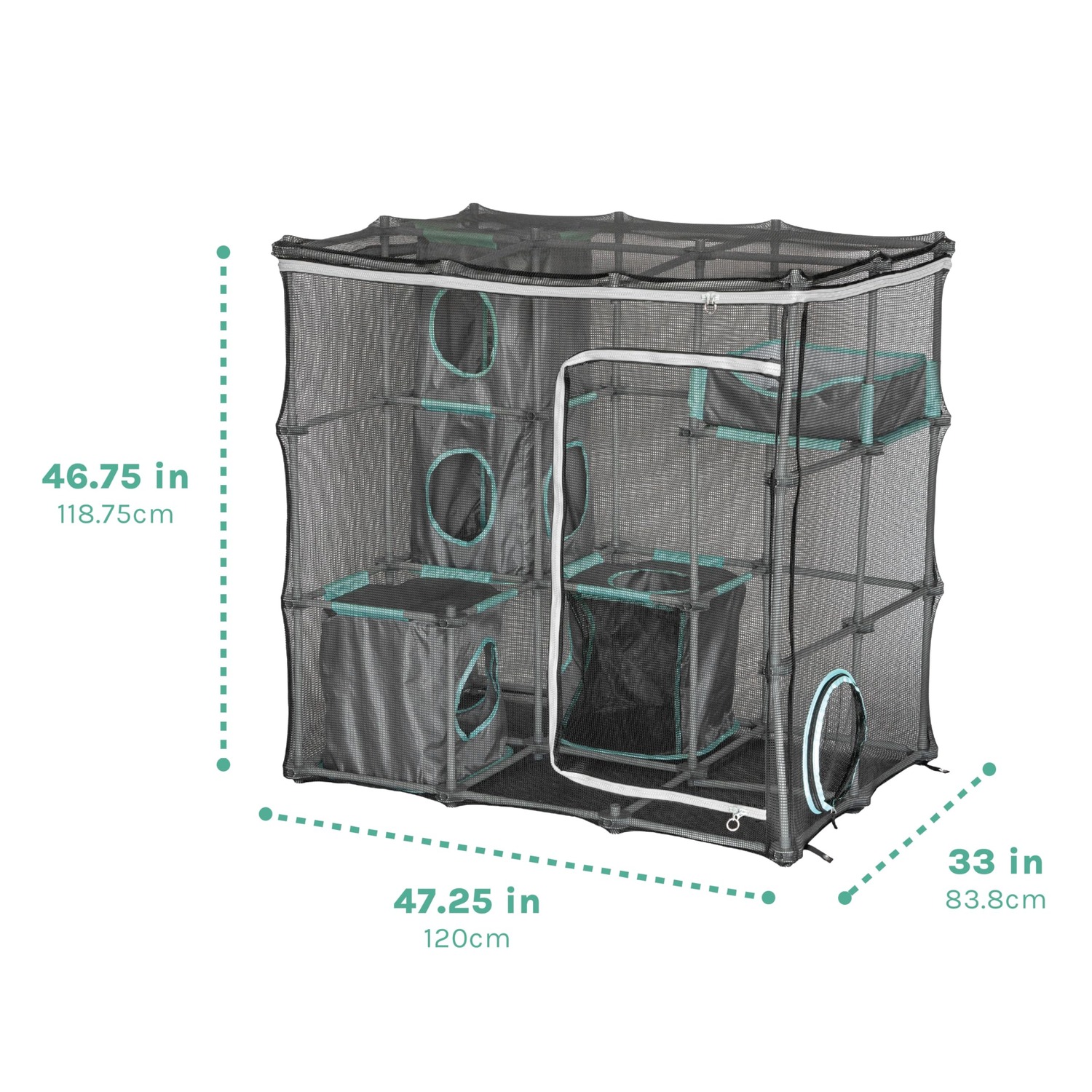
This particular kit measures 120 cm long, 83.8 cm wide and 118.7 cm high. The height is the number worth paying attention to. Plenty of cheap pet pens are knee-high, which means your cat can sit in them but not climb. At nearly 1.2 m tall, this one has three levels inside, so a cat can go up as well as across.
Inside there are cubby cubes. They are soft hideaways you can position wherever you like, and they serve two purposes. One is shade, since every cat eventually wants out of the sun. The other is variety. Move the cubes around every few weeks and the layout changes. A different route to the top level is enough to make a bored cat interested again.
Access is through a zip door in the side panel, sized for an adult to reach in properly. That sounds minor until the first time you need to top up a water bowl or lift out a cat who has decided to nap through dinner.
The tunnel port, and why it changes things
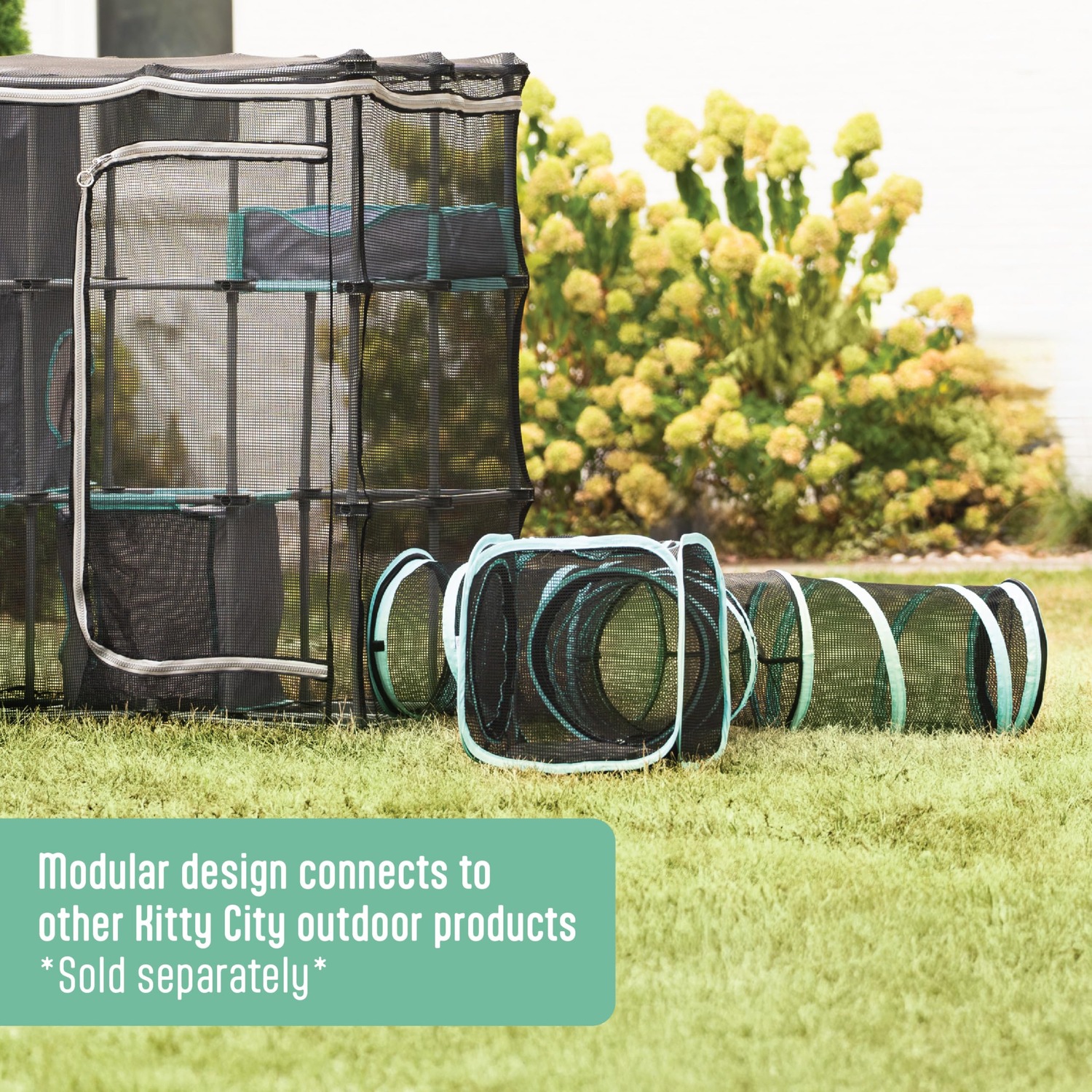
The feature that separates a decent mesh cat enclosure from a basic pen is the tunnel door. This kit has one.
What it means in practice is that your purchase is not a dead end. You can join this unit to other Kitty City mesh playsets using tunnels, so the enclosure grows as your budget or your cat's confidence grows. Two units joined by a three metre tunnel is a very different experience for a cat than one unit on its own. They get a destination, a route and a reason to move.
It also opens up the house-to-yard option. Run a tunnel from a doorway or a low window toward the enclosure and your cat can come and go without you playing doorman. The mounting type is listed as door mount, so this is a designed use rather than a hack. How well it works depends entirely on your own door and window layout, so measure before you commit to the idea.
If you have two cats who do not always get along, a connected cat enclosure system is genuinely useful. Each one gets their own zone with a shared corridor between them. They can choose contact instead of being forced into it.
Who this suits
Apartment owners get the most obvious benefit. No yard, no balcony cat-proofing, no landlord conversation. Set it up on the balcony or in the living room and your cat gets a change of scene.
Renters are in a similar spot. Nothing here is permanent. Nothing screws into a wall or gets dug into a lawn. At 5.35 kg the whole thing moves with you.
Multi-cat households are a strong fit. The floor space and the three levels mean two or three cats can be in there without crowding each other, and the cubbies give anyone who wants out of the chase somewhere to go.
Then there are the temporary uses. A new kitten who needs a safe zone while the resident cats adjust. A cat recovering from surgery who should not be jumping on furniture. A rescue cat who needs separating. A holiday rental where you want a familiar space for an anxious traveller. The kit works indoors just as well as out, which is what makes those uses practical.
Where it fits less well is as permanent unattended housing. This is a soft enclosure for supervised time, not a fortress you leave running day and night. Treat it that way and both you and the cat will get more out of it.
How to choose and set up
Start with the footprint. One square metre of clear, flat ground, plus room to walk around it. Check the spot for sharp sticks, stones and thorns before the kit goes down, because nylon mesh does not love being pressed onto a sharp object by a 5 kg cat.
Think about shade across the whole session, not just the moment you set up. Sun moves. A spot that is pleasantly dappled at 10am can be baking at 2pm. Either pick somewhere with stable shade or plan to shift the kit, which is easy enough given the weight.
Add something comfortable to the base. A towel, a mat, an old cushion. It makes longer sessions more inviting and it makes cleaning far quicker at the end.
Go slowly with the first few sessions. Open the zip door, let your cat walk in rather than lifting them in, and sit nearby. Ten minutes is plenty on day one. Most cats work it out fast, but a nervous one needs the enclosure to be their idea.
Water goes in for anything over a short visit. A small tray can go in too if you are planning longer stretches, though keep it well away from the cubbies.
Keeping it in good shape
Care is hand wash only, which keeps maintenance simple as long as you stick to it.
After each outdoor session, shake out fur, grass and grit. Spot clean marks on the mesh with warm water and a mild pet-safe soap. Skip bleach and solvents entirely, and do not put any of it through a washing machine or dryer. Machine agitation distorts mesh and pulls at seams.
The rule that matters most is drying. If the kit gets rained on or washed, open it out fully and let it air dry before folding. Damp nylon in a cupboard turns musty quickly and the smell is hard to shift.
Store it dry and out of direct sun. Leaving a mesh enclosure set up outdoors permanently will fade and weaken the fabric faster than anything a cat does to it. Pack it down between uses and it will last a lot longer.
The short version
An indoor cat who wants outside is not being difficult. They are bored. A catio kit gives them sun, air and something to watch without the risks that come with free roaming.
This one is a fully enclosed black nylon mesh enclosure, 120 by 83.8 by 118.7 cm, weighing 5.35 kg. Three levels, movable cubby cubes, a full-size side zip door and a tunnel port that connects to other Kitty City playsets. Suitable for all life stages, indoors or out, and roomy enough for more than one cat.
Set it on flat ground with shade, add a mat and water, supervise the first few visits, and dry it properly before you fold it away. Done that way, it is one of the easier things you can buy that genuinely improves a cat's day.