

The complete guide
Cat Tent and Tunnel Buying Guide, How to Give an Indoor Cat Safe Outdoor Time
The problem with keeping cats inside
Indoor cats live longer. That is well established, and it is why so many of us keep ours in. The trade-off is boredom. A cat who sits at the window for eight hours a day watching birds they can never reach is not having a rich life, and it often shows up as yowling at 3am, overgrooming, or picking fights with the other cat.
The obvious fix is a proper catio, a permanent screened structure attached to the house. Those are wonderful. They are also expensive, they need a landlord's permission, and they do not come with you when you move or go camping.
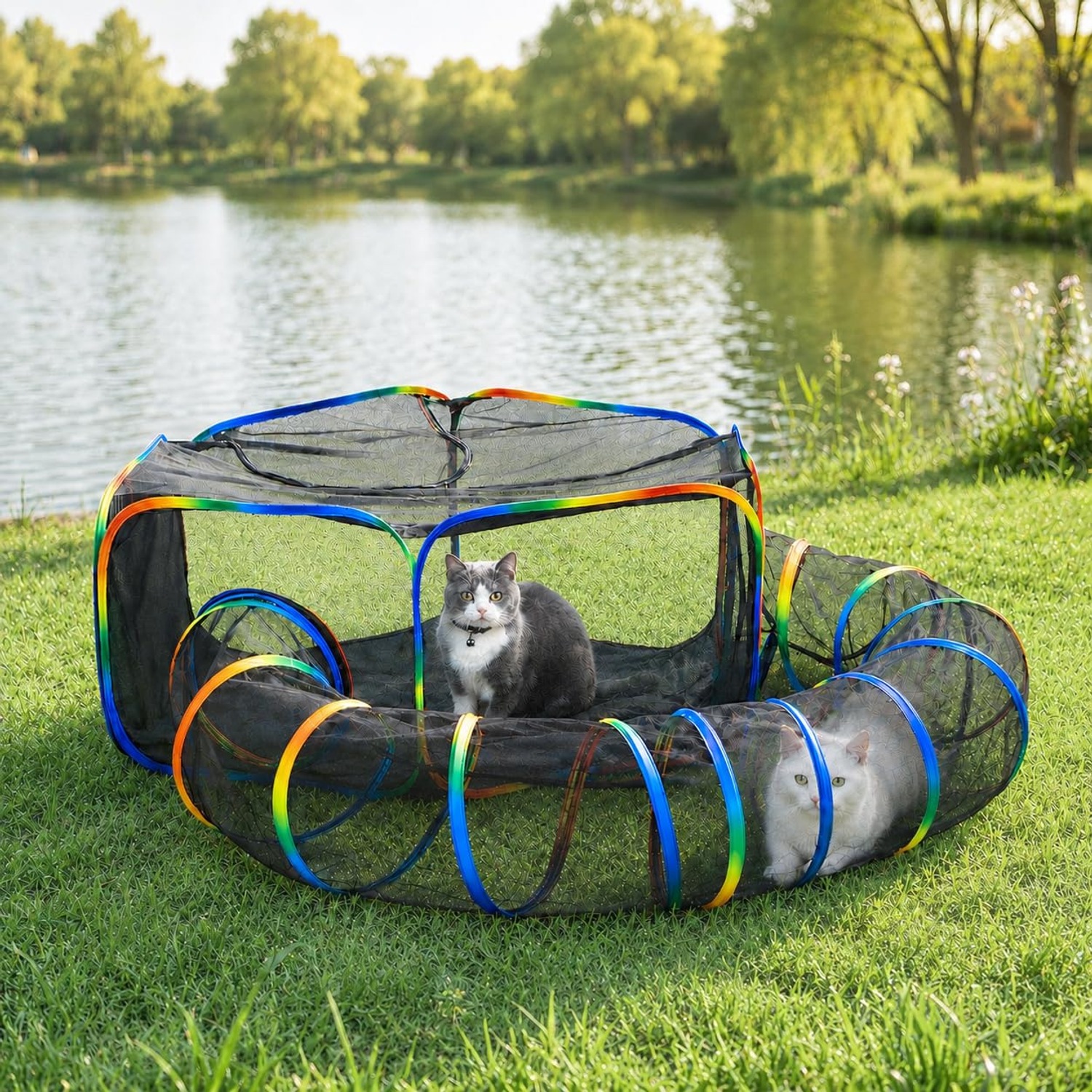
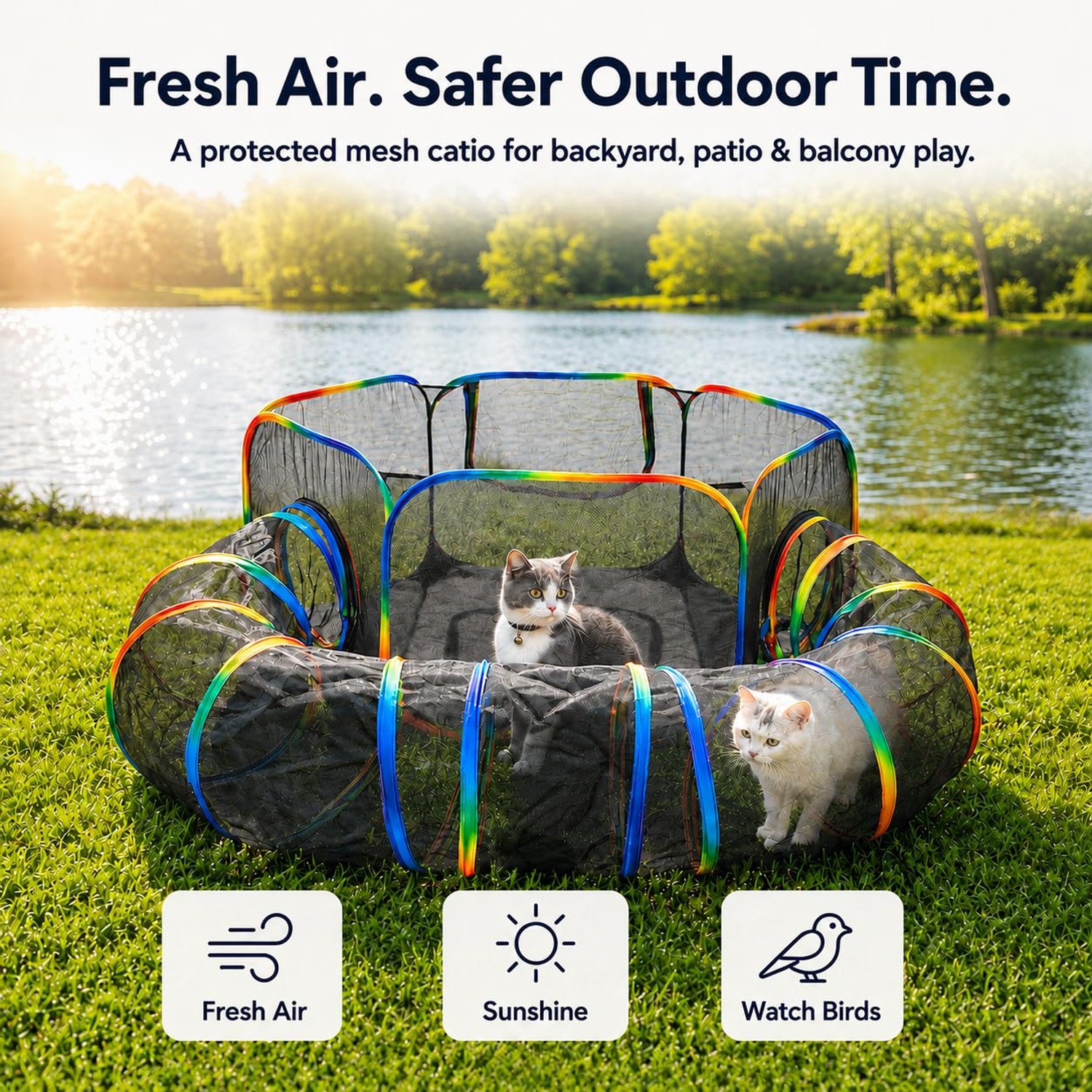
A cat tent and tunnel sits in the gap. It gives your cat real outdoor air, real grass under their paws and a real view of the garden, without a single screw going into a wall. When you are done, it folds into a bag and goes in the cupboard.
How a pop-up catio actually works
The concept is simple. You have a tent with mesh walls, a floor, and zippered doors. Your cat goes inside, the zips close, and your cat is outdoors but contained. The mesh is the important part. It lets air, light, sound and smell through, which is most of what your cat came outside for in the first place.
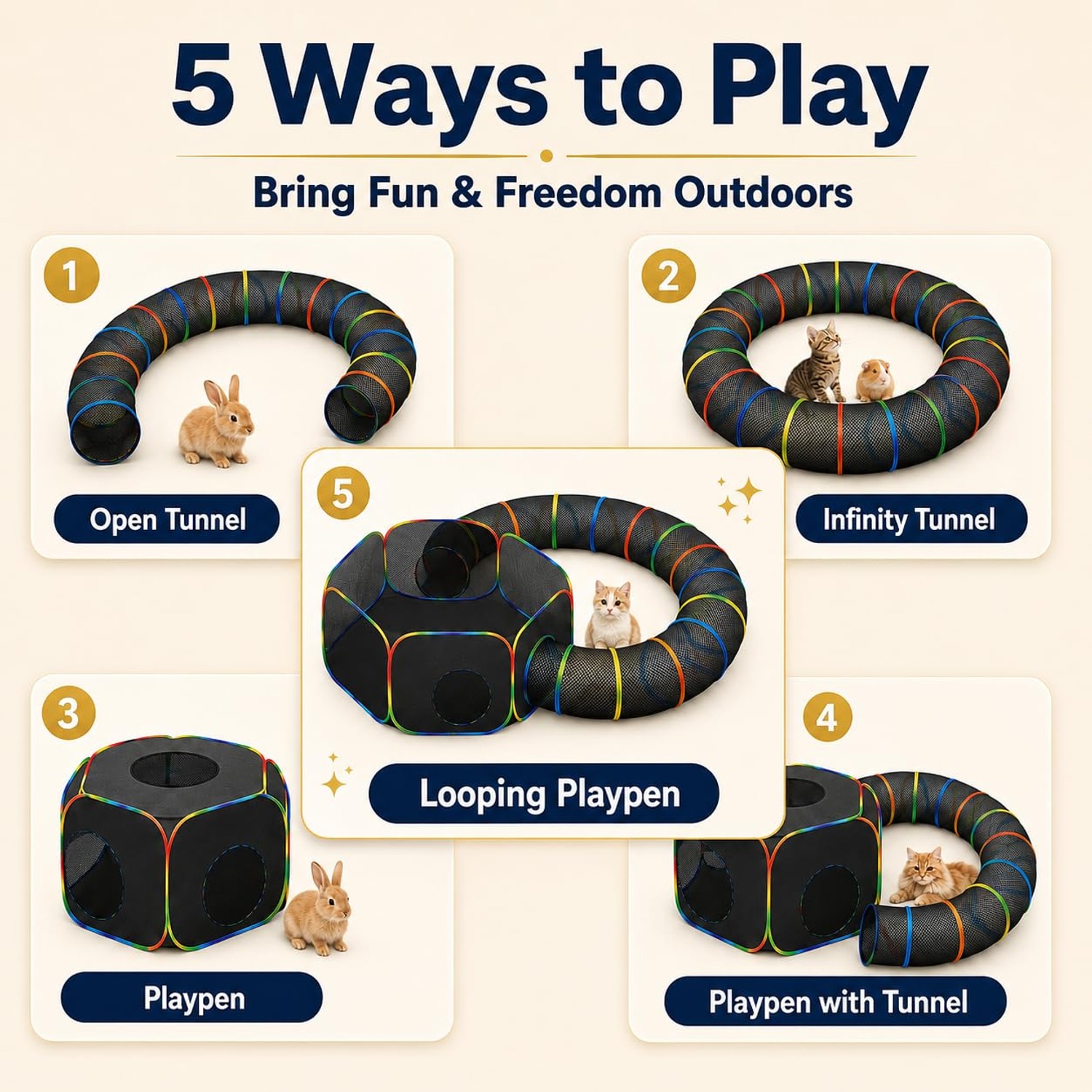
This particular set adds a tunnel. The tunnel zips onto the tent and turns a static box into something closer to a run. That matters more than it sounds. A cat sitting in a small square will settle and nap. A cat with somewhere to dash to will actually move, and movement is what most indoor cats are short of.
The two pieces also separate. On a wet weekend, the tunnel can live in the hallway as an indoor toy while the tent stays packed. On a sunny day you can use just the tent on a balcony where a long tunnel would not fit.
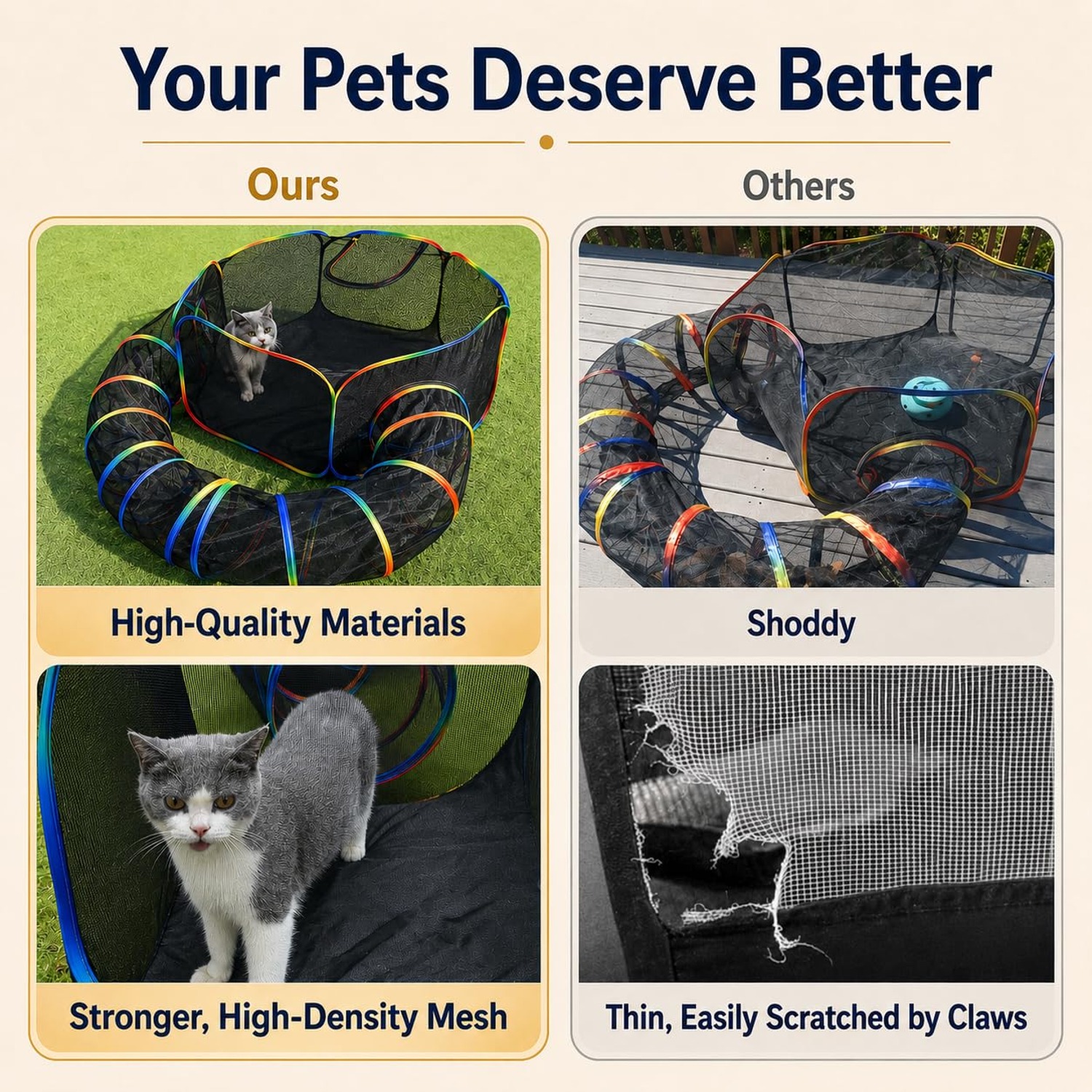
Both pieces are polyester with mesh panels. The doors use zips rather than velcro, which is the right choice. Velcro gets furry, loses grip and eventually pops open under a shoulder barge from a determined cat.
Who this suits
Renters get the most out of this kind of enclosure. You cannot build onto a property you do not own, but nobody can stop you unfolding a tent on the lawn for an hour.
Apartment owners with a balcony are the second group. A balcony catio gives a cat somewhere genuinely new to be, and because this one packs down, your balcony goes back to being a balcony when the session ends.
It also suits people who travel with their cats. Caravanners, campers, anyone who house-sits or visits family regularly. A portable cat run means your cat has one familiar safe space that travels with them, which reduces the stress of being somewhere unfamiliar.
It is less suited to anyone who wants a permanent outdoor space. Fabric and mesh left in the sun for a year will fade and get brittle. If you want something that lives outside twelve months a year, you want timber and wire mesh, not this.
Choosing the right outdoor cat enclosure
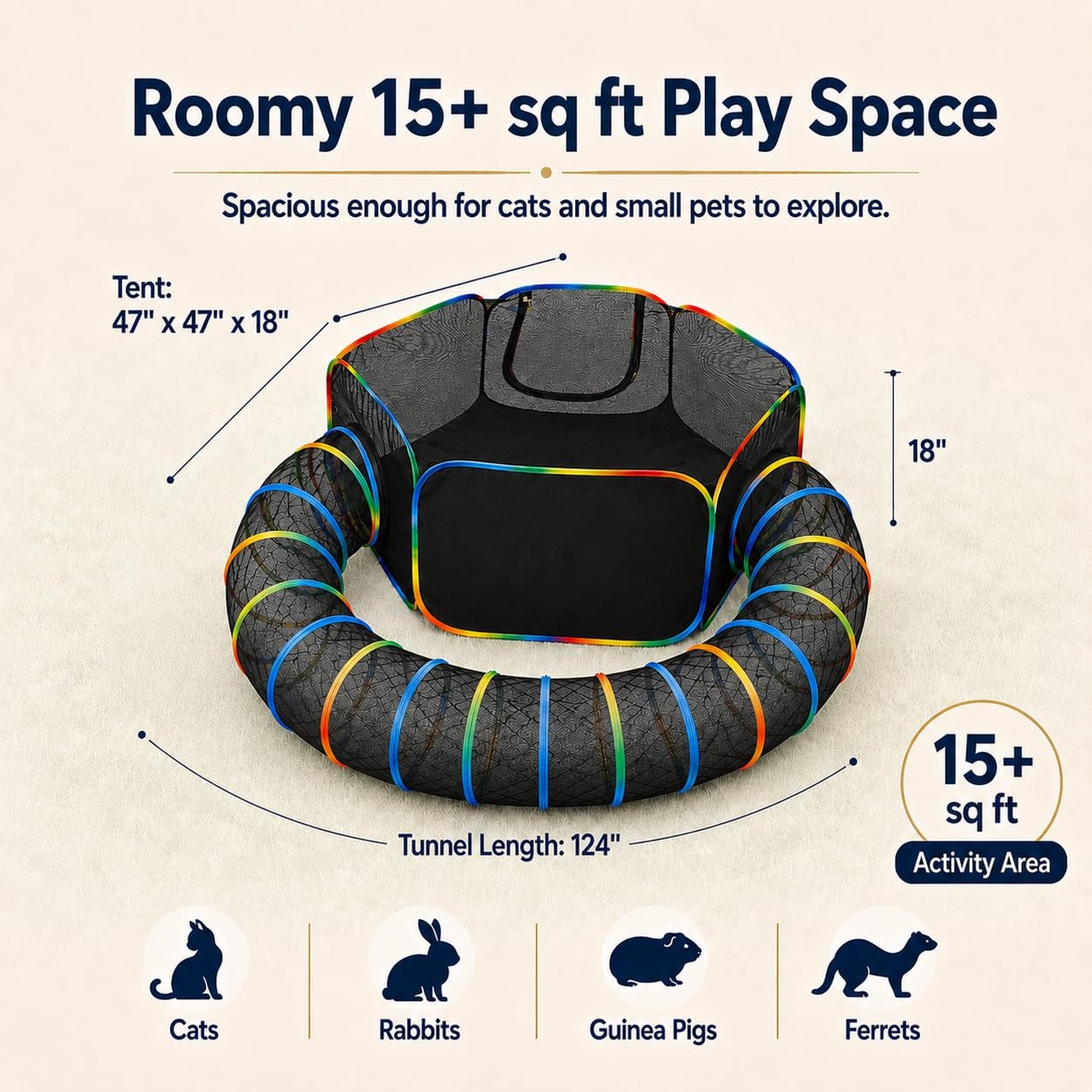
Start with where it will go. Measure the flattest, most sheltered patch you have. Assembled dimensions are not listed in this product record, so if your space is tight, ask us for the measurements before you order rather than guessing.
Then think about your cat's personality. Confident, curious cats tend to walk straight into a mesh cat enclosure and settle. Anxious cats need a slower introduction and often prefer the tent alone, with a blanket over part of it for a sense of cover.
Count your cats. Two bonded cats usually share this kind of space happily. Two cats who merely tolerate each other may find a tunnel a bit too much like a corridor with no escape route, so run them separately.
Consider the weather where you live. The fabric gives shade, and mesh keeps air flowing, but a fabric enclosure is not a rain shelter and is not a cool room. On hot days, set up under a tree, add water, and keep sessions short.
Finally, look at how it packs. A cat tent with a storage bag is far more likely to get used than one you have to wrestle into a cupboard loose. If it is easy to put away, you will take it out again tomorrow.
Setting it up for the first time
Do the first setup indoors. Work out the shape, the poles and the zips in your living room where there is no wind and no audience. Assembly is required with this set, so give yourself ten quiet minutes.
Then leave it standing in the house for a few days with every door open. Do not push your cat into it. Put their favourite blanket inside, drop treats near the entrance, then just inside, then at the far end of the tunnel. Feed a meal in there if your cat is food motivated.
Once your cat is strolling in and out and napping inside without prompting, move the whole thing outside. Pick a calm day, a quiet corner, and stay with them. Fifteen or twenty minutes is plenty for a first outdoor session.
Take water out every time. Even on a mild day, a cat in a sunny spot will want a drink, and a bowl inside the enclosure also makes the space feel like theirs rather than a holding pen.
Safety, supervision and common sense
Never leave your cat unattended in a fabric enclosure. That is not a legal disclaimer, it is practical. Mesh can be clawed, zips can be nudged, and a dog or a curious child can cause a problem in seconds. Treat it like taking a toddler to the park, you stay nearby.
Weight the base in breezy conditions. A heavy pet bed, a paver or a tile inside will stop the whole thing shifting. If the wind picks up, pack it in.
Check the zips each time you set up. Grit from a lawn or a sandy campsite is the main thing that kills zips, and a quick brush-out takes seconds.
Watch your cat's body language. Flattened ears, dilated pupils and crouching low means they have had enough. Open the door and let them go back inside. A cat who learns that they can leave whenever they want will be far more willing to go back in tomorrow.
Keeping it in good shape
Cleaning is straightforward. Shake out the fur and grass after every use. Spot clean marks with warm water and a mild pet-safe soap, then let everything dry fully in the shade before folding. Packing a damp tent away is the fastest route to mildew.
Skip the washing machine. Mesh and pole channels do not enjoy a spin cycle, and bleach will weaken the fabric. Avoid drying it in harsh direct sun for hours, as UV is what fades and embrittles polyester over time.
Store it in its bag, somewhere dry. If you use it a lot in summer, give the zips a check at the end of the season and store it clean so it is ready next spring.
The short version
An indoor cat with no outdoor access gets bored, and bored cats make their feelings known. A cat tent and tunnel is the cheapest, least permanent way to fix that. You get a mesh tent with two zip doors, a tunnel that clips on for running room, and a bag to carry the lot.
It will not replace a built catio, and it is not something to leave standing in the weather all year. What it does well is give your cat supervised fresh air in a garden, on a balcony, at a campsite or at your parents' place, then disappear into a cupboard when you are done.
Introduce it slowly, stay with your cat while they use it, bring water, and pack it away dry. Do that, and you will get years out of it and a noticeably happier cat.