
The complete guide
Choosing and Fitting a Cat Safety Net for Balconies, Windows and Terraces
The problem with balconies
Cats and balconies do not mix well, and most owners work this out the hard way. A cat will sit on a railing for weeks without incident, and then one bird, one gust of wind or one startled jump changes everything. Vets have a name for the injuries that follow a fall from height, and city practices see them often enough that it is treated as a seasonal pattern rather than a freak event.
The frustrating part is that cats genuinely benefit from outdoor access. Fresh air, changing smells, something to watch, a warm spot in the sun. Shutting the balcony door permanently solves the danger and creates a different problem, which is a bored indoor cat with nowhere interesting to be.
A cat safety net is the compromise that actually works. You keep the balcony open, the cat keeps the view, and the drop is no longer an option.
How netting actually keeps a cat in
Three things make a cat net work. Mesh size, material strength and how well it is anchored. Get any one of them wrong and the net becomes decoration.
Mesh size comes first. A cat can follow its head through any gap, and a slim adult cat has a narrower skull than most people assume. A 3cm grid is the common standard for this reason. It stops a head going through while staying open enough that light and the view come straight past. Wider grids exist, usually sold for garden use, and they are not suitable here.
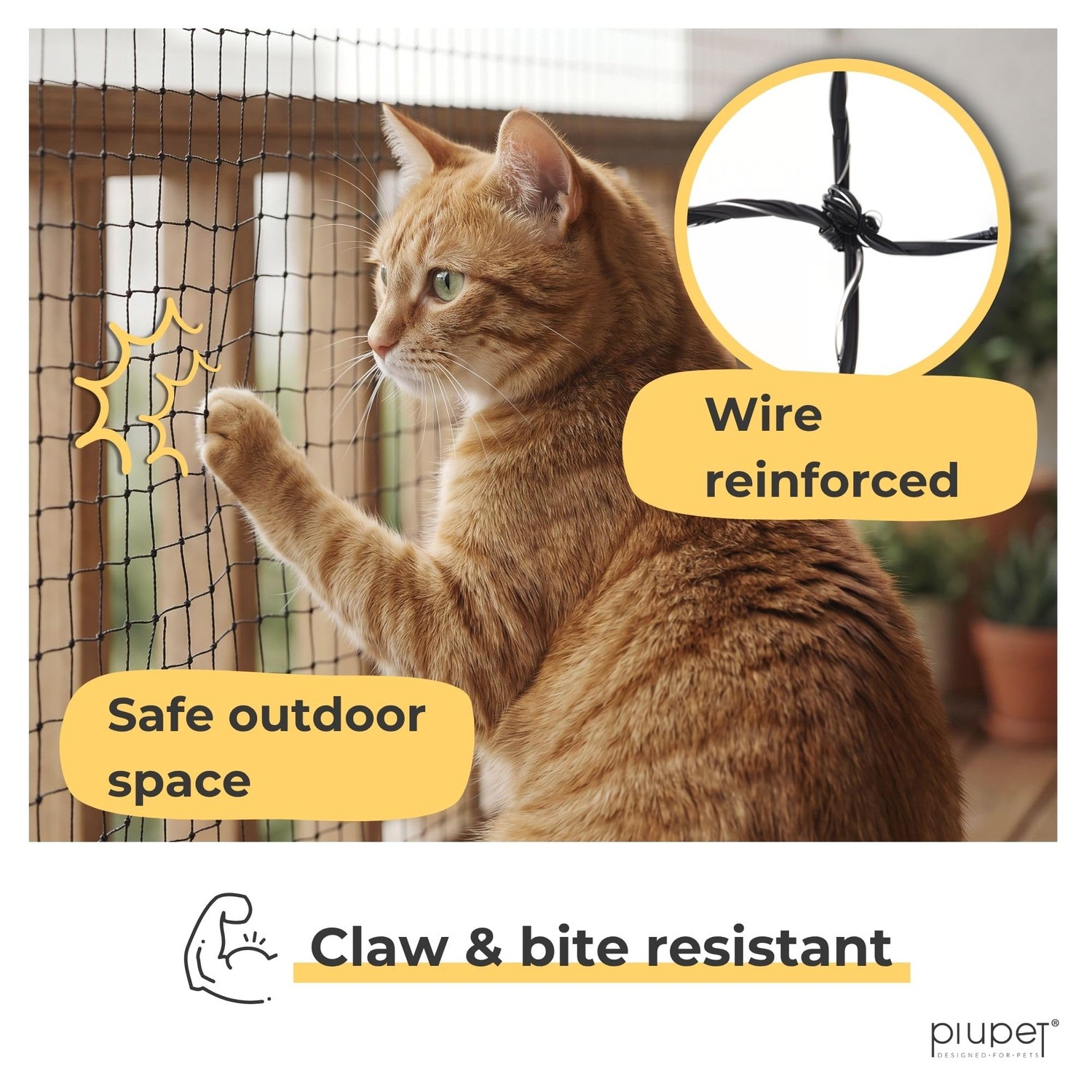
Material strength is where this particular net does something different. Plain polyethylene mesh is fine for keeping leaves out of a pond. A bored cat working at it with teeth and back claws will eventually stretch or open it. Wire reinforced cat netting weaves metal strand through the plastic, so the mesh has something hard inside it. The cat gets no satisfying give, and the net does not deform at the point of attack.
Anchoring is the part people rush. A net can be made of steel and still fail if it is tied at four corners and left loose in the middle. Cats are good at finding slack. They push a shoulder into a sagging section, widen it, and slide through a gap that looked impossible on day one. Close, even anchor points around the whole perimeter are what makes the barrier real.
Who this suits
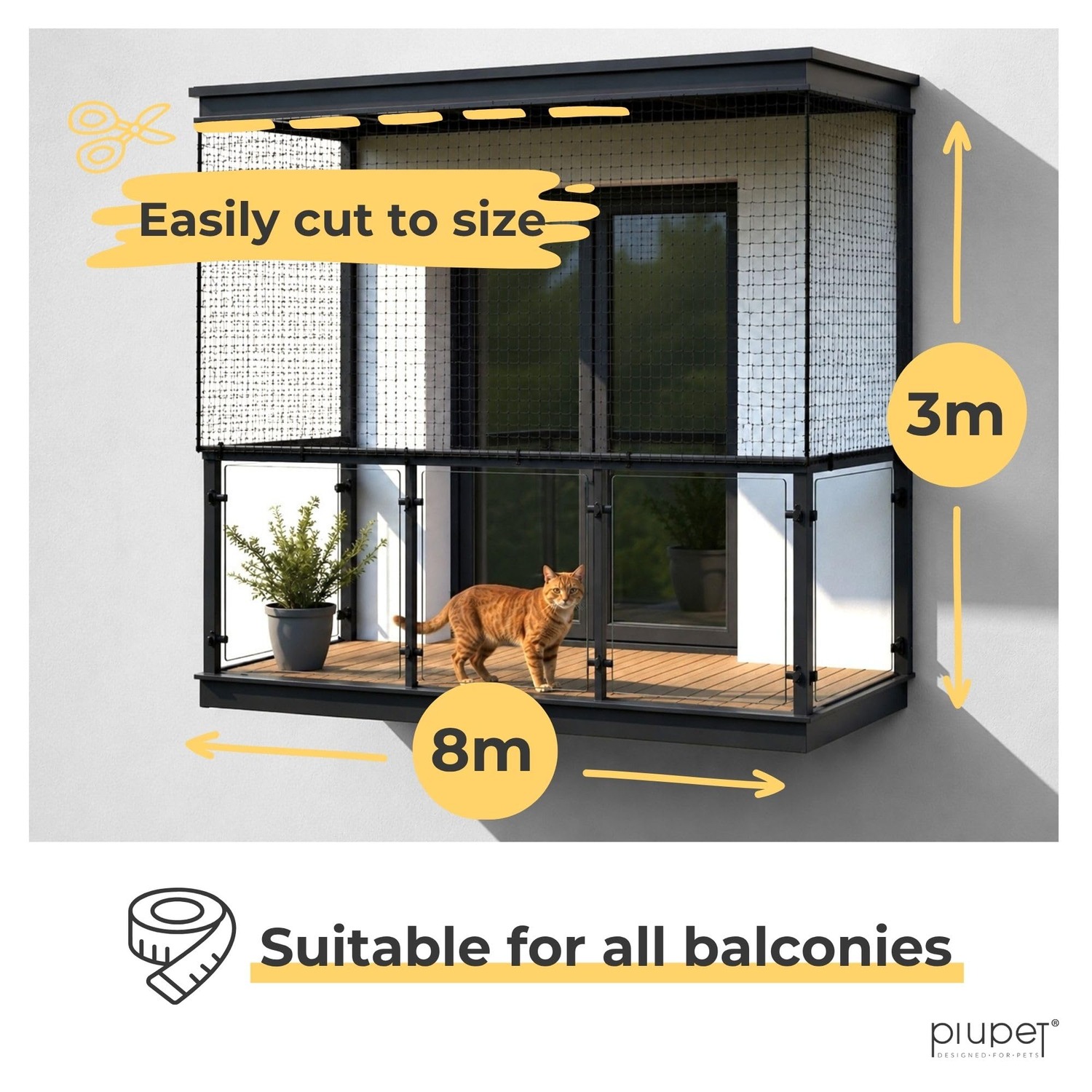
Apartment owners with a standard balcony are the obvious group. An 8m by 3m panel is sized for exactly that job, and most balconies need a single piece with a bit left over.
Second group is window owners. Tilt-and-turn windows in particular are a known hazard, because a cat trying to climb through the angled gap can get trapped. Cutting a section of net to cover the opening solves it. Because the panel is so large, people often cover a balcony and two or three windows from the same purchase.
Third group is the DIY catio builder. If you have framed up a timber enclosure against a wall, you need something to skin it with. Cat enclosure netting of this type ties straight to the frame with the included cable ties, and because it is wire reinforced it stands up to a cat climbing the inside of the structure, which is exactly what will happen.
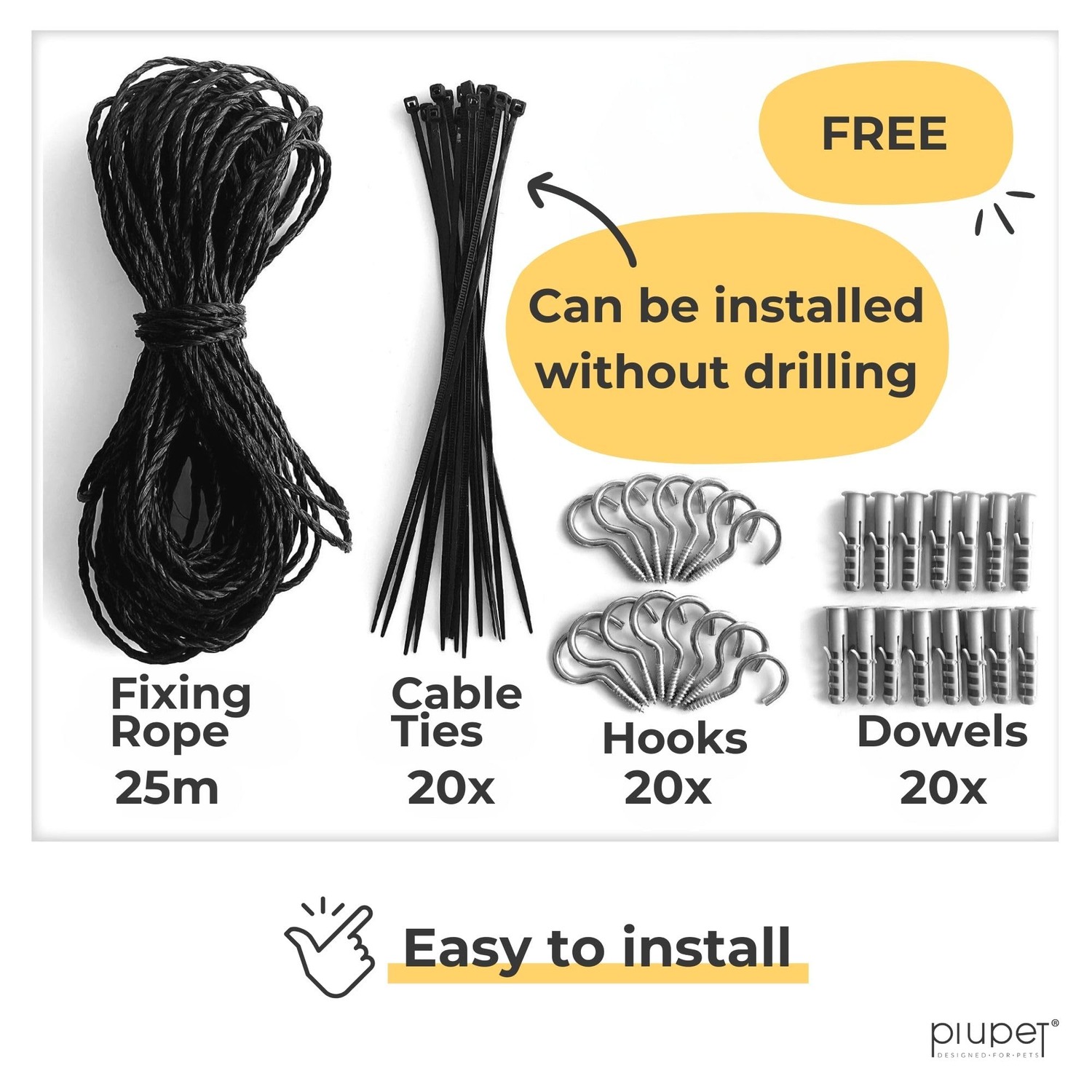
Renters are worth mentioning separately. You do not necessarily have to drill. On balconies with solid metal railings and a concrete soffit above, the fixing rope and cable ties alone can do the job if you have enough tie points. Check your lease, but a net tied to existing structure usually falls well inside what is allowed.
Measuring before you buy
Measure the height from the floor to the underside of whatever is above, then the full width of the opening, then add at least 20cm to each for tensioning and tying. Do not measure to the top of the railing. Cats climb railings, so the net has to reach the ceiling or the overhang.
If your balcony wraps around a corner, measure each face separately and add them together. One long panel can usually turn a corner if you plan the fold.
Write down what surface you are fixing into before you start. Brick and concrete take the supplied dowels. Timber takes screws or hooks directly. Metal railings take rope and cable ties. Knowing which combination you have saves a mid-job hardware run.
Fitting it properly
Start at the top. Run the fixing rope through the top edge of the mesh and secure it at both ends first, then work along adding anchor points. A top edge that is tight and level makes everything below it easier.
Then do the two sides, pulling gently outward as you go. Leave the bottom until last, because that is where you take up all the remaining slack. A properly fitted net has no section you can push more than a few centimetres with your hand.
Space your anchor points closer than feels necessary. Every 20 to 30cm around the perimeter is a reasonable target. The gaps between fixings are where a cat will test, and small gaps mean no use.
Thread the rope through the mesh rather than tying it to the outer edge where you can. Threading spreads the load across many strands instead of concentrating it on one or two.
Finally, walk the whole perimeter and look for daylight at the edges, especially where the net meets the floor or an uneven wall. A 5cm gap at skirting level is a door as far as a cat is concerned.
Living with it
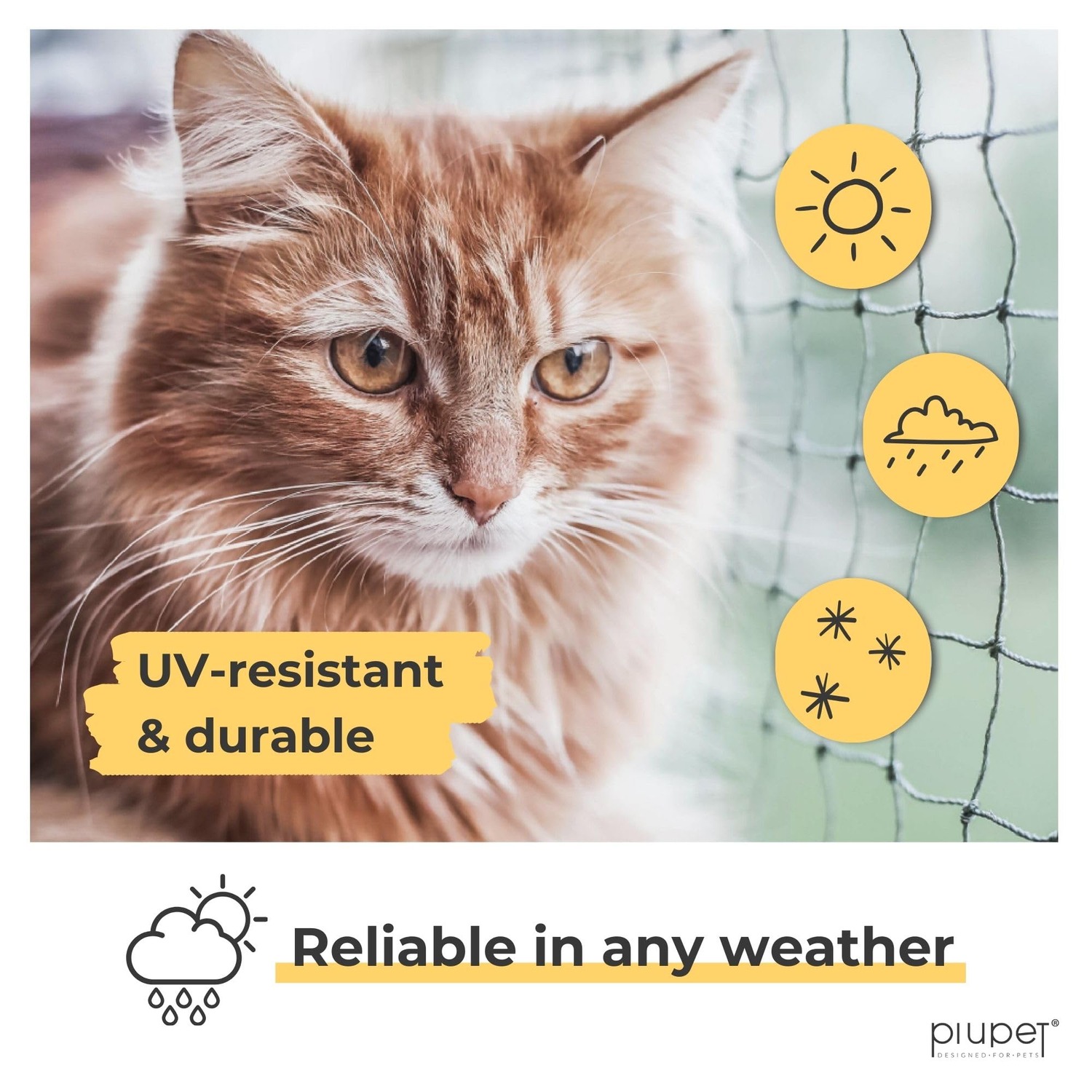
Give the net a quick look every few months. You are checking three things, which are the tension, the condition of the cable ties, and whether any edge has worked loose. UV exposure takes its toll on plastic ties faster than it does on the netting itself, so ties are usually the first thing to replace.
Cleaning is simple. Hose it, brush it with something soft, let it dry. Fur and dust collect in the grid over a season, particularly if the balcony faces a busy road. Avoid pressure washers, which can distort the mesh and strip protective coatings.
If you take it down for winter, fold it loosely rather than cramming it into a tight roll, and store it somewhere dry. Leave the hooks and dowels in the wall. Refitting in spring then takes twenty minutes instead of an afternoon.
What this net gives you
Black mesh is the practical choice and it is also the discreet one. Against a dark railing or a window frame it reads as shadow, not as equipment. From the street nobody notices it. From inside your eye stops registering it after the first week.
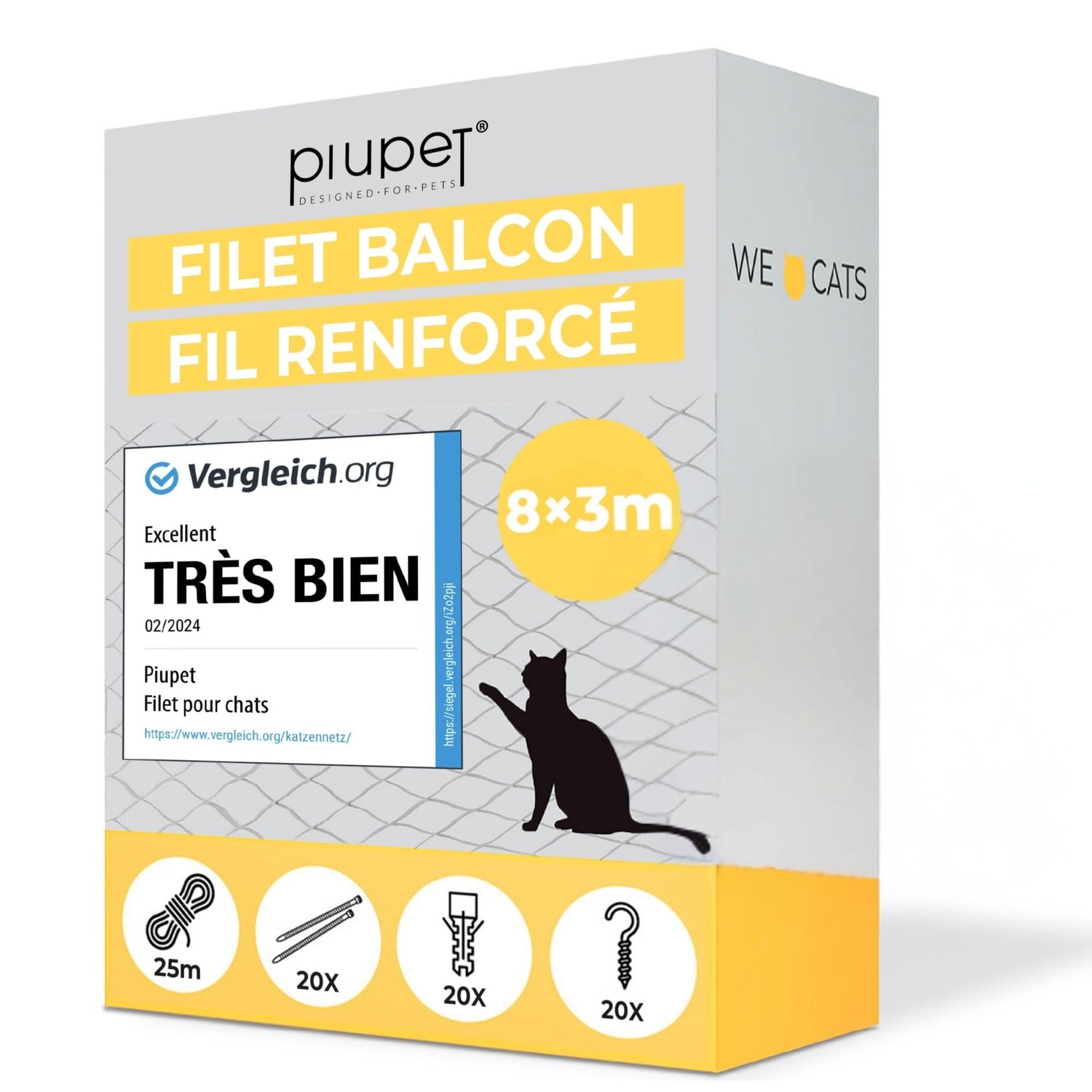
The included fastening set is more useful than it sounds. Buying netting and then discovering you need rope, ties and wall fixings is a common annoyance, and the hardware often costs a meaningful fraction of the net itself. Having 25m of rope, 15 ties, 20 hooks and 20 dowels in the box means you can order on Monday and fit it on Saturday.
At 2kg the whole thing is manageable. You can carry it up stairs, hold a section while standing on a step ladder, and roll it away one-handed.
The short version
If you have a cat and a balcony, you need a barrier, and netting is the least intrusive one available. Look for a 3cm grid, because that is the spacing that reliably stops a cat's head. Look for wire reinforcement, because plain mesh is not a long-term answer for an animal with teeth and claws and time. Then fit it tight, anchor it often, and check it twice a year.
This net covers the first two points by design and gives you the hardware for the third. Measure your opening, add a margin, and work top to bottom. Your cat gets the balcony back and you stop watching the railing.