
The complete guide
How to Choose a Cat Cube Tunnel Set That Your Cat Will Actually Use
The problem with a bored indoor cat
A cat that has nowhere to run usually finds somewhere. That is the 3am sprint down the hallway, the shredded corner of the armchair, the sudden ambush on your ankle as you walk past the kitchen bench. None of it is bad behaviour. It is a hunting animal with a full tank of energy and a flat, open room that offers nothing to stalk through.
The thing cats want is not just space. It is structure. Something to disappear into, something to peer out of, something with a corner they can round at speed. A cat cube tunnel set gives them all three in a footprint you can fold up and put in a cupboard when you need the floor back.
That last part matters more than most people expect. Plenty of cat furniture solves the boredom problem and creates a furniture problem instead. A collapsible cat tunnel does not.
How this set works
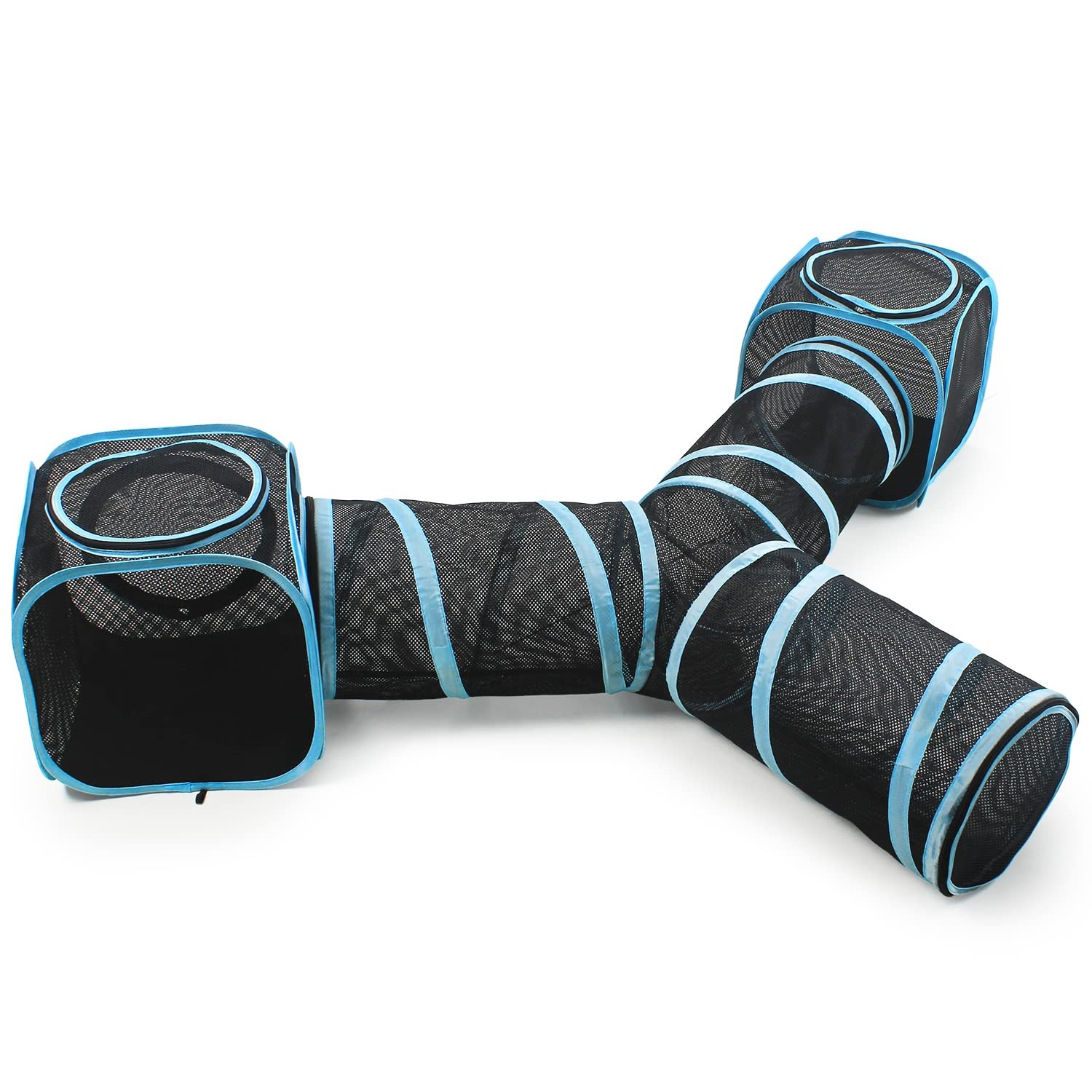
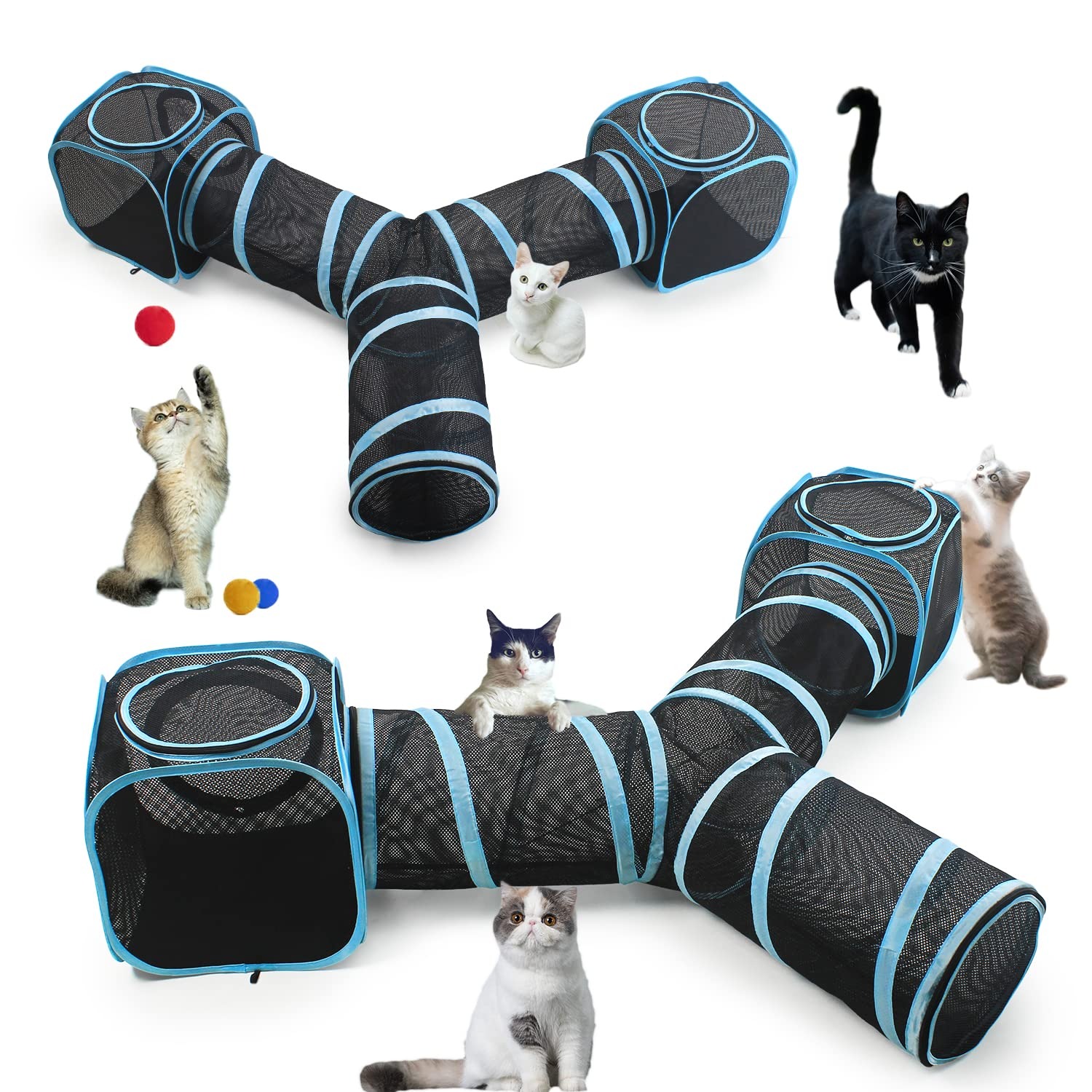
This INTURN set is built from two cubes and a three-way tunnel. The cubes are the destinations and the tunnel is the route between them. Because the tunnel has three arms rather than two, there is always more than one way in and more than one way out, which changes how cats play in it.
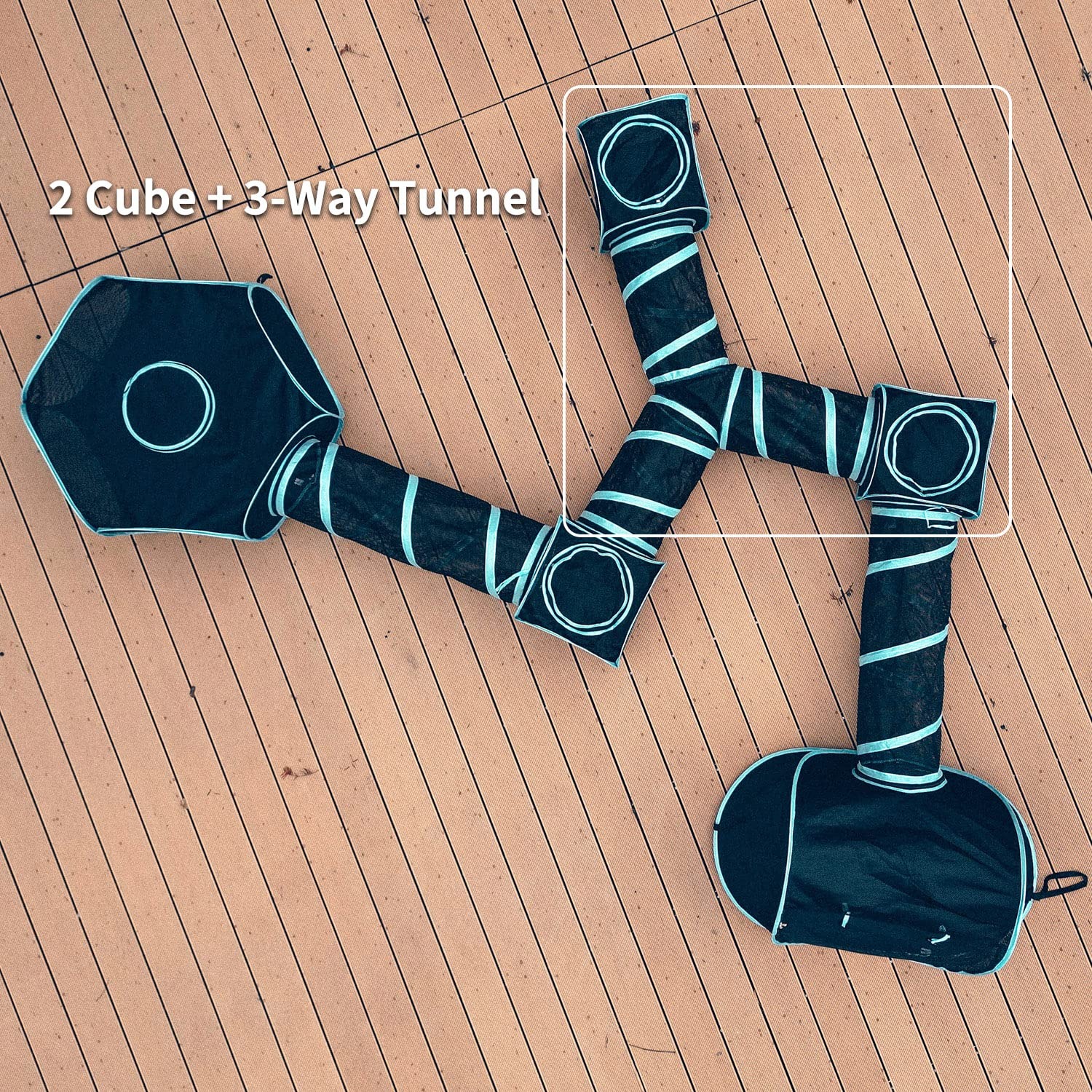
Everything joins with zips, including openings on the top and sides. You decide the shape. Run it as one long line for a sprinting run. Make an L so a cat can hide round the bend. Zip an arm closed and turn it into an ambush pocket. Pull the pieces apart entirely and put a cube in the bedroom.
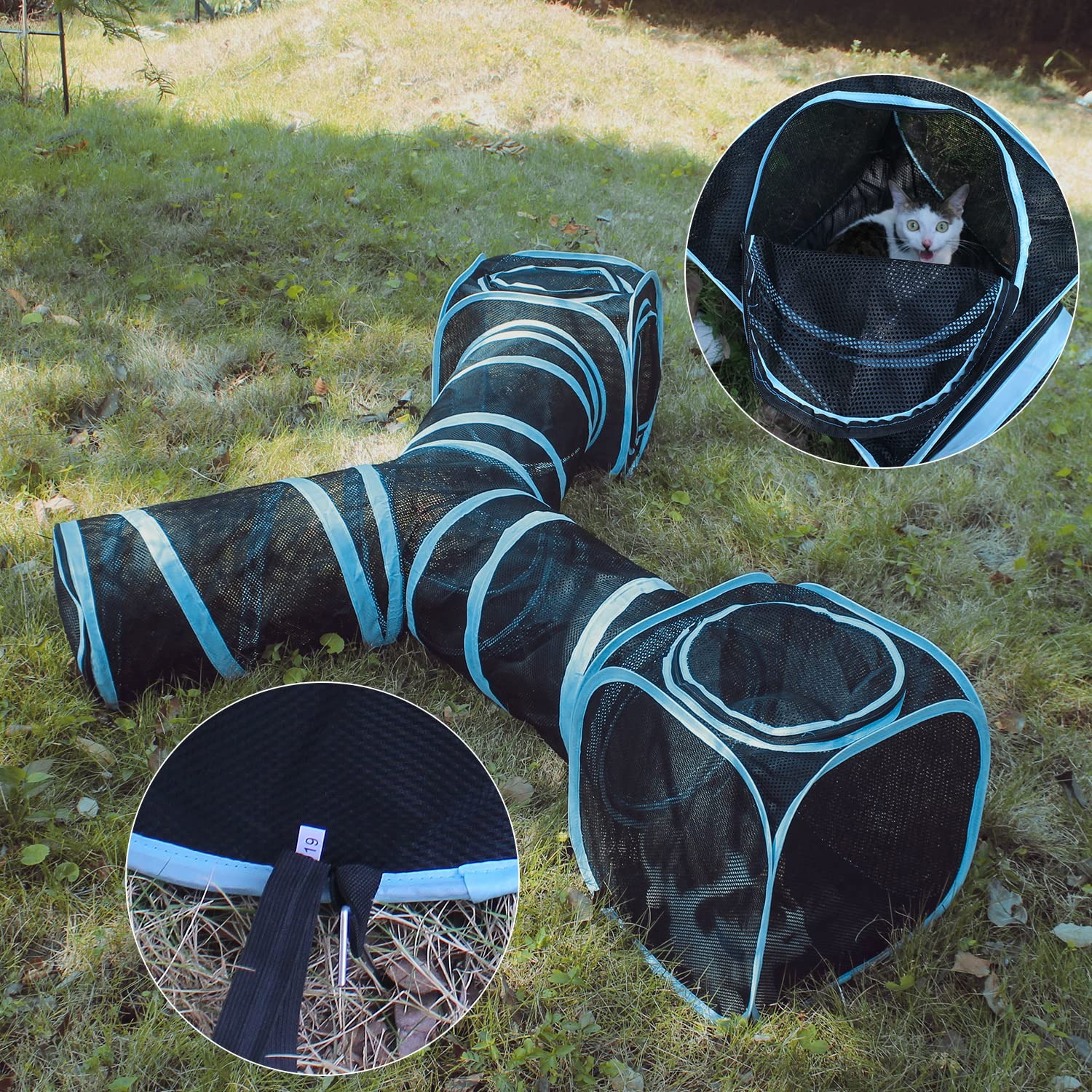
The walls are nylon mesh over fabric. Two things come from that. Air moves straight through, so a cat napping inside on a warm day is not sitting in a sealed box. And you can see in. That sounds like a small detail until you have spent ten minutes crouched on the floor trying to work out which end of an opaque tunnel your cat is sulking in.
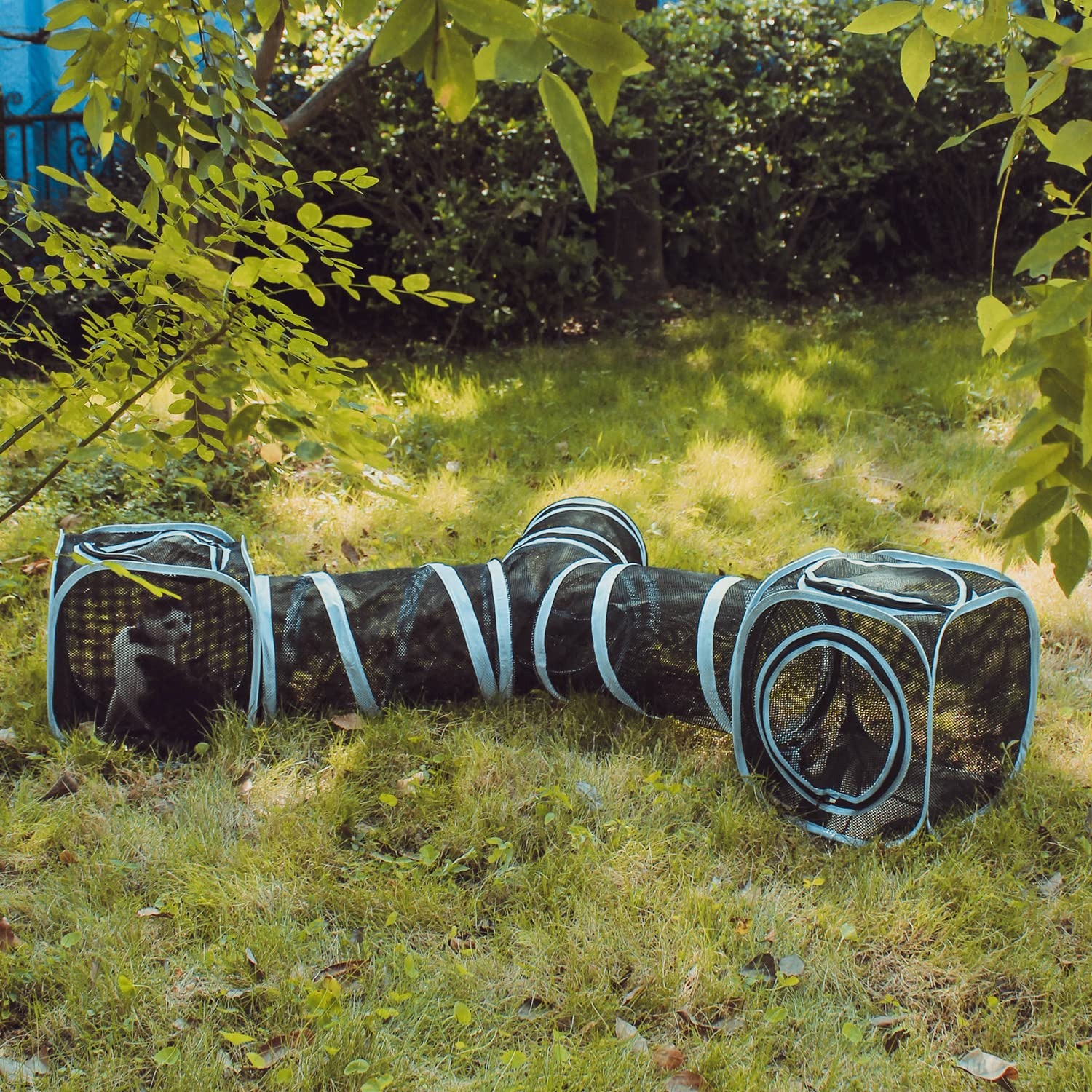
Ground pegs come in the box. Push them into a lawn and the set holds position while your cat charges through it. That is what turns an indoor toy into an outdoor cat tunnel system.
Who it suits
Indoor cats get the most out of it. If your cat never goes outside, this is a way to add terrain to a flat room, and the outdoor option means you can take them onto the grass for supervised time with a structure they already trust.
Multi-cat homes do well with a three-way tunnel, because the extra arm gives a cat a way to leave a chase instead of getting cornered. Cats that mostly tolerate each other will often play more freely when there is an escape route built in.
Nervous cats and new arrivals take to the mesh cubes for a different reason. A cat settling into a new house wants to watch without being seen. Mesh gives them exactly that. Put a cube somewhere quiet with a view of the room and it often becomes the first place they relax.
Kittens need almost no convincing. Older cats might take a few days, and that is normal.
It is less suited to a cat that treats every fabric item as a scratching post. The mesh handles ordinary play, but it is not armour.
Choosing between cat tunnel styles
There are three common types and they do different jobs.
Simple fabric tubes are cheap and fine for a quick game, but they are a corridor and nothing more. A cat runs through, then wants something else.
Crinkle tunnels add noise. Some cats are obsessed with the sound and some will not go near it. If you already know your cat startles easily, skip them.
A cat tunnel with cubes, like this one, adds destinations. The cube is where a cat stops, sits, watches and sleeps. That is the difference between a toy they use for five minutes and one they use every day, because it supports resting as well as running.
When you compare options, look at four things. Does it connect in more than one configuration? Can you see inside? Does it pack flat? And can it go outside safely? This set answers yes to all four, which is why it tends to stay in rotation longer than a plain tube.
Where to put it
Cats pick play spots based on sightlines. A tunnel shoved in the far corner of a spare room gets ignored. The same tunnel laid along the edge of the lounge, where the cat can watch the household go past, gets used every evening.
Try a run that connects two places your cat already likes. Between the window perch and the sofa works well. Along a hallway wall works well, because hallways are already sprint tracks.
Keep one cube near a soft light source if you can. A cat will choose a sunny cube over a shaded one almost every time.
Outdoors, pick flat grass away from the fence line and peg all the anchor points before you let your cat near it. Stay out there with them. The mesh keeps them visible, but it is a play structure, not a secure enclosure, and a motivated cat can get out of a zipped opening. If you want containment, you need a proper catio.
Getting a reluctant cat interested
Do not stage a big introduction. Set it up, walk away and let it become furniture for a day or two.
Then start small. Drop a few treats just inside an opening, not deep in the tunnel. Once they are stepping in for treats, run a wand toy through the length of it so they chase something rather than explore an empty tube. A pinch of catnip in one cube helps if your cat responds to it.
The mistake people make is picking the cat up and posting them in. That teaches the cat that the tunnel is where unwanted things happen. Let them choose it.
If interest drops off after a few weeks, change the shape. Rearranging the layout is the whole point of a zip-together cat tunnel set, and a new configuration reads to a cat as a new object.
Care and keeping it usable
Shake it out after each session. Cat fur, litter grit and dried grass build up fast in mesh.
For anything more, spot clean with warm water and a mild pet-safe detergent, then let it air dry completely before you fold it. Do not machine wash it, do not bleach it and never put it in a tumble dryer. Folding fabric away while it is damp is how you end up with a musty set and a cat that refuses to go near it.
Accidents need an enzyme cleaner rather than a general spray. Enzymes break down the smell instead of covering it, which stops your cat marking the same spot again.
Before each outdoor use, run a hand along the zips and seams. A split seam is easy to catch early and annoying to discover mid-play.
Store it flat and dry. Sun fades fabric and damp ruins it, so a cupboard beats the shed or the back of the car.
The short version
This is a cat cube tunnel set built around two mesh cubes and a three-way tunnel that zip together however you want them. The mesh keeps air moving and lets you see your cat. The ground pegs let it move outside onto the lawn for supervised play. Nothing needs assembling and the whole thing folds flat.
It suits indoor cats, multi-cat households, nervous newcomers and small homes where permanent cat furniture is not realistic. It is not a secure outdoor enclosure and it is not indestructible against serious scratching.
If you want one thing that gives your cat somewhere to run, somewhere to hide and somewhere to nap, and you want to be able to pack it away by Friday night, this is the shape of product that does it.